Faris Adani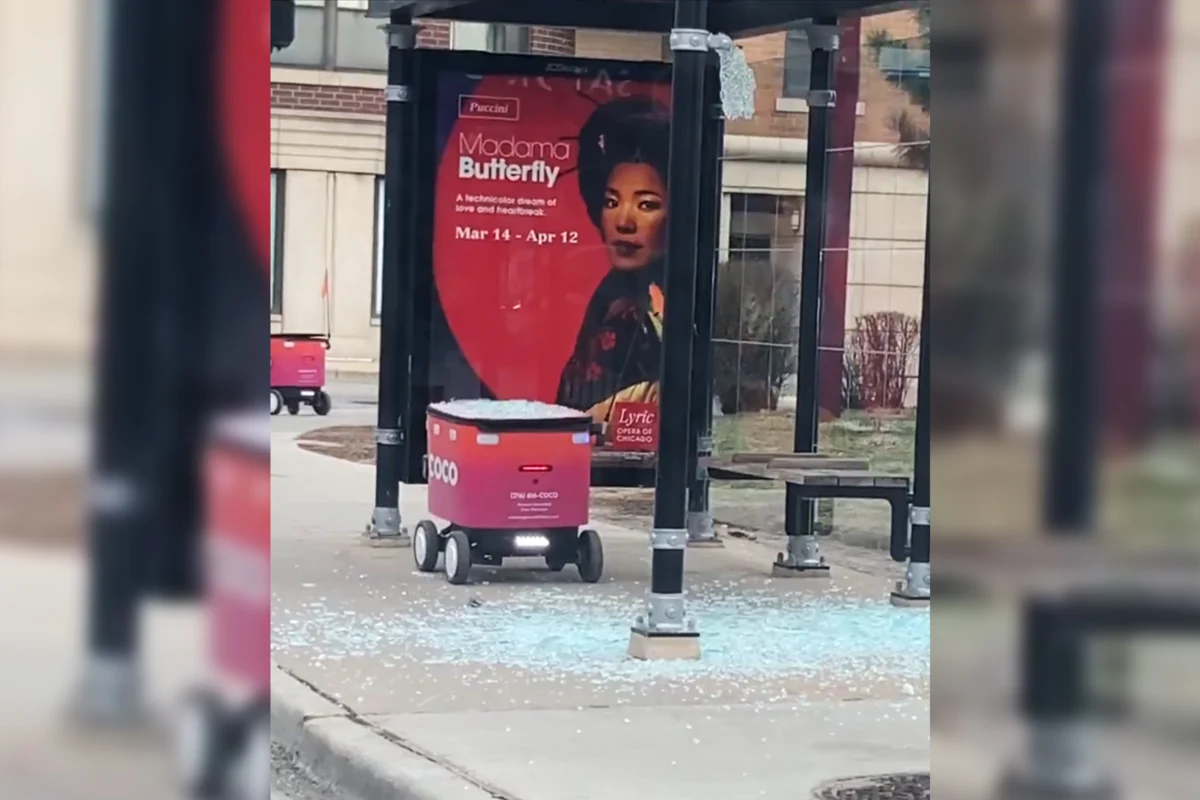
The bustling streets of Chicago, known for their vibrant energy and iconic architecture, have recently become the unexpected stage for a peculiar series of events, raising eyebrows and sparking debate over the integration of autonomous technology into urban life. In an uncanny succession, two different food delivery robots, mere days apart, have inexplicably veered off course to collide with and shatter glass bus shelters, leaving behind a trail of broken glass, bewildered residents, and pressing questions about the reliability and safety of these burgeoning automated couriers. This bizarre phenomenon, occurring in the heart of the Windy City, transcends mere isolated malfunctions, hinting at a deeper, more systemic challenge in the nascent world of sidewalk robotics.
The first incident, which quickly went viral across social media platforms, involved a robot operated by Serve Robotics. Eyewitness accounts and video footage captured the aftermath, showing the small, boxy automaton seemingly in distress, jerking back and forth in a frantic attempt to dislodge the shards of glass clinging to its frame, inadvertently showering more dangerous debris onto the public sidewalk. What started as a spectacle of mechanical incompetence soon escalated as another video emerged, revealing the actual moment of impact. The Serve bot, initially navigating around a glass advertising panel, inexplicably swerved back into the bus shelter, striking an unpaneled section with a jarring thud that sent glass flying. The company, a prominent player in the last-mile delivery space backed by Uber, quickly issued a statement acknowledging the incident and pledging to "review what happened to make improvements," a standard corporate response that did little to quell the growing public unease.
Hot on the heels of the Serve Robotics debacle, an eerily similar event unfolded, this time involving a robot from Coco, another key competitor in Chicago’s burgeoning autonomous delivery ecosystem. Photographs from the scene depicted the red-and-white Coco bot idling amidst a freshly shattered glass bus shelter, its exterior dusted with the evidence of its destructive encounter. This second incident, occurring so close to the first, transformed what might have been dismissed as a singular, unfortunate accident into a disquieting pattern. Coco, which began its Chicago operations in 2024, maintained that this was a "rare, isolated incident," echoing Serve’s defensive stance. Carl Hansen, Coco’s head of safety and government relations, emphasized their robots’ modest top speed of approximately five miles per hour and asserted that "safety is a top priority in how we design and monitor our systems." However, the uncanny repetition of the same type of crash, by two different companies, within such a short timeframe, strongly suggests that something more profound than mere coincidence is at play.
The critical question then becomes: why are these autonomous delivery robots, designed with sophisticated sensor arrays and advanced navigation algorithms, repeatedly crashing into stationary public infrastructure? While both companies have been tight-lipped about potential causes, citing ongoing investigations, several hypotheses can be explored. These robots typically rely on a combination of Lidar, cameras, ultrasonic sensors, and GPS for perception and localization. Potential points of failure include:
- Sensor Glitches or Blind Spots: Environmental factors like glare from the sun, sudden changes in lighting, heavy rain, or even reflective surfaces could confuse sensors, leading to misinterpretations of the environment. A bus shelter’s large glass panels, while seemingly transparent, might present a unique challenge to a robot’s perception system, especially if reflections or specific angles interfere with depth perception.
- Software Bugs or Algorithm Errors: The navigation algorithms that dictate a robot’s path, obstacle avoidance, and decision-making are incredibly complex. A subtle bug in the software, an error in mapping data, or a flawed decision-making tree could lead the robot to miscalculate its trajectory or misidentify a stationary object as an open path. The fact that the Serve bot initially avoided one panel only to hit another suggests a nuanced software issue.
- Remote Operator Interference or Lack Thereof: While these robots are autonomous, many operate with human oversight, where remote operators can take control in challenging situations. A lapse in attention from a remote operator, a delay in intervention, or even a misjudgment during remote control could contribute to an accident. Conversely, an over-reliance on autonomy in a complex environment could be problematic.
- Environmental Novelty: Urban environments are dynamic and unpredictable. While robots are trained on vast datasets, specific scenarios—like a combination of pedestrian traffic, varying light conditions, and the unique reflectivity of bus shelter glass—might present novel challenges that the AI is not robustly equipped to handle.
These incidents, regardless of their specific technical origins, have intensified an already simmering controversy surrounding the deployment of autonomous delivery robots in Chicago and other cities across the nation. Critics, often dubbed "Luddites" by proponents of automation, argue that these machines are not ready for prime time in crowded urban spaces. Their concerns extend beyond mere property damage to fundamental issues of public safety, accessibility, and economic impact.
Alderman Daniel La Spata, representing Chicago’s 1st Ward, has been a vocal opponent of the robots’ expansion. In February, he successfully blocked both Coco and Serve Robotics from extending their operations into his ward, citing overwhelming resident opposition. A survey revealed that over 80 percent of his constituents were against the presence of these delivery bots, reflecting a broader sentiment of unease. Residents’ objections are multi-faceted:
- Safety Concerns: Beyond crashing into bus shelters, there are fears about robots colliding with pedestrians, especially children or the elderly, who might not react predictably to a slow-moving automaton.
- Accessibility Issues: The widely shared video from last year, showing a disabled man struggling to navigate a sidewalk while a delivery robot aggressively positioned itself, highlighted how these machines can impede accessibility for individuals using wheelchairs, scooters, or other mobility aids, effectively privatizing public sidewalk space.
- Job Displacement: A significant concern is the potential for these robots to displace human delivery drivers, exacerbating unemployment in a sector that often provides entry-level job opportunities.
- Surveillance: Equipped with multiple cameras, these robots are constantly recording their surroundings, leading to privacy concerns and fears of increased surveillance in neighborhoods.
The allure of autonomous delivery is undeniable for companies: reduced labor costs, increased efficiency, and the promise of "always-on" service. For consumers, it offers convenience and potentially lower delivery fees. However, the incidents in Chicago underscore the profound challenges of integrating such technology into the complex, organic fabric of urban life. Cities are not merely grids for efficient movement; they are living spaces, shared by diverse populations with varying needs and expectations. The deployment of autonomous vehicles, whether on roads or sidewalks, requires a delicate balance between fostering innovation and safeguarding public welfare.
These repeated failures in Chicago, almost comical in their identical nature, serve as a stark reminder that the journey to widespread autonomous integration is fraught with obstacles. For robotics companies like Coco and Serve, earning public trust is paramount. This trust is not built on promises of efficiency or technological prowess alone, but on a demonstrable commitment to safety, transparency, and a respectful integration into the communities they serve. Ignoring public concerns or downplaying serious incidents will only fuel opposition and lead to stricter regulations, potentially stifling the very innovation they aim to champion.
Looking ahead, these incidents could mark a critical turning point for sidewalk delivery robots. They will likely prompt more rigorous testing protocols, potentially leading to technological refinements that better address the nuances of urban environments. Furthermore, city councils and regulatory bodies nationwide will undoubtedly re-evaluate existing ordinances, potentially imposing stricter guidelines on speed limits, operational zones, and liability. The bizarre saga of Chicago’s robot-battered bus shelters is more than just a local news story; it’s a microcosm of the global conversation surrounding automation, revealing the complex interplay between technological ambition, public expectation, and the messy reality of urban existence. The future of autonomous delivery hinges not just on smarter robots, but on smarter, more empathetic integration strategies that prioritize people over pixels and profits.