isnaini azizah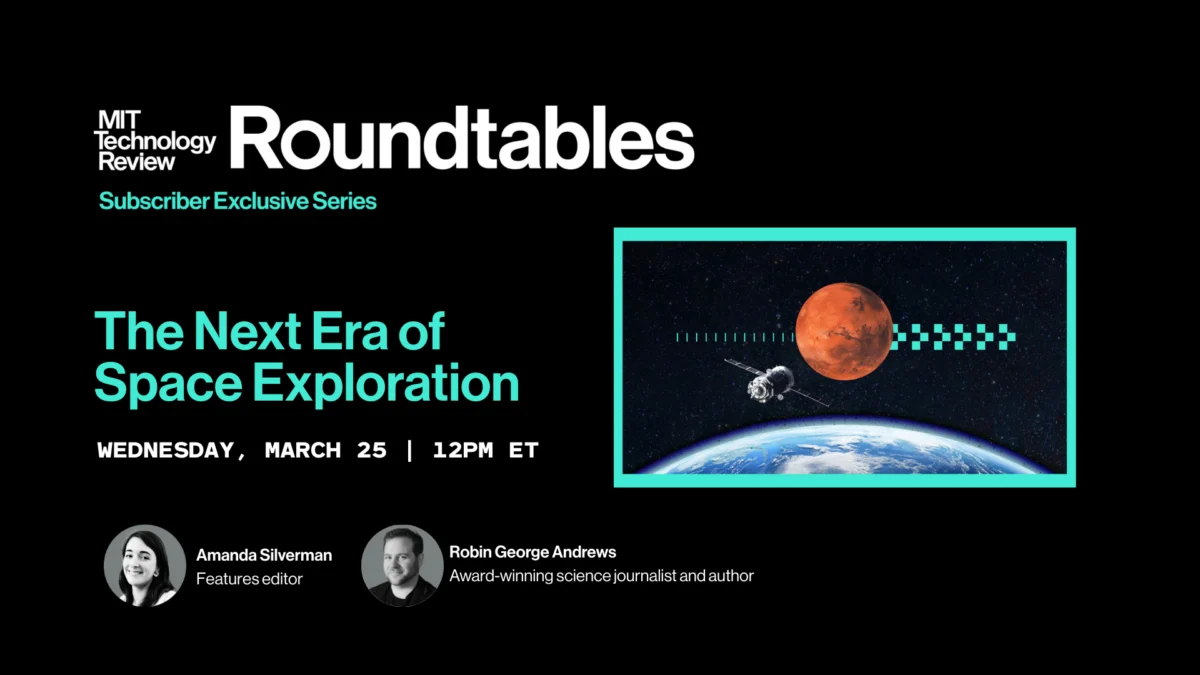
The foundations of this new era are being laid by entities like MIT Technology Review, a publication that has consistently provided critical insight into the technological and societal shifts that define our times. With a history stretching back to 1899, its independent analysis of emerging technologies and their commercial, social, and political impacts offers a crucial lens through which to understand the burgeoning space economy. The "latest iteration of a legacy" is not just a descriptor of MIT Technology Review’s own enduring relevance, but also a fitting analogy for the broader trajectory of space exploration. What was once the domain of a few select nations is now a global stage, with an ever-growing cast of commercial entities, academic institutions, and international organizations participating in the grand endeavor. This broadening participation necessitates new forms of collaboration and consensus-building, and it is within this context that the concept of "roundtables" gains significant prominence.
These roundtables are manifesting in various forms, from formal industry consortiums and government-led working groups to informal but highly influential gatherings of thought leaders and innovators. The purpose is manifold: to share best practices, to identify and mitigate common risks, to advocate for favorable regulatory frameworks, and to foster synergistic partnerships that accelerate progress. For instance, discussions around orbital debris mitigation, a growing concern as space becomes more crowded, often involve representatives from satellite operators, launch providers, space agencies, and research institutions. These roundtables are crucial for developing shared standards and technologies to track, monitor, and eventually remove defunct satellites and rocket stages, ensuring the long-term sustainability of the space environment. Without such collaborative efforts, the very infrastructure that enables future exploration and utilization could be jeopardized.
Furthermore, the economic potential of space is a significant driver for these collaborative discussions. The burgeoning space economy encompasses a wide array of activities, from satellite-based services like Earth observation and telecommunications to the nascent but rapidly developing fields of in-space manufacturing, asteroid mining, and space tourism. Each of these sectors presents unique challenges and opportunities that benefit from shared knowledge and pooled resources. Roundtables dedicated to these emerging markets allow for the exchange of technical expertise, the exploration of potential investment avenues, and the development of common business models. For example, companies looking to establish lunar outposts are engaging in discussions about resource utilization, power generation, and life support systems, drawing on expertise from various aerospace engineering disciplines and even terrestrial industries like agriculture and medicine.
The "Advertise with MIT Technology Review" section, while ostensibly about commercial partnerships, also hints at the growing importance of communication and engagement in this new era of space exploration. Elevating brands to the forefront of conversations around emerging technologies that are "radically transforming business" is precisely what many stakeholders in the space sector are aiming to achieve. This underscores the fact that space exploration is no longer just about scientific discovery; it’s about building industries, creating jobs, and driving innovation that has tangible benefits on Earth. Advertising and custom content within influential platforms like MIT Technology Review help to disseminate knowledge, attract talent, and foster public understanding and support for these ambitious endeavors. The "unmatched audience of technology and business elite" is precisely the demographic that can drive investment, policy changes, and technological breakthroughs necessary for continued progress.
The collaborative spirit fostered by these roundtables is also essential for addressing the ethical and geopolitical dimensions of space exploration. As more nations and private entities venture into space, questions about resource ownership, planetary protection, and the militarization of space become increasingly pertinent. International roundtables, often facilitated by organizations like the United Nations Committee on the Peaceful Uses of Outer Space (COPUOS), play a critical role in establishing norms of behavior and developing legal frameworks that govern activities in space. These discussions are complex, involving diverse national interests and varying perspectives on the future of humanity’s cosmic presence. The ability to find common ground and forge agreements through dialogue is paramount to avoiding conflict and ensuring that space remains a domain for peaceful exploration and scientific advancement.
The technological advancements enabling this new era are equally remarkable. Innovations in propulsion systems, miniaturization of satellites (cubesats and smallsats), advanced materials, artificial intelligence, and robotics are making space more accessible and affordable than ever before. These technologies are not developed in isolation; they are often the product of collaborative research and development, with insights shared and refined through various forms of roundtables and consortiums. For instance, breakthroughs in additive manufacturing are enabling the on-demand production of components in space, reducing the need for costly launches from Earth. Discussions around the feasibility and scalability of such technologies involve engineers, material scientists, and business strategists, all contributing to the rapid evolution of space capabilities.
The role of educational institutions, like MIT, in nurturing this next era is also profound. By providing a pipeline of skilled professionals and fostering an environment of innovation, universities are integral to the ongoing success of space exploration. MIT Technology Review’s own legacy is intrinsically linked to the intellectual capital generated by such institutions, and its ability to translate complex technical advancements into accessible analysis is invaluable for informing both the public and policymakers. The roundtables that occur within university settings, bringing together students, researchers, and industry professionals, are incubators for the ideas and partnerships that will shape the future of space.
Looking ahead, the trend towards greater collaboration and the establishment of robust roundtables is set to accelerate. As the commercialization of space matures, the need for standardized interfaces, interoperable systems, and shared infrastructure will become even more pronounced. This will necessitate even more sophisticated forms of roundtables, potentially leading to the creation of new international bodies or industry-led organizations dedicated to specific aspects of space exploration and utilization. The challenges are immense, from the harsh realities of the space environment to the complexities of international law and economics, but the potential rewards – scientific discovery, economic growth, and the expansion of human civilization – are equally boundless. The "next era of space exploration" is not a singular event, but an ongoing, dynamic process, and roundtables are proving to be the essential forums where its future is being collectively forged.