anjir abdul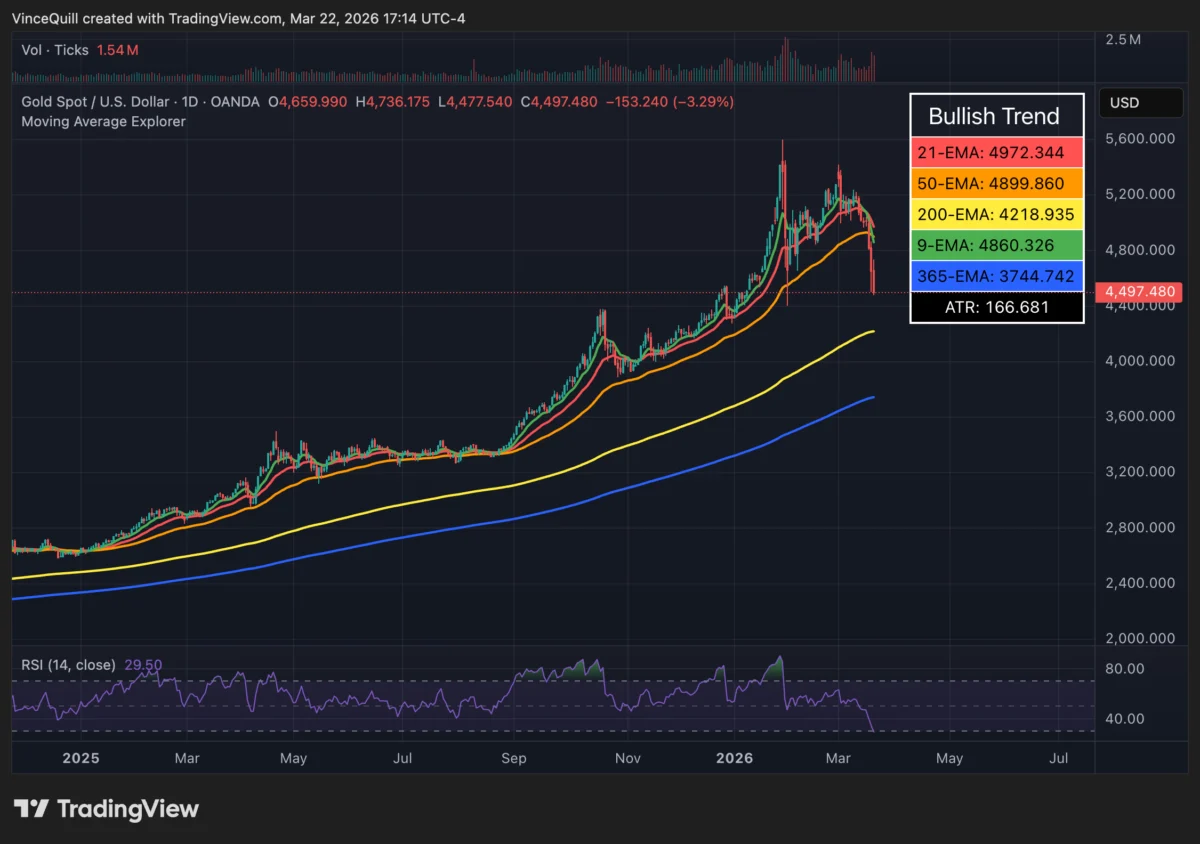
Gold’s impressive rally over the last three years has been primarily fueled by unprecedented central bank buying, a strategic move by state actors seeking to diversify reserves and mitigate geopolitical risks. In stark contrast, Bitcoin’s ascent is predominantly driven by individual investors, who increasingly view the digital asset as a personal financial lifeline and a hedge against systemic vulnerabilities. This fundamental difference in demand drivers highlights their distinct roles in the global financial ecosystem.
Coltman explained to Cointelegraph that physical gold currently holds a greater geopolitical strategic role. "It’s the asset of choice for state actors who want to store wealth in a way that is protected from rival powers," he noted. This has meant that gold’s price action has traded with heightened sensitivity to deteriorating international relations, as nations adjust their reserve strategies in response to a fragmented global landscape. The drive for de-dollarization among several major economies, coupled with a desire for non-sovereign wealth storage, has propelled central banks worldwide to accumulate gold at record levels. Countries like China, Russia, India, and various emerging market economies have been prominent buyers, viewing gold as a neutral asset that is not tied to any single government’s fiscal or monetary policy, thus offering a crucial layer of protection against sanctions or currency debasement. This institutional demand provides a stable, long-term floor for gold’s valuation, differentiating its market dynamics significantly from more speculative assets.
Conversely, Bitcoin has carved out a unique utility for individuals, particularly in times of crisis. Coltman underscored its role as an "alternative lifeline" when local banking infrastructure fails or access to the traditional financial system becomes impossible. This utility was starkly demonstrated when, shortly after a hypothetical conflict started, both the Dubai and Abu Dhabi exchanges were shut down following missile and drone strikes from Iran. Coltman described this as a "stark reminder" of the invaluable nature of 24/7, permissionless access to one’s assets during wartime or other emergencies. In such scenarios, where capital controls might be imposed, banks could close, or national currencies could suffer rapid devaluation, Bitcoin offers a censorship-resistant and globally accessible means for individuals to preserve wealth, conduct transactions, and even facilitate remittances. Its decentralized nature means it operates independently of any single government or financial institution, making it resilient to localized disruptions. This makes it particularly appealing in regions experiencing political instability, hyperinflation, or restrictive financial policies, where individuals are desperate for an exit option from failing traditional systems.
The distinct buyer bases also explain the differing risk profiles and market behaviors of the two assets. Gold, backed by millennia of history as a store of value and reserve asset, is largely seen as a traditional safe haven, appealing to large institutions and sovereign entities seeking stability and long-term preservation of capital. Its physical nature and tangible scarcity contribute to this perception. Bitcoin, while increasingly recognized as "digital gold," is still a relatively nascent asset class, subject to higher volatility and often correlated with broader risk-on sentiment in technology stocks. However, its fixed supply cap of 21 million coins and its decentralized, digital nature present a compelling argument for its long-term store-of-value potential, especially for those seeking an alternative to fiat currencies susceptible to inflation or governmental control.
Coltman further suggested that the inverse correlation often observed between BTC and gold implies that investors should consider holding both assets to benefit from each’s unique properties and provide diversified exposure. While gold might act as a geopolitical hedge, absorbing shocks related to state-level conflicts and macroeconomic uncertainty, Bitcoin can serve as a hedge against systemic financial failures and provide unparalleled access and portability for individuals. This complementary relationship can offer a more robust portfolio strategy, balancing traditional stability with modern digital resilience.

The macroeconomic and geopolitical landscape of the last several years has indeed tested the mettle of both assets. Ongoing global tensions, persistent inflation concerns, supply chain disruptions, and regional conflicts drove gold to an all-time high of nearly $5,600 per ounce in January 2026. This surge was a testament to its enduring appeal as a safe haven in tumultuous times. However, the subsequent heightened volatility, leading to gold being dragged back down to about $4,497 per ounce, sparked renewed debate among analysts regarding gold’s reliability as a store of value and how it would fare against Bitcoin in the coming years. This correction, representing one of its biggest weekly falls in recent memory, prompted some to question whether gold’s traditional role was being challenged by new digital alternatives or if it was merely a temporary price adjustment in a volatile market. The interplay of interest rate expectations, dollar strength, and investor sentiment continues to heavily influence gold’s short-term movements, even as central bank buying provides a strong underlying support.
The financial analyst community remains sharply divided on the future dominance of gold versus BTC. Macroeconomist Lyn Alden is a prominent voice predicting that Bitcoin is likely to outperform gold over the next three years. Alden argues that it’s "usually a pendulum between the two." She posited, "If gold has gone up as much as it did, the entire diminishing return story per cycle is going to be erased in the coming one, too." Alden’s perspective often highlights Bitcoin’s superior network effects, its adoption curve, and its fixed supply as key drivers for long-term outperformance. She points to the digital asset’s increasing institutional acceptance, exemplified by the emergence of spot Bitcoin ETFs, as a sign of its maturing market and growing legitimacy. For Alden, Bitcoin represents a technologically superior form of scarcity that is better suited for the digital age, capable of attracting a new generation of investors who prioritize decentralization and digital native assets. The relative youth of Bitcoin’s market means it still has significant room for growth compared to gold, which has a much larger and more mature market capitalization.
Conversely, former hedge fund manager Ray Dalio maintains a more cautious stance, expecting that BTC will never fully replace gold as a store-of-value asset. Dalio’s arguments center on Bitcoin’s continued correlation with technology stocks, categorizing it as a "risk-on" asset, which behaves more like speculative growth equities rather than a true safe haven. He emphasizes gold’s deep entrenchment as a reserve asset within the global banking system, its long history of acceptance, and its physical tangibility. Dalio frequently highlights the regulatory uncertainties surrounding Bitcoin, the potential for government intervention, and the asset’s inherent volatility as significant drawbacks when compared to gold’s millennia-long track record of stability and universal recognition. For institutional investors and central banks, gold’s lack of counterparty risk in its physical form and its established legal framework make it an unparalleled choice for reserve management, a status Bitcoin is far from achieving. Dalio’s view underscores the profound difference in institutional acceptance and regulatory clarity between the two assets, which he believes will continue to define their roles.
Beyond the immediate price action and analyst debates, the long-term trajectories of gold and Bitcoin will be shaped by several evolving factors. The regulatory landscape, for instance, will play a critical role. Clearer, more favorable regulations could further accelerate institutional adoption of Bitcoin, blurring the lines between "risk-on" and "safe-haven" assets. Conversely, stringent regulations or outright bans in major jurisdictions could hinder its growth. For gold, the continued geopolitical fragmentation and the drive for de-dollarization among central banks will likely sustain its demand as a strategic reserve asset.
Technological advancements within the Bitcoin ecosystem, such as scaling solutions like the Lightning Network, could significantly enhance its utility for everyday transactions, further cementing its role as a practical "lifeline" for individuals. The demographic shift towards younger, digitally native investors who are more comfortable with cryptocurrencies will also likely favor Bitcoin in the long run.
Ultimately, the choice between gold and Bitcoin, or indeed a combination of both, reflects an investor’s risk tolerance, time horizon, and fundamental beliefs about the future of finance and global power dynamics. Gold continues to be the bedrock of traditional finance, a testament to its enduring value in an uncertain world, largely supported by sovereign demand. Bitcoin, while more volatile, represents the cutting edge of financial innovation, offering a decentralized, permissionless alternative for individuals navigating an increasingly digital and often turbulent global economy. The ongoing narrative of these two assets is not necessarily one of replacement, but rather of diversification and complementary roles in a complex and rapidly evolving financial landscape. As the world grapples with persistent inflation, geopolitical instability, and technological disruption, both gold and Bitcoin offer distinct, yet equally compelling, propositions for wealth preservation and growth.