anjir abdul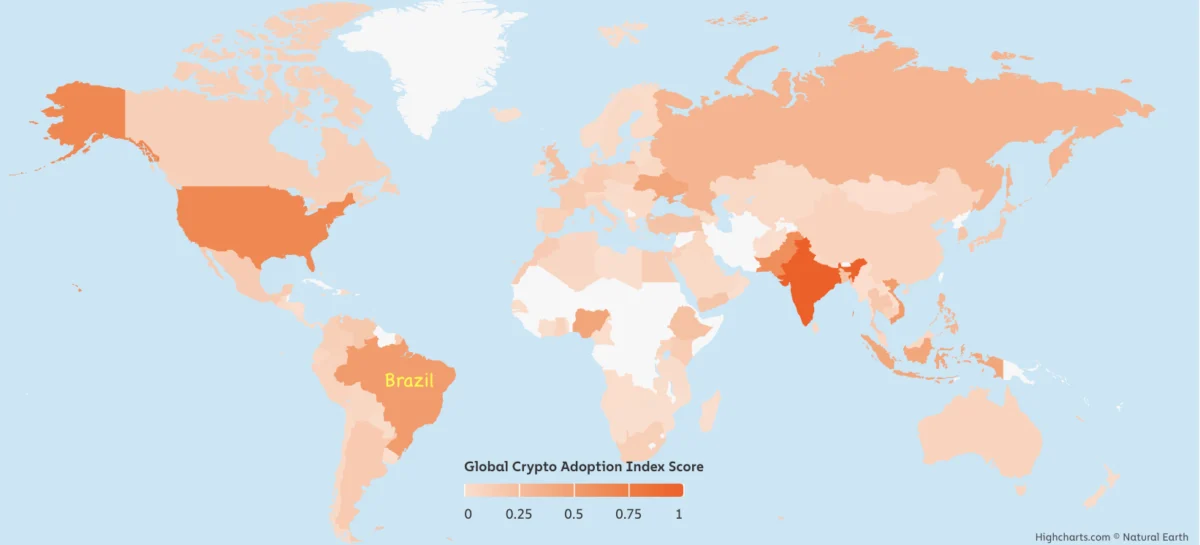
Brazil’s Finance Minister, Dario Durigan, has reportedly opted to place discussions surrounding new crypto tax policy initiatives on hold, effectively postponing any significant legislative movements until after the nation’s presidential elections scheduled for October 2026, a strategic move aimed at sidestepping potentially "divisive" tax reforms during a politically charged election cycle. This decision, revealed by sources close to the matter speaking to Reuters, indicates a cautious approach from the newly appointed minister, prioritizing political stability and avoiding contentious issues that could sway public opinion or election outcomes. While a public consultation on crypto tax policy was initially anticipated for later this year, it is now likely to be pushed back to 2027, though officials affirm the matter "remains on the radar" for future consideration, underscoring its long-term importance despite the immediate delay.
This pause comes at a critical juncture for Brazil’s burgeoning cryptocurrency market. The country has been actively shaping its regulatory landscape, having concluded its long-standing no-tax policy on gains from smaller cryptocurrency sales or transfers in June 2025. This significant shift introduced a flat 17.5% tax on crypto capital gains, a comprehensive measure that also encompassed profits derived from offshore holdings and self-custodial wallets, marking a substantial departure from previous, more lenient regulations. Prior to this, Brazilian residents enjoyed an exemption from capital gains taxes on monthly sales up to 35,000 Brazilian Real, equivalent to approximately $6,587 USD. For transactions exceeding this threshold, investors were subject to a progressive tax regime, with rates varying between 15% and 22.5% depending on the profit tier. The transition to a flat tax rate, while simplifying some aspects, also broadened the tax net significantly, especially for those who previously benefited from the lower-tier exemption.
Further cementing Brazil’s evolving regulatory stance, November 2025 saw the Banco Central do Brasil, the nation’s central bank, publish comprehensive rules that fundamentally altered how stablecoin transfers are perceived and regulated. Under these new guidelines, stablecoins are now treated akin to foreign currency exchange transactions, consequently subjecting them to the same rigorous tax laws and reporting requirements as traditional foreign currency dealings. This move reflects a growing global trend among financial regulators to categorize stablecoins, particularly those pegged to fiat currencies, as instruments that carry similar economic implications to foreign exchange, thus requiring comparable oversight. The Brazilian government is also actively exploring proposals to implement taxes on cryptocurrencies utilized for international payments, signaling a broader strategy to integrate digital assets into the existing financial regulatory framework. Concurrently, the country is meticulously aligning its crypto reporting rules to conform with the Crypto-Asset Reporting Framework (CARF), an international monitoring standard designed to enhance transparency and information exchange regarding crypto transactions across jurisdictions. This alignment highlights Brazil’s commitment to participating in global efforts to combat illicit financial activities and ensure regulatory harmonization within the rapidly evolving digital asset space.
The decision to place further crypto tax consultations on hiatus, particularly during a period of rapid industry expansion, presents a multifaceted scenario for Brazil. The South American nation stands as a global leader in cryptocurrency adoption, a testament to its vibrant tech ecosystem and a population increasingly open to digital innovation. According to Chainalysis’ Global Crypto Adoption Index for 2025, Brazil proudly ranks fifth worldwide in terms of crypto adoption, a remarkable achievement that underscores its significant presence on the global crypto stage. Within the Latin American region, Brazil holds the undisputed top position, serving as a beacon of digital asset integration and a hub for blockchain innovation. This robust adoption is not merely anecdotal; it’s supported by a diverse demographic profile and a rapidly digitizing economy. With a population exceeding 213 million people and a median age of 33.5 years, Brazil possesses a youthful and digitally-native demographic ripe for embracing new technologies. Furthermore, over 91% of its population resides in urban areas, according to data from Worldometer, indicating a concentrated and connected user base that facilitates the widespread dissemination and adoption of digital platforms and assets.
The broader Latin American context also plays a crucial role in understanding Brazil’s trajectory. Chainalysis reported that Latin America’s crypto adoption surged by an impressive 63% in 2025, a growth driven by both burgeoning retail interest and increasing institutional engagement. This regional dynamism positions Brazil at the forefront of a transformative wave, where cryptocurrencies are increasingly utilized for a variety of purposes, including remittances, inflation hedging, and as alternatives to traditional financial services. The expansion of Brazil’s highly successful Pix instant payment system into Argentina, as highlighted by related news, further exemplifies the region’s innovative spirit in digital finance and the potential for interoperability and cross-border utility that crypto assets can offer. Pix, a central bank-backed instant payment network, has revolutionized domestic transactions in Brazil, and its cross-border expansion suggests a strategic vision for broader digital financial integration across South America.
The Finance Minister’s rationale for delaying further tax policy discussions—avoiding "divisive" changes during an election year—speaks volumes about the political sensitivities surrounding cryptocurrency regulation. Tax policies, especially those concerning emerging asset classes, can often polarize public opinion. On one hand, proponents of a lighter regulatory touch argue that excessive taxation could stifle innovation, drive talent and capital offshore, and disadvantage Brazil in the global race for crypto leadership. They might emphasize the economic benefits of fostering a thriving crypto ecosystem, including job creation, technological advancement, and increased foreign investment. From this perspective, a pause might be seen as a temporary relief, allowing the industry to mature further before new tax burdens are imposed.

Conversely, proponents of stricter taxation and regulation might argue for the need to ensure fairness, prevent illicit activities, and generate revenue for public services. They might highlight concerns about market volatility, consumer protection, and the potential for tax evasion if digital assets are not adequately integrated into the national tax framework. For them, a delay could be viewed as missed opportunities for revenue generation and a prolonged period of regulatory ambiguity that could pose risks to financial stability. The term "divisive" therefore encompasses a complex interplay of economic ideologies, technological perspectives, and political calculations. During an election year, a government naturally seeks to avoid policies that could alienate significant segments of the electorate or become a flashpoint for opposition parties. A measured approach, even if it means delay, might be perceived as a safer political strategy.
The implications of this pause are far-reaching. For individual crypto investors and businesses operating in Brazil, the delay offers a temporary reprieve from potential new tax obligations or regulatory changes. This period of stability, even if uncertain about future direction, could allow for better planning and strategic positioning. However, prolonged uncertainty beyond the existing framework could also deter long-term institutional investment, which often seeks clear and predictable regulatory environments. While the current 17.5% flat tax and stablecoin regulations provide some clarity, the lack of further movement on other proposals, such as taxing international crypto transfers, means that certain aspects of the crypto economy remain in a state of flux.
From an economic perspective, Brazil’s high crypto adoption rate suggests a robust demand for digital assets, driven by various factors. These include a history of economic volatility and inflation, which often push citizens towards alternative stores of value like Bitcoin. The ease of access provided by mobile technology and increasing internet penetration also plays a significant role. Furthermore, the innovative spirit within Brazil’s fintech sector, exemplified by the success of Pix, creates a fertile ground for the integration of cryptocurrencies into daily financial life. A delay in new, potentially more stringent, tax policies could inadvertently provide a window for this organic adoption to continue unhindered, allowing the market to grow further before the government decides on its next steps.
Looking ahead, the post-2026 election landscape will be crucial. Regardless of who assumes the presidency, the crypto tax policy will undoubtedly re-emerge as a significant agenda item. The intervening period could be used by various stakeholders—from crypto industry associations to consumer advocacy groups and financial institutions—to lobby for their preferred regulatory frameworks. The central bank and other financial bodies will also likely continue their internal work, gathering data and developing proposals that can be presented once the political climate is deemed more conducive. The alignment with CARF, in particular, suggests a long-term commitment to international standards, implying that future policies will likely reflect a global trend towards greater transparency and oversight, even if the immediate implementation of new domestic taxes is delayed.
In conclusion, Brazil’s decision to temporarily halt further crypto tax policy development is a pragmatic political maneuver, designed to navigate the complexities of an election year without introducing potentially contentious reforms. While it offers a period of stability for the country’s rapidly expanding crypto market, it also defers definitive answers on several critical regulatory fronts. As Brazil continues to lead in global crypto adoption, the eventual resolution of these tax policies will be pivotal in shaping the future trajectory of its digital asset economy, balancing the imperatives of innovation, revenue generation, and regulatory oversight in a dynamic and evolving landscape. The world will be watching closely as this South American powerhouse determines its path forward in the global digital finance revolution.