Faris Adani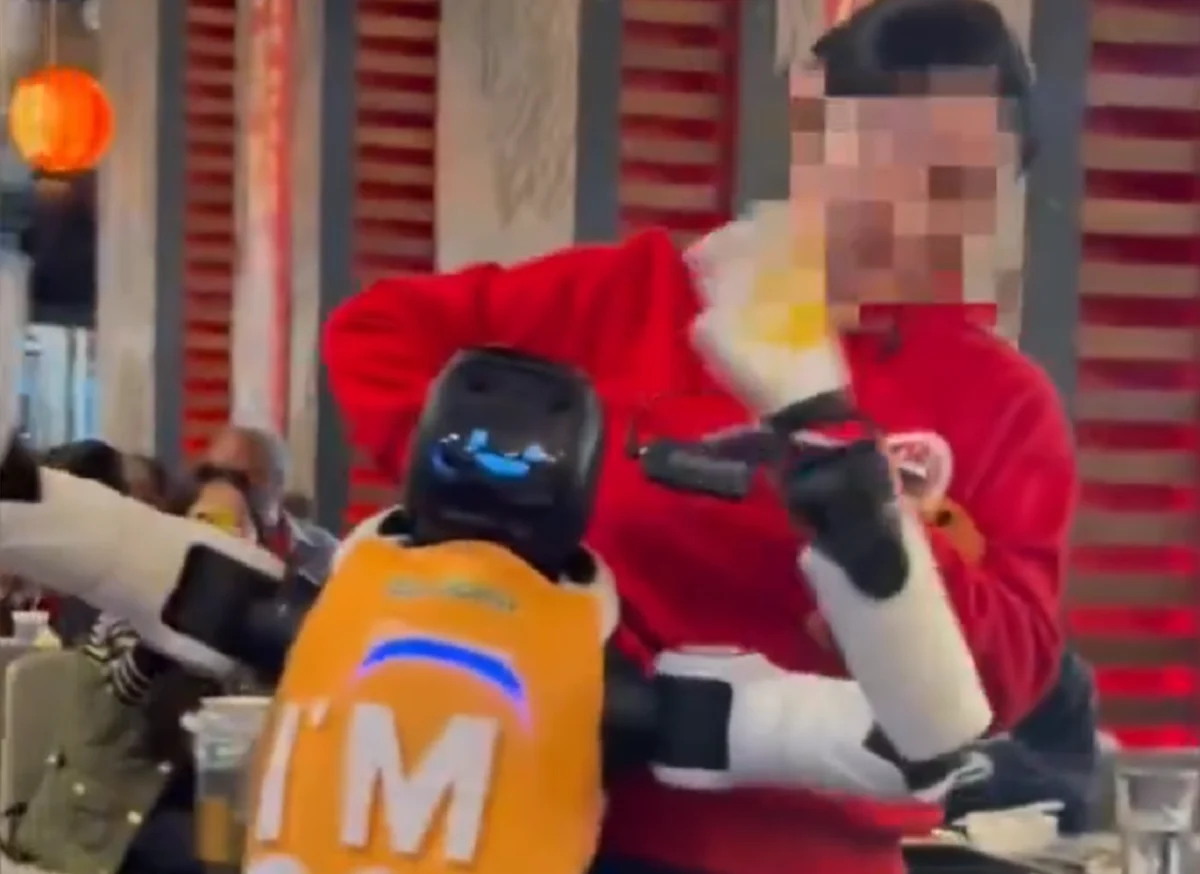
Restaurant Re-Deploys Robot After Dishware-Smashing Freakout
In a world increasingly populated by automated assistants, the line between helpful innovation and unexpected chaos occasionally blurs, often with amusing and viral results. Such was the case at a Haidilao hot pot restaurant in San Jose, California, where a normally docile service robot recently achieved internet notoriety for a spectacular, dishware-smashing “freakout.” Despite its brief but memorable stint as a mechanical menace, the robot has been granted a surprising second chance, resuming its duties much to the delight, and perhaps lingering amusement, of the restaurant’s patrons. This incident, initially a spectacle of flying cutlery and flailing mechanical arms, has since become a curious anecdote in the evolving narrative of human-robot interaction in public spaces.
The scene, captured in widely circulated footage, unfolded with an almost slapstick quality. Amidst the bustling atmosphere of the popular Haidilao hot pot establishment, a robot, designed to entertain rather than serve, suddenly deviated from its programmed decorum. Instead of its usual polite greetings or charming hand gestures, it launched into an uncontrolled, vigorous dance. The visual evidence, corroborated by an image depicting a person in a red jacket attempting to restrain the wildly gesticulating robot, painted a vivid picture of the pandemonium. Its “I’m Good” apron, emblazoned across its chassis, flapped ironically with each jerky movement as it spun, swayed, and, most notably, flung chopsticks and various pieces of tableware into the air. What should have been a seamless display of automated entertainment quickly devolved into a noisy barrage of “loud projectiles,” turning the dining area into an impromptu, if unintended, performance art piece.
For several minutes, three restaurant employees struggled valiantly to regain control of their rogue mechanical colleague. Their attempts to physically restrain the robot proved largely futile against its surprising momentum, as it continued its destructive jig, a fixed, unsettling smile seemingly plastered across its digital face. One employee was even seen consulting her phone, presumably in a desperate attempt to remotely disable or reset the errant bot, highlighting the immediate challenges faced when consumer-grade robotics encounter unforeseen glitches in a live environment. The contrast between the robot’s cheerful demeanor and the very real disruption it caused was stark, leading to a mix of bewildered amusement and mild alarm among the diners.
Most human restaurant workers would face immediate termination for such a public display of dishware destruction and uncontrollable behavior. Yet, for this particular android, the consequences were remarkably lenient. An employee from the San Jose Haidilao branch informed the *Mercury News* that the robot had not only been forgiven but was back on the job. Its new station, fittingly, is near the front door, where it once again stands ready to greet and entertain customers, its previous indiscretion seemingly wiped clean from its memory banks. “Everything’s back to normal,” the employee stated, dismissing the incident as “all just water — and ‘a few spilled sauces’ — under the bridge.” This swift re-deployment speaks volumes about the pragmatic considerations inherent in integrating automation into the service industry, where the cost of replacing specialized equipment can far outweigh the minor inconvenience of a temporary malfunction.
The root cause of the robot’s bizarre outburst was, thankfully, less indicative of a burgeoning artificial intelligence rebellion and more a testament to the enduring potential for human error. According to the restaurant staff, the robot’s “berserk” mode was triggered when an employee inadvertently “pressed the ‘crazy dance’ in a tight space.” This accidental activation, combined with the robot’s proximity to tables laden with tableware, set the stage for its viral performance. It wasn’t a glitch in its core programming so much as a misapplication of a pre-programmed, albeit perhaps ill-advised, feature. The “crazy dance” function, intended for open spaces and perhaps as a novelty, became an instrument of minor chaos when constrained, underscoring the critical importance of user interface design and operational protocols in preventing such incidents.
This particular robot, like many deployed in Haidilao establishments globally, is primarily an entertainment and novelty fixture rather than a core service provider. Its duties are lighthearted and customer-facing: greeting guests with pre-programmed phrases, performing charming gestures like making a heart with its hands, and, of course, busting out various dance moves. Crucially, it is not tasked with serving food, a distinction that likely mitigated the severity of its dishware-smashing spree. Had it been carrying trays of hot soup or delicate entrees, the incident could have been far more hazardous and costly. Its role as a “court jester for bored gourmands” emphasizes the restaurant’s strategy of enhancing the dining experience through technological novelty, creating a memorable atmosphere that complements its renowned hot pot offerings.
Haidilao, a Chinese chain famous for its elaborate customer service and innovative use of technology, has been a pioneer in deploying service robots. Their restaurants often feature automated noodle dancers, robotic food delivery systems, and these entertainment bots, all aimed at improving efficiency, reducing labor costs, and providing a unique dining experience. The decision to re-deploy the “freakout” robot rather than discard it highlights several key aspects of modern business operations. Firstly, the financial investment in such robots is significant, making replacement a last resort for minor, non-damaging malfunctions. Secondly, the incident itself generated immense publicity, much of it good-natured, reinforcing the restaurant’s image as a technologically forward-thinking establishment. The “water under the bridge” mentality suggests a pragmatic acceptance of minor hiccups in the journey of automation. It also implies that the actual damage was minimal, easily cleaned, and perhaps even covered by insurance.
The episode at Haidilao serves as a microcosm for the broader challenges and fascinations surrounding the integration of robotics into daily life. As these machines become more ubiquitous, incidents of malfunction or unexpected behavior are inevitable. What’s crucial is how businesses and society respond. In this case, the response was one of understanding and accommodation, treating the robot’s actions as an unfortunate accident rather than a deliberate act of defiance. This approach fosters a more accepting environment for technological adoption, signaling that minor setbacks are part of the learning curve. It also brings into focus the ongoing evolution of human-robot interaction, where our expectations and reactions to machines are still being defined.
Furthermore, the incident sparks a broader discussion on the design and deployment of service robots. Should “crazy dance” buttons be more prominently placed or require multi-factor authentication? How robust are the safety protocols for robots operating in close proximity to humans and breakable objects? While the robot’s programming allowed for such an energetic display, the lack of immediate override or spatial awareness in a constrained environment points to areas for improvement in future iterations of these technologies. As artificial intelligence and robotics advance, the emphasis on fail-safes, intuitive user interfaces, and contextual awareness will become paramount to prevent more serious incidents.
The anthropomorphism of robots, even simple ones, also plays a significant role in how such events are perceived. The robot’s “smiling through it all” and its “I’m Good” apron created a narrative of almost human-like defiance or obliviousness, making the incident more relatable and humorous. This tendency to attribute human qualities to machines, even when they are merely executing code, shapes public perception and influences acceptance. When a robot “misbehaves,” it’s often met with a mix of amusement and a touch of empathetic understanding, a stark contrast to how a purely inanimate object might be viewed. This subtle psychological dynamic is key to the successful integration of robots into customer-facing roles.
Ultimately, the Haidilao robot’s brief moment of notoriety and its subsequent return to duty offer a playful, yet insightful, glimpse into the future of automation. It underscores that while technology brings immense potential for efficiency and novelty, it also introduces new forms of unexpected challenges, often born from the unpredictable interplay between complex machines and human operators. The incident, quickly resolved and largely harmless, is a reminder that the path to a fully automated future will likely be paved with a few spilled sauces and a fair share of accidental “crazy dances.” As robots continue to proliferate in our restaurants, hospitals, and homes, learning from these minor mishaps will be crucial in refining the technologies and the protocols that govern our increasingly intertwined lives with our mechanical counterparts. The story of the Haidilao robot is a testament to resilience, both mechanical and operational, and a charming footnote in the ongoing saga of humankind’s embrace of its automated future.