anjir abdul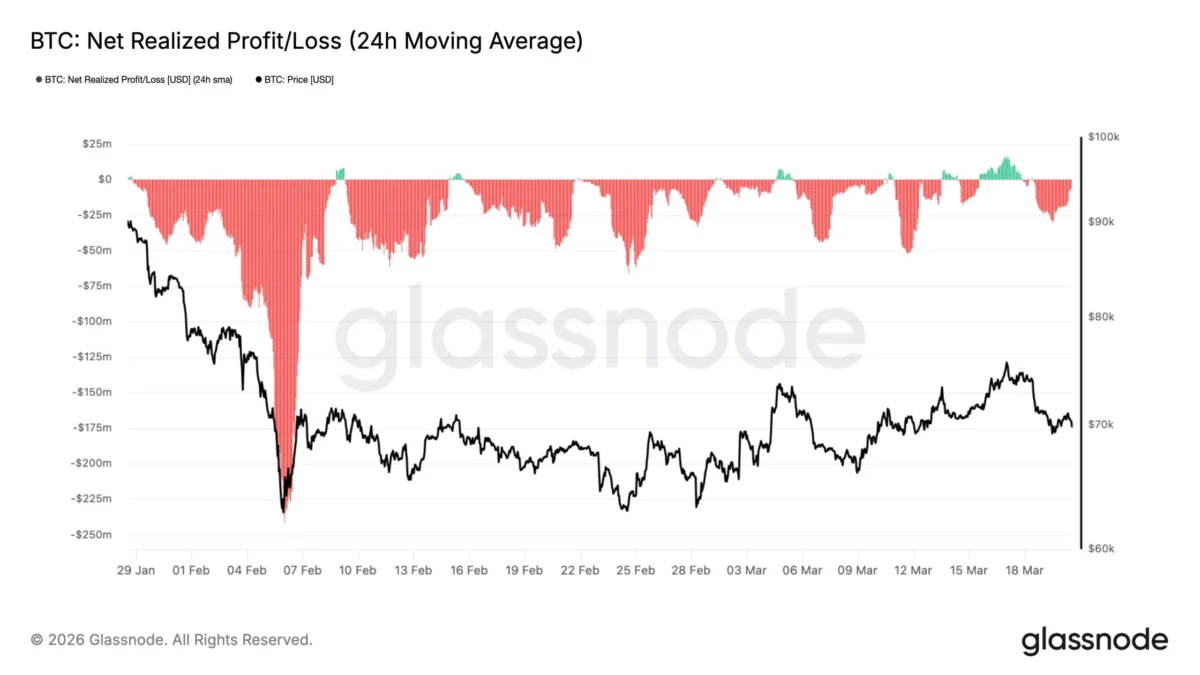
The global financial landscape is currently navigating a tempestuous period, marked by significant capital shifts and heightened geopolitical tensions, directly impacting both traditional markets and the burgeoning cryptocurrency sector. After what began as a promising start to the week, Bitcoin (BTC) has experienced a notable downturn, shedding nearly 5% of its value in recent trading. This retreat mirrors a broader market correction, with major U.S. indices such as the S&P 500, DOW, and Nasdaq also recording losses, alongside a decline in gold prices, which typically acts as a safe-haven asset. In stark contrast to these declining asset classes, crude oil has surged impressively, climbing 7.30% in a short span and registering a staggering 53% increase since the onset of the US and Israel-Iran war on February 28. This dramatic divergence underscores a coordinated de-risking strategy by investors, as escalating global uncertainties compel a rapid recalibration of portfolios across nearly all asset classes.
The prevailing market weakness serves as a stark indicator of a systemic shift in capital flows, profoundly influenced by the escalating conflict in the Middle East. This coordinated withdrawal of funds is particularly evident in the substantial uptick in outflows from prominent exchange-traded funds (ETFs) tracking the S&P 500 (SPY) and Nasdaq 100 (QQQ). Such movements are a clear signal that traders are actively de-risking, opting for caution amidst an increasingly unpredictable global environment. Investors, facing heightened uncertainty regarding the potential for further escalation, supply chain disruptions, and inflationary pressures exacerbated by rising energy costs, are choosing to cut exposure to risk assets. The implications of this widespread capital exodus are far-reaching, affecting everything from equities and commodities to the relatively nascent digital asset market, challenging the narrative of Bitcoin as a truly uncorrelated asset.
A Historic Capital Exodus Across Investment Markets

Adding a quantitative dimension to this narrative, The Kobeissi Letter, a respected voice in financial analysis, recently reported an unprecedented combined outflow of $64 billion from the S&P 500 ETF (SPY) and Nasdaq 100 ETF (QQQ) over the past three months. This figure represents the largest outflow on record for these bellwether instruments, signifying a profound and rapid shift in investor sentiment away from these heavily weighted technology and broad-market equity funds. To put this into perspective, this record withdrawal completely reverses a substantial $50 billion inflow witnessed just a few months prior in November, effectively wiping out previous bullish momentum and indicating a dramatic reversal in market confidence. More alarmingly, these outflows now constitute approximately 5% of the total assets under management for these crucial ETFs, suggesting a significant erosion of capital and a deep-seated apprehension among institutional and retail investors alike. The sheer scale of this capital flight from some of the world’s most liquid and widely held assets paints a concerning picture for market stability and future growth prospects, reflecting a profound shift in risk appetite.
Mirroring the broader market’s vulnerability, spot Bitcoin ETFs, once hailed as a gateway for institutional capital into the crypto space, have also experienced a significant setback. These newly launched funds recorded a cumulative $253 million in outflows over the past two days, indicating that even the digital gold narrative struggles to withstand the current risk-off sentiment permeating global markets. While the monthly ETF flows for Bitcoin remain positive at $1.48 billion, this figure must be viewed in the critical context of the substantial $6.3 billion in cumulative outflows that occurred between November and February. This preceding period of sustained withdrawals highlights a fragile recovery in investor demand, suggesting that recent inflows might be less robust and sustainable than they appear. The underlying investor appetite for Bitcoin, particularly from institutional players, remains tenuous in the face of macro headwinds and geopolitical instability. The initial euphoria surrounding the launch of these ETFs appears to be giving way to a more cautious, and at times, bearish outlook as the novelty wears off and market realities set in.
Further reinforcing the notion of a market under stress, data from Glassnode, a leading on-chain analytics firm, indicates that the Bitcoin market is struggling considerably to absorb the persistent selling pressure. The metric of net realized profit-taking, which measures the aggregate profit or loss realized by all entities that moved their coins on-chain, briefly accelerated to approximately $17 million per hour (on a 24-hour average basis). This surge in profit-taking activity, often a precursor to price corrections and indicative of profit-taking by short-term holders, rapidly lost momentum. Consequently, Bitcoin’s price slipped back below the critical $70,000 threshold, a psychological and technical resistance level. Glassnode’s analysis underscored the severity of the situation, stating, "Broader geopolitical uncertainty appears to be compressing demand depth, limiting the market’s capacity to absorb even moderate realization events." This implies that even relatively small selling events can have a disproportionately large impact on price due to a lack of willing buyers at current levels, a classic sign of market illiquidity and weak conviction, where fear outweighs fundamental value.
War-Influenced Market Cycles Shape Bitcoin Price Action

The current market movements, particularly Bitcoin’s reaction, are increasingly being framed by market participants through the lens of past geopolitical events. Analysts are drawing compelling parallels between the ongoing US and Israel-Iran war and the Russia-Ukraine conflict that erupted in 2022. Both events, coincidentally occurring in February four years apart, offer invaluable insights into how sudden geopolitical shocks can reshape market dynamics and investor behavior across asset classes.
Crypto commentator Carlitosway highlighted this historical context, noting that following Russia’s full-scale invasion of Ukraine on February 24, 2022, Bitcoin initially experienced a sharp sell-off as fear gripped global markets. However, this was followed by a remarkable 24% relief bounce over the subsequent four weeks, as some investors perhaps sought safe havens or speculated on a quick resolution. Yet, this bullish momentum proved fleeting and unsustainable. By November 2022, Bitcoin had plummeted another 64% from its post-invasion peak, illustrating the long-term corrosive effects of sustained geopolitical instability, inflationary pressures, and tightening monetary policies on risk assets. This pattern suggests that initial rallies in times of crisis can often be short-lived and driven by short-term speculation, followed by more prolonged periods of decline or consolidation as the full economic ramifications unfold.
A strikingly similar sequence appears to be unfolding this month. Following the commencement of the current Middle East conflict, Bitcoin initially rallied nearly 10% at one stage last week, demonstrating a knee-jerk reaction often seen in the early stages of such events. However, this momentum has since dissipated, and the price has begun to retrace, mirroring the post-Ukraine invasion pattern of a short-lived recovery followed by a struggle for sustained upside. Carlitosway attributed this renewed weakness to a confluence of factors: sustained pressure on overall market liquidity, which makes it harder for assets to find willing buyers without significant price concessions; rapidly rising energy costs, directly linked to the surge in crude oil prices, which fuels inflation and reduces disposable income for investment; and continued forced selling during periods of market stress, as investors are compelled to liquidate assets to cover other losses or meet margin calls in other parts of their portfolios. All these elements collectively contribute to a reduction in follow-through demand for Bitcoin, preventing a sustained recovery and pushing its price downwards.
This emerging pattern strongly suggests that the Bitcoin market, and indeed the broader financial system, may be entering a more extended stabilization phase. In such a phase, the recovery path is typically protracted and challenging, characterized by heightened volatility, choppy price action, and a constant struggle between buyers and sellers, often without clear directional trends. A true recovery requires significant time for capital to rebuild and for the prevailing selling pressure to fully abate, alongside a return of broader market confidence.

Adding to this cautious outlook, crypto analyst Finish expressed the belief that a meaningful recovery for Bitcoin might only materialize after the price finds a bottom around the $55,000 mark. This technical level, if reached, could represent a significant re-evaluation point for the asset, potentially flushing out weaker hands and establishing a firmer base. Finish articulated the overarching sentiment succinctly: "I frankly think that until the Iran war is settled, it’s gonna be hard for $BTC to rise. The environment is risk off, the SPX lost trillions in capitalisation, which leads me to a more neutral stance." This perspective highlights the direct correlation between geopolitical stability and market confidence, particularly for assets perceived as riskier, like cryptocurrencies. The analyst’s "neutral stance" reflects the widespread uncertainty, where the traditional "buy the dip" mentality is tempered by profound macro concerns. The sheer scale of capital lost in the S&P 500, measured in trillions, underscores the gravity of the situation and the reluctance of investors to allocate funds to speculative assets.
The intricate interplay between geopolitical events, macroeconomic indicators, and investor psychology is currently dictating the trajectory of global markets. While Bitcoin has often been touted as a hedge against traditional financial instability and a form of "digital gold," its recent performance, especially its correlation with broader equity market downturns and susceptibility to geopolitical risk-off sentiment, challenges this narrative. The dramatic outflows from SPY and QQQ ETFs, coupled with the struggles of spot Bitcoin ETFs, point to a universal flight to safety, or at least a flight from risk, rather than a specific rotation into digital assets. This suggests that in severe periods of global uncertainty, even Bitcoin is viewed primarily as a risk asset, subject to the same pressures as traditional equities.
Looking ahead, the resolution of the Middle East conflict will undoubtedly be a primary catalyst for a potential shift in market sentiment. However, even with de-escalation, the lingering effects of high energy prices, persistent inflation, and potentially tighter monetary policies from central banks trying to combat these inflationary pressures could continue to dampen investor enthusiasm for risk assets. The path to recovery for Bitcoin and the wider market appears to be paved with uncertainty, demanding patience and a careful watch on both geopolitical developments and their subsequent economic repercussions. Investors will need to keenly observe liquidity conditions, the capacity of markets to absorb selling events, and the overall macroeconomic environment to gauge when a true bottom might be in sight for Bitcoin and other risk-on assets. The current market environment serves as a potent reminder that in an interconnected global economy, no asset exists in isolation, and even decentralized cryptocurrencies are deeply intertwined with the broader geopolitical and macroeconomic fabric.
This article does not contain investment advice or recommendations. Every investment and trading move involves risk, and readers should conduct their own research when making a decision. While we strive to provide accurate and timely information, Cointelegraph does not guarantee the accuracy, completeness, or reliability of any information in this article. This article may contain forward-looking statements that are subject to risks and uncertainties. Cointelegraph will not be liable for any loss or damage arising from your reliance on this information.