Faris Adani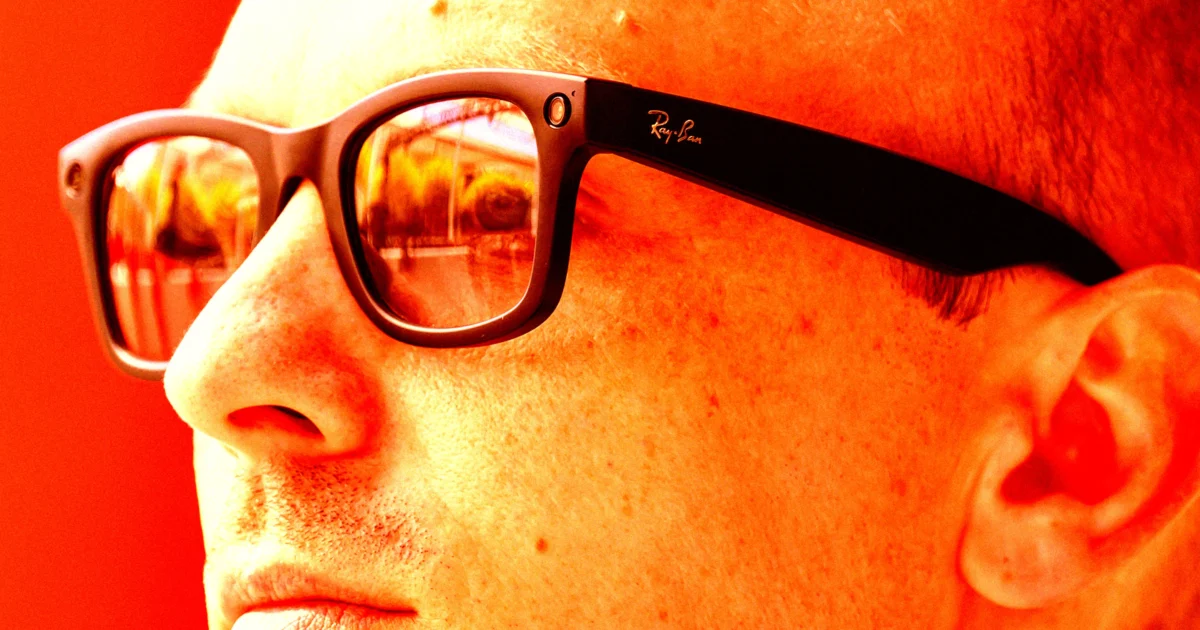
The sanctity of the courtroom, a bastion of truth and justice, is facing an unprecedented challenge from the rapid advancement of wearable technology, particularly smart glasses. A recent case in the UK High Court has brought this issue sharply into focus, revealing how individuals are attempting to subvert legal proceedings using discreet devices capable of real-time communication and information access. This incident serves as a stark warning to judicial systems worldwide, highlighting the urgent need for updated protocols to safeguard the integrity of legal processes.
The case in question involved Laimonas Jakstys, a co-owner of a Lithuanian company, who appeared before Judge Raquel Agnello KC in January to contest his firm’s inclusion on an insolvency list. What began as a routine cross-examination quickly devolved into a testament to the cunning, yet ultimately flawed, use of technology to gain an unfair advantage. Judge Agnello, a seasoned legal professional, noticed something amiss almost immediately. Jakstys, while wearing a pair of smart glasses, exhibited an unusual pattern during his testimony: he "seemed to pause quite a bit" before formulating answers, a hesitancy that struck the judge as peculiar given the presence of a Lithuanian interpreter ready to bridge any language barrier.
This astute observation led Judge Agnello to instruct Jakstys to remove the smart glasses. The immediate change in his demeanor and response pattern was telling. Once the glasses were off, Jakstys’s ability to answer questions appeared to diminish significantly. The judge’s written decision meticulously documented her findings: "In my judgment, the smart glasses were clearly connected to his mobile phone during his cross examination because no voice was heard out loud until his smart glasses were removed and disconnected from his glasses. There was clearly someone on the mobile phone talking to Jakstys." This statement unequivocally pointed to external assistance being relayed directly to Jakstys through his wearable device.
Further investigation into Jakstys’s phone records revealed multiple calls to a contact cryptically labeled "abra kadabra." When confronted, Jakstys offered the improbable explanation that "abra kadabra" was merely a "taxi driver." Judge Agnello, however, remained unconvinced by this flimsy alibi, emphasizing that the identity of the mysterious caller was secondary to the undeniable fact that Jakstys was "being assisted or coached." The cumulative effect of these findings was devastating to Jakstys’s credibility. "Not only have I held that Jakstys was untruthful in denying his use of the smart glasses and his calls to abra kadabra," Judge Agnello concluded, "but the effect of this is that his evidence is unreliable and untruthful."
The judge’s detailed account painted a clear picture of how Jakstys’s performance deteriorated without the illicit aid. "Once Mr Jakstys was no longer had his smart glasses, he hesitated quite a bit before providing answers to questions," her write-up stated. "Frequently, he was asked a question and he would pause for some time before asking for the question to be repeated or he would say he did not understand the question. This occurred frequently when it was clear to me he simply did not know what his reply should be." Ultimately, Judge Agnello unequivocally rejected his testimony: "In conclusion, I reject Mr Jakstys evidence in its entirety. He was untruthful in relation to his use about the smart glasses and in being coached through the smart glasses. He had a blatant disregard for the signing of the disclosure certificate and carrying out his disclosure obligations."
The Jakstys case is not an isolated incident but rather a prominent example of a growing problem. The proliferation of smart glasses, such as Meta’s Ray-Ban eyewear, equipped with largely concealed cameras, microphones, and speakers, has become a significant "headache" for those presiding over court proceedings. These devices can silently record, transmit, and receive information, fundamentally undermining the principles of a fair trial and the integrity of witness testimony.
This technological infiltration into the courtroom has already drawn the ire of the judiciary at the highest levels. Just last month in Los Angeles, Meta CEO Mark Zuckerberg himself faced a stern rebuke from Judge Carolyn Kuhl during a social media safety trial. Zuckerberg, wearing a pair of his company’s smart glasses, was met with an immediate and unequivocal threat from Judge Kuhl, who declared she would hold anyone using such devices in "contempt of the court." "This is very serious," she added, underscoring the gravity with which judges view any technology that could compromise the judicial process.
The risks extend far beyond mere recording. The most insidious threat posed by smart glasses is the potential for real-time communication. A witness or defendant on the stand could receive instant instructions, facts, or even pre-prepared answers from outside counsel, a legal assistant, or, perhaps most alarmingly, an AI chatbot. Imagine a scenario where a sophisticated AI, fed with case details and legal precedents, could whisper strategic advice or factual corrections directly into a wearer’s ear, subtly guiding their testimony during a critical cross-examination. Such a capability would utterly dismantle the adversarial system, rendering cross-examination meaningless and making it nearly impossible to discern genuine testimony from technologically assisted deception.
The ethical and legal dilemmas presented by these devices are multifaceted. Firstly, they directly challenge the concept of a fair trial. The judicial process relies on the spontaneous and unadulterated testimony of witnesses, subject to rigorous cross-examination designed to test credibility and uncover truth. Real-time coaching, whether human or AI-driven, fundamentally corrupts this process, allowing individuals to present rehearsed or externally sourced information as their own, thereby manipulating the court.
Secondly, the act of using such devices in court, especially when concealed, can be construed as contempt of court. Judges hold immense authority to maintain order and uphold the dignity of proceedings. Any attempt to surreptitiously record, transmit, or receive information without explicit permission is a direct affront to that authority and the rules designed to ensure justice. The swift and decisive action taken by Judge Kuhl against Zuckerberg and Judge Agnello against Jakstys underscores this judicial resolve.
Thirdly, there are broader privacy implications. While Jakstys’s case focused on receiving information, the ability of smart glasses to record audio and video without obvious indication raises concerns about unauthorized surveillance within courtrooms. Most jurisdictions have strict rules against recording proceedings without explicit permission, and smart glasses offer a stealthy way to circumvent these regulations, potentially compromising the privacy of participants and the sanctity of closed-door discussions.
The difficulty in detecting these devices further compounds the problem. As smart glasses become more compact, stylish, and integrated into everyday eyewear, distinguishing them from regular glasses becomes increasingly challenging. This places a significant burden on court security and judicial vigilance. Judge Agnello’s ability to spot Jakstys’s deception was a testament to her keen observation skills, but it’s unclear whether every judge or court official will possess the same "wherewithal to spot the offending tech in the court room."
Looking to the future, courts will need to adapt rapidly to this evolving technological landscape. Proactive measures are becoming indispensable. This could include:
- Stricter Screening Procedures: Implementing more rigorous security checks at courtroom entrances, potentially including the mandatory surrender of all smart devices, including smart glasses, before entry.
- Updated Court Rules and Legislation: Developing clear and explicit rules specifically prohibiting the use of smart wearables that can record or transmit information in courtrooms, with severe penalties for non-compliance.
- Technological Countermeasures: Exploring the use of electromagnetic jamming technologies within courtrooms to block cellular and Wi-Fi signals, effectively neutralizing the communication capabilities of smart glasses. However, such measures would need careful consideration to avoid disrupting legitimate legal tools or emergency communications.
- Enhanced Training for Judicial Staff: Educating judges, clerks, and security personnel on how to identify various types of smart wearables and the tell-tale signs of their illicit use.
- Public Awareness Campaigns: Informing the public and legal professionals about the prohibitions and consequences of using smart devices inappropriately in court.
The "arms race" between advancing technology and legal safeguards is inevitable. As devices become more sophisticated and discreet, so too must the methods of detection and prevention. The legal system, inherently traditional and often slow to adapt, is now confronted with a pace of technological change that demands immediate and innovative responses.
Ultimately, incidents like Jakstys’s chip away at the fundamental trust that underpins the judicial system. If witnesses can be coached in real-time, if evidence can be manipulated through technological means, the public’s faith in the fairness and integrity of legal outcomes will erode. The core principle that justice must not only be done but also be seen to be done is jeopardized when the very process can be silently undermined by a pair of seemingly innocuous glasses. The Laimonas Jakstys case serves as a critical wake-up call, emphasizing that courts must remain vigilant and adaptable to ensure that justice, in the age of pervasive technology, remains blind to deceit and fully sighted on truth. The ongoing struggle to balance technological advancement with legal integrity will undoubtedly shape the future of jurisprudence for years to come.