anjir abdul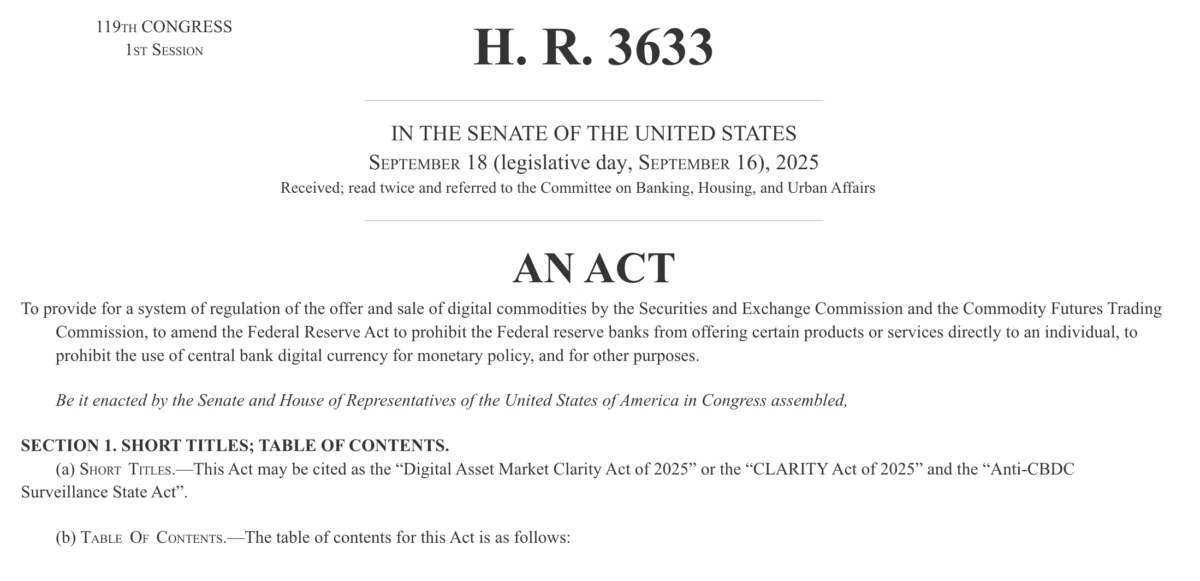
A significant breakthrough appears to have been made in the protracted legislative efforts to regulate the burgeoning cryptocurrency market, with reports indicating a tentative deal has been struck between the White House and US lawmakers regarding stablecoin yield. This pivotal agreement could finally pave the way for the advancement of the long-awaited CLARITY crypto market structure bill, a piece of legislation deemed crucial for providing regulatory certainty to the digital asset space.
According to a Friday Politico report dated March 20, 2026, Republican Senator Thom Tillis and Democratic Senator Angela Alsobrooks, both influential members of the Senate Committee on Banking, Housing, and Urban Affairs, have reached an "agreement in principle." This development signals a potential resolution to one of the most contentious issues surrounding the Digital Asset Market Clarity Act of 2025, commonly known as the CLARITY Act: whether stablecoin issuers should be permitted to offer yield to token holders. The bipartisan nature of this agreement, involving key figures from both sides of the aisle and the executive branch, underscores the growing urgency and political will to establish a comprehensive regulatory framework for digital assets in the United States.
Senator Alsobrooks emphasized the dual objectives of the proposed deal, stating, "I think what it will do is to allow us to protect innovation, but also gives us the opportunity to prevent widespread deposit flight." Her remarks highlight the delicate balance lawmakers are attempting to strike: fostering technological advancement and economic opportunity within the crypto sector while simultaneously safeguarding the stability of the traditional financial system. A core element of this compromise, she revealed, is a provision that prohibits stablecoin yield on "passive balances." This specific detail addresses a primary concern raised by traditional banks and some regulators, who fear that high-yield stablecoin offerings could draw substantial capital away from conventional bank deposits, potentially destabilizing the banking sector. The distinction between "passive" and potentially "active" or "utility-driven" balances will be critical in defining the scope of this prohibition and its impact on the broader crypto ecosystem.

Despite the optimism, specific details of this prospective deal remain largely under wraps. Senator Tillis, recognizing the complexity of the issue and the diverse interests involved, indicated that the agreement would need to be thoroughly vetted by the crypto industry before it can be finalized. This step is crucial for ensuring that the legislation is practical, enforceable, and does not inadvertently stifle innovation or create unintended consequences for a rapidly evolving industry. Cointelegraph reached out to the White House for further details on the prospective deal but did not receive a response by the time of publication, underscoring the preliminary nature of the announcement and the ongoing discussions.
The news of this breakthrough follows months of intense negotiations and periods of stagnation for the CLARITY Act. Wyoming Senator Cynthia Lummis, a vocal advocate for digital asset policy on Capitol Hill, had recently expressed palpable optimism. Speaking at the DC Blockchain Summit on Wednesday, Senator Lummis declared, "We are so close" to passing a comprehensive crypto regulatory framework, a sentiment echoed by her spokesperson who told Cointelegraph on Wednesday that a deal was expected to materialize in "the next few days." The spokesperson further noted that Senator Lummis was actively working to hammer out "ethics language" in the bill, suggesting that beyond the economic implications, there are also considerations for market integrity and consumer protection being addressed.
The CLARITY Act, formally known as the Digital Asset Market Clarity Act of 2025, represents a cornerstone of proposed crypto legislation. Its passage was widely anticipated, especially after the GENIUS stablecoin framework was successfully signed into law. The GENIUS Act provided a foundational regulatory structure for stablecoins themselves, but the CLARITY Act aimed to delve deeper into the broader market structure, including how these digital assets interact with traditional finance and whether they could generate yield. However, the bill unexpectedly stalled in January, primarily due to significant concerns voiced by major industry players. Crypto exchange Coinbase, among others, had raised objections, particularly regarding the contentious issue of whether stablecoin issuers should be allowed to share yield with token holders. Critics argued that prohibiting yield could disadvantage U.S. crypto companies, pushing innovation offshore, while others warned that allowing unrestricted yield could create systemic risks.
The banking industry has been a leading voice in opposing yield-bearing stablecoins, citing grave concerns over potential "deposit flight" from traditional banks. Bank deposits typically offer yields far below 1%, making them significantly less attractive than the potentially higher returns promised by some stablecoin products. Bankers also fear an "erosion of banking market share," arguing that if stablecoins can offer competitive yields, they could effectively become alternative banking systems, circumventing existing regulations and siphoning away capital. This perspective frames the stablecoin yield debate as a direct competition for consumer funds and a threat to the established financial order.

Conversely, Patrick Witt, the executive director of the White House Council of Advisors for Digital Assets, has previously asserted that these banking concerns are "overblown." Witt has argued that, rather than undermining the banking system, the legalization and regulation of dollar-pegged yield-bearing stablecoins could actually attract a "wave of fresh capital" into the U.S. banking industry. His argument posits that by integrating these innovative financial products into a regulated framework, banks could participate in and benefit from the growth of the digital asset economy, potentially offering new services and attracting a new demographic of investors. This perspective highlights the transformative potential of crypto to evolve into a complementary force rather than a disruptive one, provided the right regulatory environment is established.
The "agreement in principle" marks a critical inflection point, suggesting that the White House and key lawmakers have found a middle ground that addresses both the industry’s desire for innovation and the traditional finance sector’s concerns about stability. The prohibition on yield for "passive balances" appears to be a compromise designed to mitigate the risk of mass deposit migration while potentially allowing for yield generation in other, more actively managed or utility-driven stablecoin applications. The specific definitions of "passive" versus "active" will be paramount in determining the practical impact on the stablecoin market and the broader DeFi ecosystem.
The legislative journey for the CLARITY Act, even with this deal, is far from over. An "agreement in principle" still needs to be translated into specific legislative text, pass through relevant committees, and then secure votes in both the full Senate and the House of Representatives. Given the bipartisan nature of the current agreement, the chances of navigating these hurdles have significantly improved. However, the requirement for the crypto industry to "vet the agreement" before finalization suggests that further refinements and negotiations may be necessary to ensure broad stakeholder buy-in. The ongoing discussions around "ethics language" also underscore the complexity of crafting legislation for a rapidly evolving technological domain, where issues of market manipulation, consumer protection, and data privacy are constant considerations.
This potential deal carries immense implications for the future of digital assets in the United States. A clear regulatory framework for stablecoins, especially concerning yield, could unlock significant institutional investment, foster greater adoption of digital payment systems, and solidify the U.S.’s position as a leader in the global crypto economy. Conversely, continued uncertainty or an overly restrictive framework could push innovation and capital to more accommodating jurisdictions. The CLARITY Act, by defining how digital assets are structured and regulated, will play a crucial role in shaping investor confidence, fostering market integrity, and determining the long-term trajectory of the cryptocurrency industry within the established financial landscape. The coming weeks will reveal whether this early agreement can indeed translate into the clarity and stability that the digital asset market so desperately seeks.