Faris Adani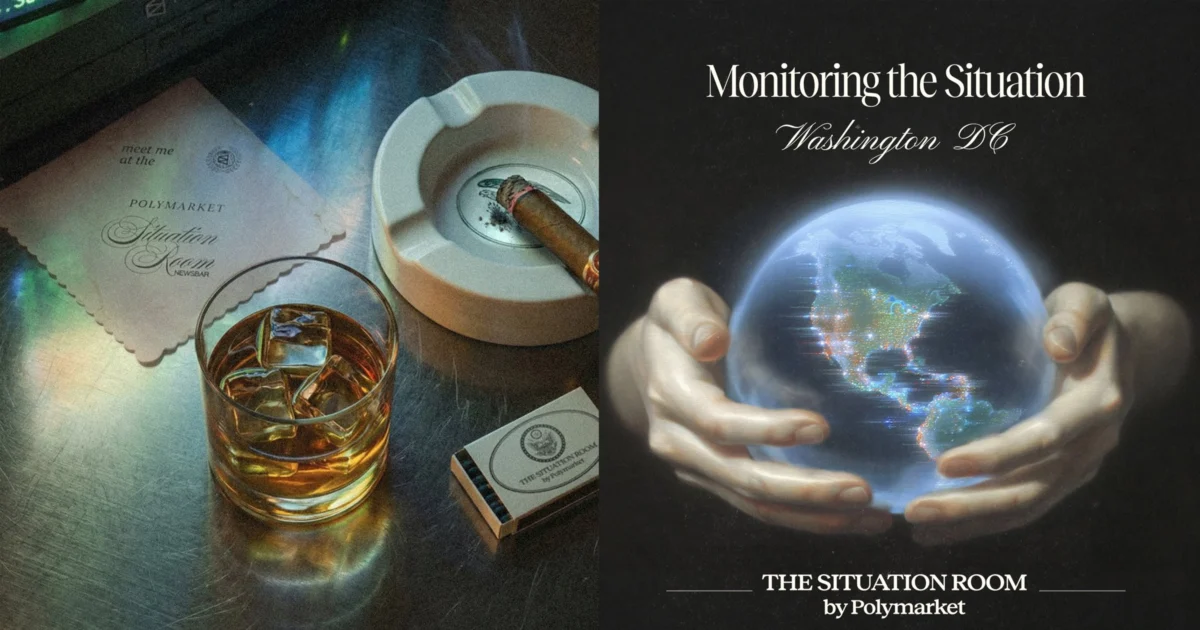
Polymarket via X
Sign up to see the future, today
Can’t-miss innovations from the bleeding edge of science and tech
Any seasoned bartender understands a cardinal rule of hospitality: keep the news off the screen. In countless American taverns and pubs, it’s an unwritten law that unless a truly monumental event is unfolding, the airwaves are reserved for sports, local programming, or nothing at all. The rationale is simple: patrons seek an escape, not a grim reminder of global instability. Yet, in a brazen defiance of this industry wisdom, Polymarket, the controversial prediction market platform, has flung open the doors to what it terms the “world’s first bar dedicated to monitoring the situation” in Washington D.C., christened ‘The Situation Room.’ This audacious move signals a disturbing escalation in the gamification of global events, inviting patrons to imbibe and wager on everything from humanitarian crises to political upheaval, effectively turning geopolitical tension into a spectator sport.
Polymarket’s core business model is rooted in allowing users to gamble on the outcomes of real-world events, a practice that has long drawn scrutiny for its ethical implications. From active military conflicts and volatile geopolitical developments to the results of elections and economic indicators, the platform transforms complex, often tragic, realities into speculative contracts. Users buy and sell shares corresponding to the likelihood of an event occurring, profiting if their prediction aligns with reality. This creates a perverse incentive structure where individuals can financially benefit from war, famine, or political turmoil, raising serious questions about the moral compass of such ventures. The company, operating in the burgeoning yet contentious realm of decentralized finance (DeFi), has positioned itself at the vanguard of a movement that blurs the lines between information arbitrage and outright gambling on human suffering.
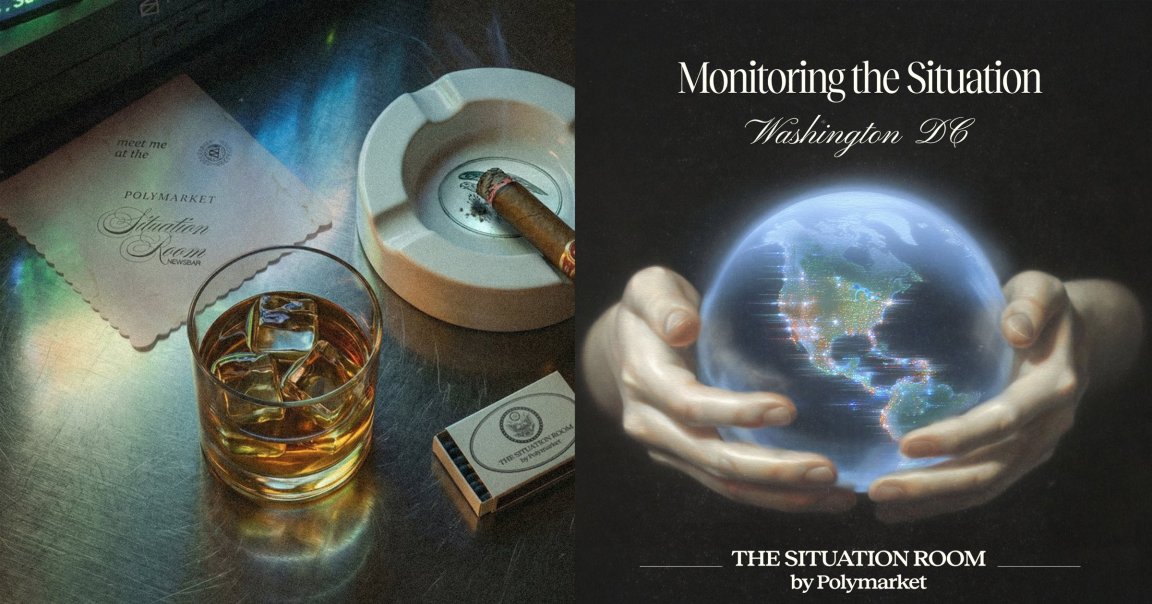
The concept of ‘The Situation Room’ is as audacious as it is unsettling. Polymarket’s X (formerly Twitter) announcement, accompanied by slick mock-up images, paints a picture of an establishment completely enmeshed in a digital tapestry of real-time data. Walls are envisioned plastered with live news feeds, constantly updating stock tickers, global flight radar maps, and, crucially, Polymarket’s own betting screens. The company’s description, “imagine a sports bar… but just for situation monitoring — live X feeds, flight radar, Bloomberg terminals, and Polymarket screens,” attempts to normalize this environment by likening it to a familiar recreational space. However, the juxtaposition is stark: instead of cheering for touchdowns, patrons are implicitly encouraged to monitor and wager on the unfolding drama of international crises, economic shifts, and political battles, all while potentially under the influence of alcohol. This is not mere passive observation; it is an active immersion into a market that thrives on uncertainty and, often, human misfortune. The image accompanying the announcement, featuring a whiskey and cigar next to a napkin reading “meet me at the POLYMARKET Situation Room NEWSBAR,” further underscores the attempt to frame this as a sophisticated, almost conspiratorial, hub for informed speculation, rather than what critics might deem a digital gambling den.
Strategically located just two blocks from the White House, the temporary takeover of Proper Twenty-One in Washington D.C. is no accident. This proximity to the epicenter of global power is a clear statement, aiming to attract a demographic deeply entrenched in, or keenly observing, policy and politics. It’s a calculated move to legitimize the platform by associating it with serious discourse, even as it facilitates gambling on the very events being discussed. This venture marks the latest in a series of aggressive, attention-grabbing marketing stunts by Polymarket. Earlier in 2026, the company engaged in a tit-for-tat marketing battle with rival prediction market platform Kalshi. After Kalshi announced free pop-up grocery stores in New York City, a stunt designed to lampoon a local politician’s policy, Polymarket swiftly retaliated by opening a free grocery store of its own in Manhattan. These stunts, while generating buzz, highlight a company willing to push boundaries and court controversy in its pursuit of market share and public recognition.
We’re excited to announce ‘The Situation Room’ by Polymarket is coming to Washington, D.C.
The world’s first bar dedicated to monitoring the situation. 🧵 pic.twitter.com/UbdHUT5u2k
— Polymarket (@Polymarket) March 18, 2026
The regulatory landscape surrounding Polymarket has undergone a significant transformation, making this D.C. bar opening particularly timely. For years, Polymarket operated largely in the shadows for US citizens, facing legal challenges and restrictions. However, late in 2025, the platform received full regulatory approval from the Commodity Futures Trading Commission (CFTC), a pivotal moment that legalized its operations for American users. This approval, however, came with a caveat: US citizens are now required to submit extensive Know Your Customer (KYC) information, including their full name, address, and social security number, before they can engage in trading. This “tighter leash,” as the article notes, stands in stark contrast to international users who can often participate using anonymous cryptocurrency wallets, raising questions about equitable access and the true extent of regulatory oversight. While this legitimizes Polymarket in the eyes of the US government, it also potentially opens the floodgates for a broader American audience to engage in what many consider morally ambiguous speculation, now with the veneer of official sanction.
The ethical quagmire deepens when considering the nature of the markets offered. While prediction markets are sometimes lauded as tools for aggregating information and forecasting outcomes more accurately than traditional polls, their application to human tragedy and conflict crosses a line for many. Betting on the duration of a war, the outcome of a humanitarian crisis, or the specifics of a political assassination attempt (hypothetically, if such markets were allowed) transforms human suffering into a commodity for profit. This can foster a cynical detachment, where global events are viewed less as matters of grave concern and more as opportunities for financial gain. The term “war profiteers” is not lightly invoked; it suggests an individual or entity deriving benefit from conflict, and Polymarket’s facilitation of bets on such events inherently aligns with this criticism, even if the individual stakes are small. The potential for problem gambling is also exacerbated in an environment like ‘The Situation Room,’ where alcohol consumption, constant exposure to market fluctuations, and the high-stakes nature of global events could combine to create a highly addictive and destructive experience.
Initial reactions to ‘The Situation Room’ announcement on X were predictably polarized. While some commenters expressed intrigue, viewing it as a novel social experiment or a unique hub for real-time information, a significant portion voiced deep concern and outright condemnation. Critics were quick to draw parallels to gambling establishments, with one commenter succinctly stating, “New age casino. Get people drunk so they place more polymarket bets lol.” This comment encapsulates the fear that the bar isn’t just a place for “situation monitoring,” but a calculated attempt to lower inhibitions and encourage more reckless wagering. Another, more caustic, remark questioned the ethical boundaries entirely: “Can we bet on when the bar goes out of business or how many women get roofied there.” While extreme, this sentiment underscores a profound discomfort with the commodification of serious news and the potential for a morally compromised environment. The casual nature of these criticisms highlights a broader societal unease with ventures that seemingly profit from the world’s misfortunes, especially when packaged as a recreational activity. The silence from Polymarket to requests for comment only reinforces the perception that they are unfazed by the ethical storm brewing around their audacious expansion.
In conclusion, Polymarket’s ‘Situation Room’ is more than just a bar; it is a provocative cultural statement that pushes the boundaries of how society engages with global events and the morality of profiting from them. By creating a physical space dedicated to the gamification of geopolitical tension, economic shifts, and even potential humanitarian crises, Polymarket is not merely offering a new entertainment venue but is actively normalizing a form of speculation that many find deeply troubling. This venture invites patrons to shed the traditional reverence for serious news, transforming it instead into a live-action betting spectacle. As the lines blur between informed analysis and speculative gambling, and as the company enjoys newfound regulatory legitimacy, the opening of ‘The Situation Room’ in the heart of Washington D.C. serves as a stark reminder of the evolving and often controversial landscape of prediction markets, where the pursuit of profit increasingly treads on sensitive ethical ground. The future of global events, it seems, is now a commodity to be wagered upon, served alongside a whiskey.
More on Polymarket: Crypto Market Descending Into Chaos