isnaini azizah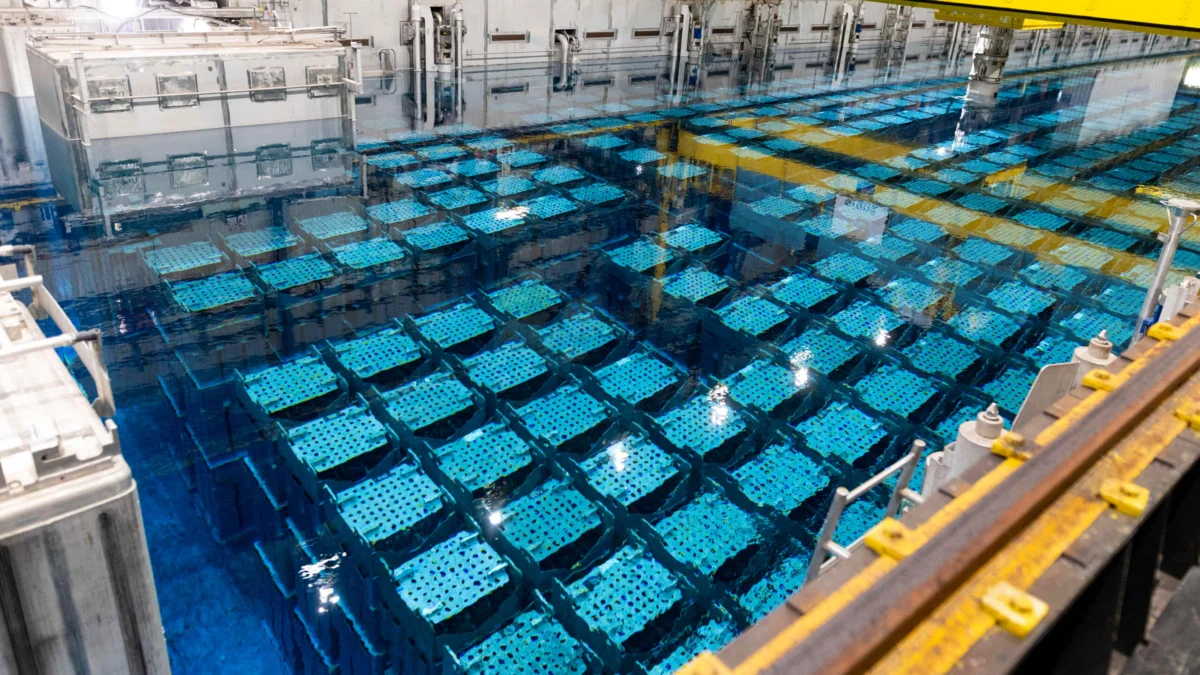
The allure of transforming waste into valuable resources is a persistent fascination, whether it’s breathing new life into discarded EV batteries, extending the lifespan of solar panels, or finding utility in spent nuclear fuel. However, when it comes to the complex realm of nuclear energy, the question of effectively recycling spent fuel presents a formidable set of challenges that have historically limited its widespread adoption, despite its potential to reduce both waste volume and the demand for new uranium mining. While the concept of a closed nuclear fuel cycle, where waste is reprocessed and reused, promises a more sustainable approach, economic realities, technical hurdles, and strategic considerations create a compelling case for the world’s current hesitance to fully commit to extensive nuclear waste recycling.
The fundamental challenge with nuclear waste lies in its inherent radioactivity and the stringent safety protocols required for its handling. Even as advanced nuclear reactor designs emerge, promising innovative coolants, fuels, and operational logistics, the management of spent fuel remains a critical concern. The potential for these new technologies to alter the waste landscape, potentially requiring adjustments in reprocessing techniques and storage strategies, is an area of ongoing research and development. Yet, the core question of why more nuclear waste isn’t recycled globally persists, and the answer is multifaceted, involving a delicate balance of technological feasibility, economic viability, and national security interests.
A significant amount of usable uranium remains in spent nuclear fuel when it is removed from reactors. Harnessing this residual uranium, along with plutonium, could theoretically diminish the volume of high-level radioactive waste requiring permanent disposal and lessen the environmental impact of mining fresh uranium ore. However, the processes involved in achieving this are far from simple. They are characterized by considerable cost, intricate technical complexities, and a less-than-perfect efficiency, meaning that not all usable material can be recovered or effectively repurposed.
France stands as the global leader in nuclear fuel reprocessing, boasting the most extensive and established program worldwide. Its La Hague plant, situated in the north of the country, possesses a substantial capacity to reprocess approximately 1,700 tons of spent fuel annually. The technology employed at La Hague is the PUREX (Plutonium Uranium Reduction Extraction) process. This sophisticated method involves dissolving spent fuel in strong acid, followed by a series of chemical separation steps designed to extract uranium and plutonium. The recovered plutonium is then ingeniously utilized in the production of mixed oxide (MOX) fuel. This MOX fuel can be blended with uranium oxide to fuel conventional nuclear reactors or, in some specialized reactor designs, used as a standalone fuel source. The extracted uranium, meanwhile, can be subjected to further enrichment and subsequently used in standard low-enriched uranium fuel assemblies.
Proponents of reprocessing, such as Allison Macfarlane, director of the school of public policy and global affairs at the University of British Columbia and a former chair of the Nuclear Regulatory Commission (NRC), highlight its potential to significantly reduce the overall volume of high-level nuclear waste that necessitates specialized, long-term storage. This reduction in volume is particularly attractive when considering the ultimate destination for nuclear waste: geological repositories, deep underground facilities designed for permanent isolation.
However, a crucial caveat emerges when discussing the storage capacity of these repositories. Heat generation, rather than sheer volume, often becomes the primary limiting factor in how much radioactive material can be safely stored. Spent MOX fuel, due to its composition, emits significantly more heat than conventional spent fuel. This means that even if reprocessing leads to a smaller physical volume of waste, its increased thermal output could occupy the same or even greater space within a repository, thereby negating some of the intended benefits of volume reduction.
Furthermore, achieving a truly circular fuel economy through reprocessing faces inherent difficulties. The uranium recovered from reprocessing is often contaminated with various isotopes, making the separation of pure, usable uranium a technically challenging endeavor. As a result, France currently treats its reprocessed uranium as a strategic stockpile, held for potential future enrichment. Historically, some of this uranium has also been exported to Russia for enrichment. The cycle is also not infinite. While MOX fuel can be used in certain reactors, reprocessing it after its initial use presents its own set of technical challenges, meaning that the current best-case scenario allows for the fuel to be utilized, at most, twice, rather than indefinitely.
This leads to the pragmatic conclusion articulated by Edwin Lyman, director of nuclear power safety at the Union of Concerned Scientists: "Every responsible analyst understands that no matter what, no matter how good your recycling process is, you’re still going to need a geological repository in the end." This underscores that reprocessing, while potentially reducing waste volume, does not eliminate the fundamental need for long-term, secure disposal solutions.
Beyond the technical complexities and storage considerations, reprocessing also carries significant risks. The plutonium extracted during the process is a fissile material that can be diverted for the production of nuclear weapons. France mitigates this risk through stringent security measures and by rapidly converting the recovered plutonium into MOX fuel, thereby reducing the time it is stored in its pure, weapon-usable form.
The economic argument against widespread reprocessing is also substantial. Reprocessing is an exceptionally expensive undertaking. Moreover, the global supply of uranium is not currently constrained to the point where its scarcity necessitates intensive recycling efforts. Paul Dickman, a former official at the Department of Energy and the NRC, aptly summarizes the economic situation: "There’s no economic benefit to reprocessing at this time."
France’s commitment to reprocessing, despite its high cost, is largely driven by strategic and political imperatives. Lacking domestic uranium resources and relying heavily on imported supplies, reprocessing serves as a critical component of its energy independence strategy. The country is willing to incur the financial premium associated with reprocessing as a matter of national security.
Other nations are also exploring reprocessing, albeit with varying degrees of success and timelines. Japan, for instance, has been constructing a spent-fuel reprocessing facility since 1993. However, the project has been plagued by significant delays, with its initial planned startup in 1997, and it is now anticipated to become operational by 2027.
Looking ahead, the landscape of nuclear waste recycling could be reshaped by technological advancements. Dickman suggests that agencies like the Department of Energy should invest in long-term research into advanced separation technologies, which could potentially make reprocessing more efficient and economically viable. Several companies developing advanced nuclear reactors have indicated their intention to incorporate novel reprocessing methods into their fuel cycle designs, suggesting that future innovations might yet offer more compelling solutions for managing and utilizing spent nuclear fuel. The journey towards a more circular nuclear economy is ongoing, marked by careful consideration of its inherent complexities and a persistent pursuit of technological breakthroughs.