anjir abdul
The Cost of Production Can Be Cheap, But Never Zero
To truly put things into perspective, even in an age of purported AI abundance, products and services will not simply materialize out of thin air. The fundamental laws of economics and physics dictate that their creation will still necessitate the expenditure of labor (even if automated), raw materials, energy, and infrastructure. While it is true that advancements in artificial intelligence and other emerging technologies are poised to dramatically reduce the cost of energy and revolutionize production through hyper-automation, leading to a marginal cost of most digital and even physical goods approaching zero, this is not synonymous with absolute freeness.
This reduction in marginal cost stems from three primary factors. First, the widespread automation of labor, where advanced machines and sophisticated AI systems will handle nearly all aspects of production, logistics, and a vast array of services, from manufacturing to customer support. Human intervention would be minimized to oversight and high-level strategy. Second, advanced manufacturing techniques, such as highly efficient 3D printing and sophisticated robotics, combined with AI-driven distribution systems, will drastically reduce waste, optimize supply chains, and virtually eliminate inventory. This efficiency makes the notion of producing "enough for everyone" technically feasible. Lastly, the promise of abundant energy – whether from advanced fusion reactors or ultra-cheap solar power – aims to make energy so affordable and limitless that it ceases to be a significant bottleneck in the production process. Given that energy underpins virtually every physical process, a radical reduction in energy cost would indeed cause a cascade effect, driving down other associated costs.
Elon Musk’s ambitious plans, for instance, already prioritize lunar manufacturing and AI development, with a stated goal of achieving over 1,000 gigawatts of solar power. The hypothesis is that utilizing solar energy, potentially harvested more efficiently in space, could reduce energy costs to near zero for certain operations. However, the critical catch here lies in the monumental initial capital investment required to establish such infrastructure on the moon, not to mention the immense technological and logistical challenges that must be overcome. Even if successful, the upfront cost for developing these capabilities would be astronomical.
Under such conditions, it is plausible that educational resources could become largely "free" to the end-user, as they would be AI-generated, highly personalized, and infinitely replicable once the underlying AI system is built. Similarly, a substantial fraction of healthcare services, particularly diagnostics, preventative care, and routine treatments, could become extremely cheap once the necessary AI and robotic infrastructure is fully established. However, the research and development of new cures, specialized surgical procedures, and highly personalized human care will likely retain significant costs. The bottom line remains: at the level of physics and engineering, while the real bottlenecks of energy and automation may become incredibly abundant, leading to a collapse in operational costs, these costs do not completely vanish. There is always an initial investment, ongoing maintenance, and the cost of innovation.
Infrastructure Is the Missing Layer That No One Talks About
For robotics and energy systems to operate at the scale and speed required to create an "abundance" of everything for everyone, a vast and sophisticated infrastructure is indispensable. This is the crucial, often overlooked, layer in the "free abundance" narrative.
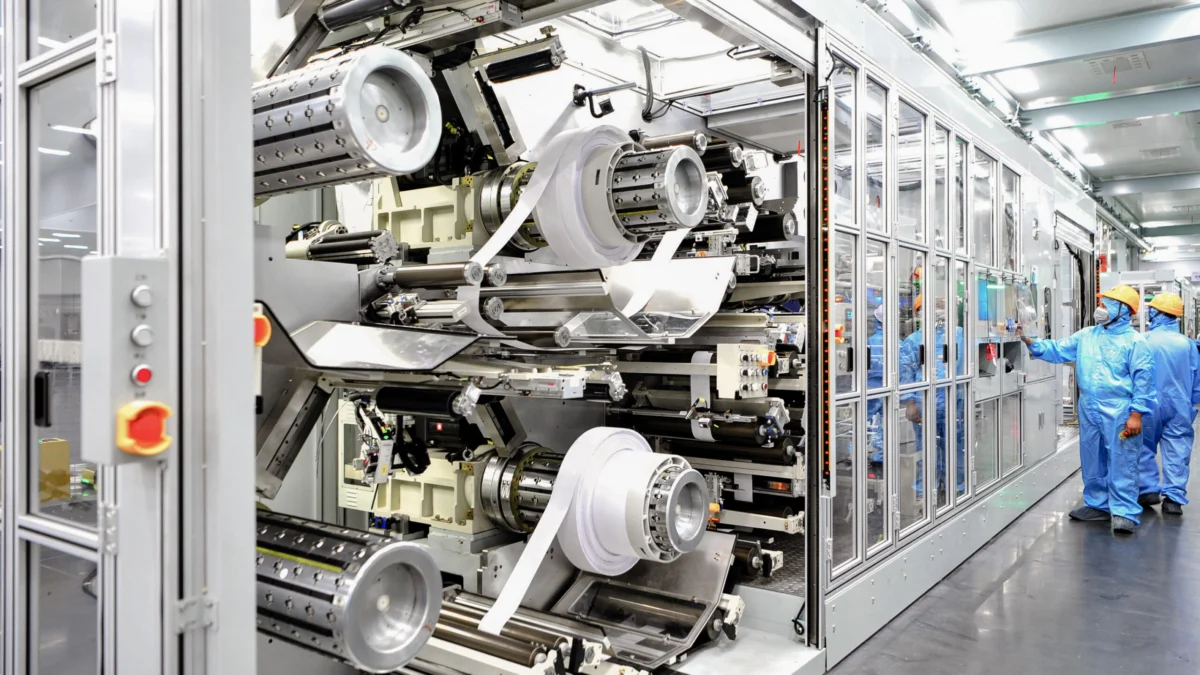
Automation and robotics depend on what Nvidia CEO Jensen Huang aptly calls "AI factories." These are not merely data centers; they represent a fundamental shift towards treating AI development as an industrial process. They are specialized, high-performance computing data centers explicitly designed to "manufacture" intelligence by converting raw data into continuously refined AI models and tokens. Unlike traditional data centers that primarily store information, AI factories are the engines of advanced AI applications such as autonomous vehicles, sophisticated robotics, and generative AI. They are equipped with advanced GPUs, specialized cooling systems, and massive interconnected infrastructure, all working in concert to train and refine AI models for enhanced safety, efficiency, and capability.
The construction and operation of these AI factories are extraordinarily expensive, requiring colossal upfront investment in hardware, software, and specialized talent, alongside continuous energy consumption. Companies that have already established and scaled this infrastructure are poised to reap unprecedented benefits. For example, Nvidia, a key player in providing the computational backbone for AI, has demonstrated a profitability margin five times greater than IBM’s in the 1980s, yet with only a tenth of the staff. This stark comparison highlights how AI dramatically boosts efficiency and, consequently, profits. Investment capital will naturally gravitate towards those who own the foundational AI models, the leading platforms, and, most critically, the underlying infrastructure.
This dynamic is almost certain to lead to an unprecedented concentration of wealth and power in human history. Major tech giants like Nvidia, Amazon Web Services (AWS), and SpaceX are already at the forefront of this revolution. Their existing infrastructure, vast capital, and talent pools make it incredibly challenging for newcomers to compete effectively, solidifying their dominance.
Governments are also keenly aware of this strategic imperative. China, for instance, is aggressively leveraging its vast renewable energy capacity, particularly solar, to power its burgeoning AI sector. This creates a unique "AI and energy" ecosystem where artificial intelligence optimizes renewable energy generation, while abundant solar power reliably supports energy-intensive data centers. China’s proactive stance positions it as a leader in integrating renewable energy with advanced AI infrastructure, a move with significant geopolitical and economic implications.
Cheap Energy Is Not Cheap
At the heart of the "free abundance" theory lies the assumption of universally cheap, practically limitless energy. Energy is the indispensable fuel that powers AI factories, which in turn drive all robotics, automation, and AI applications intended to generate this abundance. Energy fuels the infrastructure, and infrastructure runs the AI applications. Therefore, energy is the fundamental bottleneck. Without truly cheap and scalable energy, the entire "free" theory collapses.
Currently, electricity is the primary form of energy used to power this infrastructure. While regions like China are aggressively integrating renewable energy sources into their grid, and other areas are expanding renewable-powered data centers, electricity generation and grid capacity on the scale required for global AI infrastructure remain very costly and, crucially, not infinitely scalable with current technologies. To achieve abundance at a global scale, energy must be not just cheap, but also virtually boundless and easily deployable.
What are the viable options? Fission energy, or traditional nuclear power, is a mature technology that provides stable, carbon-free power. However, it comes with significant drawbacks, including the production of long-lived radioactive waste, the risk of nuclear proliferation (as the technology can be adapted for weapons), and inherent safety concerns regarding meltdowns. While it is generally cheaper than current fossil-based electricity sources, it still carries a tangible cost, and like other electricity sources, its scalability is limited by fuel availability, construction time, and public acceptance. Furthermore, the lifecycle costs, including secure waste storage for millennia and decommissioning old plants, are substantial.
Fusion energy, by contrast, involves merging light atomic nuclei to create energy, mimicking the process that powers the sun. It offers the promise of nearly limitless, cleaner energy without the production of long-lived high-level radioactive waste. Fusion is inherently safer, with no risk of a runaway chain reaction. The caveat, however, is that while nuclear fission is what is currently being used, creating commercially viable nuclear fusion for energy is an extraordinarily expensive endeavor, requiring upfront investments potentially running into hundreds of billions of dollars. It remains largely experimental and is likely decades away from large-scale commercial use. Projects like ITER (International Thermonuclear Experimental Reactor) are massive international collaborations, but their goal is scientific proof, not immediate commercialization. Private fusion companies are emerging, but they too face immense technical and financial hurdles. Unlike fission, nuclear fusion is theoretically scalable to meet global demands, and once developed, could be very cheap to run. But it does not cost zero. Someone, or some entity, will have to bear the immense upfront costs to build the infrastructure, develop the technology, and then maintain it. This cost will inevitably be recouped.
Elon Musk Is Going to the Moon
In this grand vision of boundless abundance, Elon Musk’s ambitious strategy to leverage lunar resources stands out. Lunar solar power offers the tantalizing prospect of ample energy without the atmospheric interference that affects solar panels on Earth. The moon’s vacuum environment also presents unique advantages for ultra-precise manufacturing. Yet, this vision comes with extremely high costs for launching materials, building, and maintaining complex infrastructure in a hostile vacuum environment. Musk’s long-term plan is to move a significant portion of production, including the aforementioned AI factories, to the moon.
The moon, with its low gravity and abundant raw materials (like regolith, which contains silicon and metals), is envisioned as the ideal, and ultimately cheapest, location for building large-scale AI infrastructure. The strategy involves deploying robots to terraform and construct the initial infrastructure, with humans eventually arriving to oversee and expand operations. AI data centers on the moon would then fuel a burgeoning space economy. With his integrated ecosystem encompassing Starlink for global communication, SpaceX for space transport, Optimus robots for lunar labor, and xAI for advanced intelligence, Musk is uniquely positioned to pursue this audacious goal.
However, a critical challenge lies in transporting or manufacturing the incredibly complex machines needed for advanced AI chip fabrication to the moon. These bus-sized machines require extremely precise environmental conditions. The proposed solution is a revolutionary method called Atomically Precise Manufacturing (APM), which involves building structures atom by atom. This aligns perfectly with Musk’s "first principles" thinking, breaking down problems to their fundamental components. If successful, APM on the moon could unlock unlimited solar energy and raw materials from the moon and nearby asteroids, free from thermal limits or atmospheric interference.
This could indeed lead to boundless AI at a remarkably low operational cost. Experts suggest that if lunar fabrication proves viable, it could unlock a trillion-dollar, or even hundreds of trillions, opportunity. But this raises a profound question: who will be the primary beneficiaries of this colossal opportunity? Will its immense wealth be shared equitably among humanity, or will it further concentrate power and resources in the hands of a select few?
The Soft Prison of "Free"
Herein lies the profound ethical and societal dilemma of a future built on "free" abundance: when you have strongly centralized infrastructures and systems, whoever owns and controls that infrastructure ultimately dictates the terms of engagement. Historically, strongly centralized systems, whether state-owned or corporate-controlled, often provide extensive "free" services. However, in exchange, they frequently demand a high degree of control over individual speech, movement, data, and economic choices. Even non-authoritarian welfare states often involve a trade-off, where individuals cede some autonomy for guaranteed security and services.
We already see this dynamic in the digital realm today. Many "free" digital services are not truly free; they are funded by extensive surveillance, profiling, and behavioral manipulation. Your data and attention are the real currency, making you, the user, the product. In a world of AI abundance, the infrastructure – whether government-owned, corporate-owned, or a public-private partnership – will be fundamentally centralized. This centralized power will inevitably dictate the terms of distribution: how AI abundance is distributed, who receives what, and under what conditions.
The potential for abuse is stark. If these centralized powers choose to, they could abruptly "shut the valve," denying access to resources or services to an individual or an entire group. Your dependency on their services then transforms into a "soft prison," subtly but effectively stripping you of your autonomy and self-sovereignty. You become a subject of the system, rather than an independent agent.
Even if this future truly represents a hundred-trillion-dollar opportunity, the owner(s) of the centralized infrastructure will undoubtedly claim the lion’s share. The rest will merely be a trickle-down, distributed according to their will and criteria. The old adage, "If something is ‘free,’ you are the product," remains profoundly true in a world of sheer abundance. In that world, however, the product is not just your data or attention; it is your very self-sovereignty – your inherent right to make independent choices, control your own destiny, and live free from arbitrary external control. For true abundance to be a boon for all, it must be accompanied by decentralization, equitable access, and robust protections for individual autonomy, ensuring that the promise of AI does not lead to a gilded cage.
Opinion by: Merav Ozair, PhD, blockchain and AI senior advisor.