Faris Adani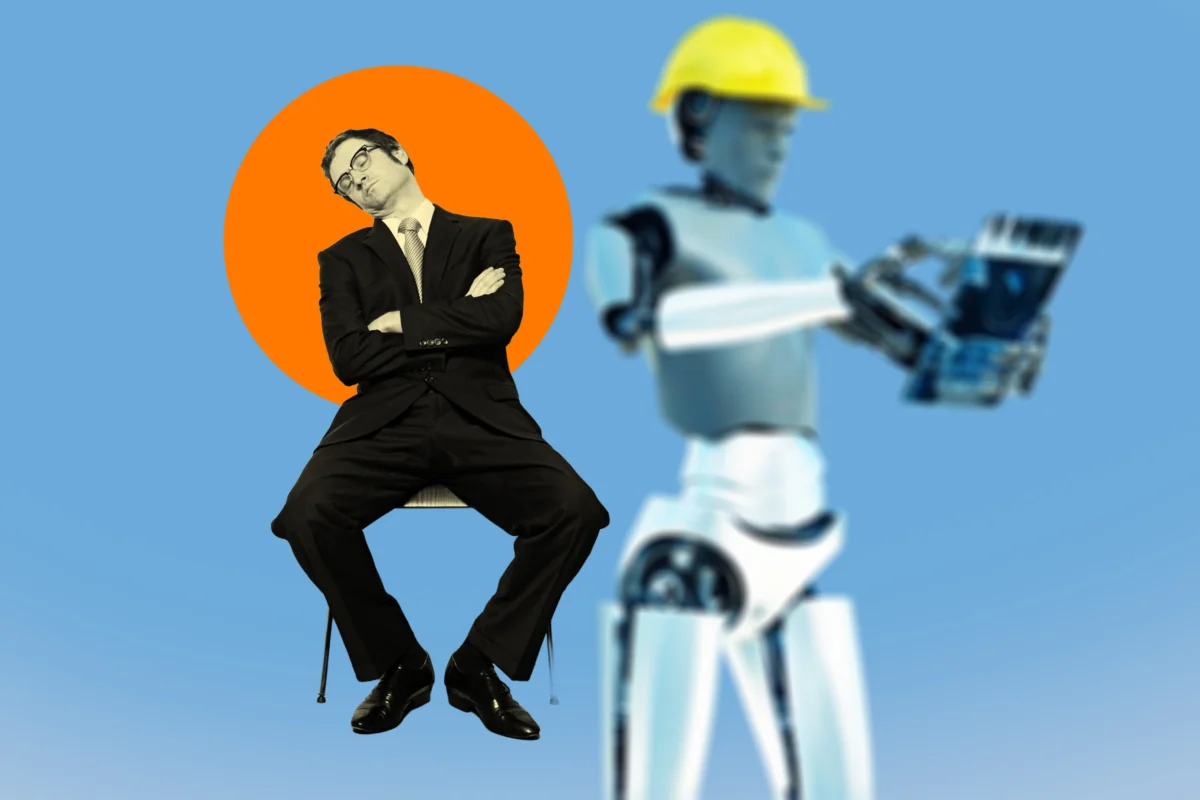
The emergence of a seemingly paradoxical role – that of a human "babysitter" for a bipedal robot on a factory floor – underscores a pivotal moment in the relentless march of industrial automation, hinting at both unprecedented efficiencies and profound societal shifts in the landscape of labor. In a scenario that feels plucked from a speculative fiction novel, the Schaeffler plant in Cheraw, South Carolina, has deployed Digit, a cutting-edge humanoid robot developed by Agility Robotics, to operate a stamping press for eight hours daily, under the continuous, watchful gaze of a human Agility contractor. This arrangement, documented by the Wall Street Journal, encapsulates the nascent stages of human-robot collaboration (HRC) where advanced robotics, while capable of complex tasks, still necessitate human oversight due to current technological limitations and stringent safety regulations.
Digit, a bipedal machine designed to mimic human movement and navigate environments built for people, currently performs its duties from within a plexiglass enclosure. This "cage," as it’s informally known, isn’t a punitive measure but a critical safety barrier, necessitated by the robot’s current inability to autonomously detect human beings in its immediate vicinity. Such a limitation triggers strict machine-guarding regulations, particularly those enforced by the Occupational Safety and Health Administration (OSHA), which mandate protective measures to prevent industrial machinery from causing injury. However, this is a temporary state. Agility Robotics anticipates that Digit will acquire the capability to sense and react to human presence by the end of the year, a development poised to dismantle these physical barriers and allow factory workers and humanoid robots to potentially operate side-by-side on the assembly line, ushering in a new era of direct, unsegregated HRC.
Courtney Baines, an advanced production technology engineer at Schaeffler, articulated the company’s ambitious vision, stating, "We’ve identified a whole host of use cases that we would like humanoid robots to do." This sentiment reflects a broader industry trend where manufacturers are aggressively exploring how humanoid robots can tackle a diverse array of tasks, from repetitive assembly operations and material handling to more complex, dexterous manipulations that traditionally required human hands. The underlying driver for this exploration is, as always, efficiency and cost reduction. Agility Robotics, the innovator behind Digit, revealed that these robots currently come at a cost equivalent to paying a human worker between $10 and $25 an hour, depending on the specific deployment and utilization strategy. However, the company’s co-founder, Damion Shelton, candidly shared an ambitious long-term objective: to drive down the operational cost of Digit to a mere $2 to $3 an hour.
This target figure sends a clear signal about the impending economic disruption. With entry-level human positions at the Cheraw plant starting at $20 an hour, the stark difference in potential labor costs becomes glaringly apparent. For any for-profit entity, the economic calculus is straightforward: if humanoid robots can perform tasks with comparable or superior efficiency at a fraction of the cost, they represent an irresistible solution. Doug Thompson, a manufacturing worker with 14 years of experience at the Schaeffler plant, captured the prevailing sentiment with a stark observation: "Efficiency is the name of the game and it’s relentless. It’s not going to stop." This reflects a deep understanding among the workforce that the drive for automation is an inexorable force, continuously reshaping industrial practices and potentially displacing human labor.
The deployment of Digit at Schaeffler is not an isolated incident but rather a prominent example of a rapidly accelerating global trend. Earlier this month, the Chinese electric vehicle giant Xiaomi made headlines for successfully integrating two humanoid robots into its EV plant in Beijing. Much like Digit, these initial deployments were conducted within plexiglass enclosures, acknowledging the current safety requirements and technological maturity. However, the rapid pace of innovation within the robotics sector suggests that these containment measures are likely transient. As AI capabilities improve, granting robots enhanced perception, decision-making, and adaptability, the physical separation between humans and machines will diminish, fostering more integrated work environments.
The implications of this shift extend far beyond individual factory floors. The ability of humanoid robots to perform tasks traditionally reserved for humans, and at significantly lower costs, poses critical questions about the future of work. Economists and futurists are grappling with the potential for widespread job displacement in manufacturing and logistics sectors, which have historically provided stable employment for millions. While some argue that automation will create new, higher-skilled jobs in robot maintenance, programming, and supervision, the scale of potential displacement and the feasibility of retraining entire workforces remain significant challenges. Discussions around universal basic income (UBI) and other social safety nets are gaining traction as potential responses to a future where traditional employment models may become less prevalent.
Beyond the immediate economic impact, the rise of humanoid robots represents a pinnacle in the evolution of industrial automation. For decades, factories have utilized fixed-arm industrial robots for repetitive, high-precision tasks. These machines, while incredibly efficient, are largely confined to structured environments and specific, pre-programmed movements. Humanoid robots like Digit, however, are designed for greater versatility. Their bipedal locomotion allows them to navigate human-centric spaces, climb stairs, and interact with tools and equipment designed for human use, thereby broadening the scope of tasks they can perform without requiring extensive re-engineering of factory layouts. This adaptability is a game-changer, promising to bring automation to previously inaccessible areas of manufacturing and service industries.
The development of Digit by Agility Robotics is part of a larger ecosystem of innovation. Companies like Tesla with its Optimus (Tesla Bot), Boston Dynamics with its agile Atlas, Figure AI, and Sanctuary AI with its Phoenix are all racing to develop general-purpose humanoid robots. These initiatives are fueled by breakthroughs in artificial intelligence, particularly in areas like reinforcement learning, computer vision, and natural language processing, which are enabling robots to learn from experience, perceive their surroundings more accurately, and even understand human commands. The video footage of a humanoid robot seamlessly playing tennis, for instance, highlights the rapid advancements in robotic dexterity, balance, and real-time decision-making, capabilities that are directly transferable to complex industrial tasks.
Despite the rapid progress, challenges remain. The cost of manufacturing humanoid robots at scale, their energy consumption, and their ability to operate reliably in highly unstructured and dynamic environments are ongoing areas of research and development. Ethical considerations also loom large. As robots become more sophisticated and integrated into human society, questions about accountability, bias in AI systems, and the psychological impact on human workers will require careful deliberation and robust regulatory frameworks.
The "babysitting" role observed at the Schaeffler plant, while seemingly quaint, is a crucial transitional phase. It reflects the current need for human expertise to bridge the gap between emerging robotic capabilities and the strict safety and operational demands of industrial environments. As robots gain autonomy and perception, this human role will undoubtedly evolve – perhaps shifting from direct, continuous supervision to more specialized tasks like troubleshooting, maintenance, and strategic oversight, or even disappearing as robots achieve true self-sufficiency. The future factory will likely be a complex ecosystem where humans and robots, each leveraging their unique strengths, collaborate in intricate ways. The current deployment of Digit is not just about a robot operating a press; it’s a front-row seat to the unfolding narrative of humanity’s evolving relationship with intelligent machines, a narrative that promises to redefine productivity, reshape economies, and fundamentally alter the human experience of work in the decades to come.