Faris Adani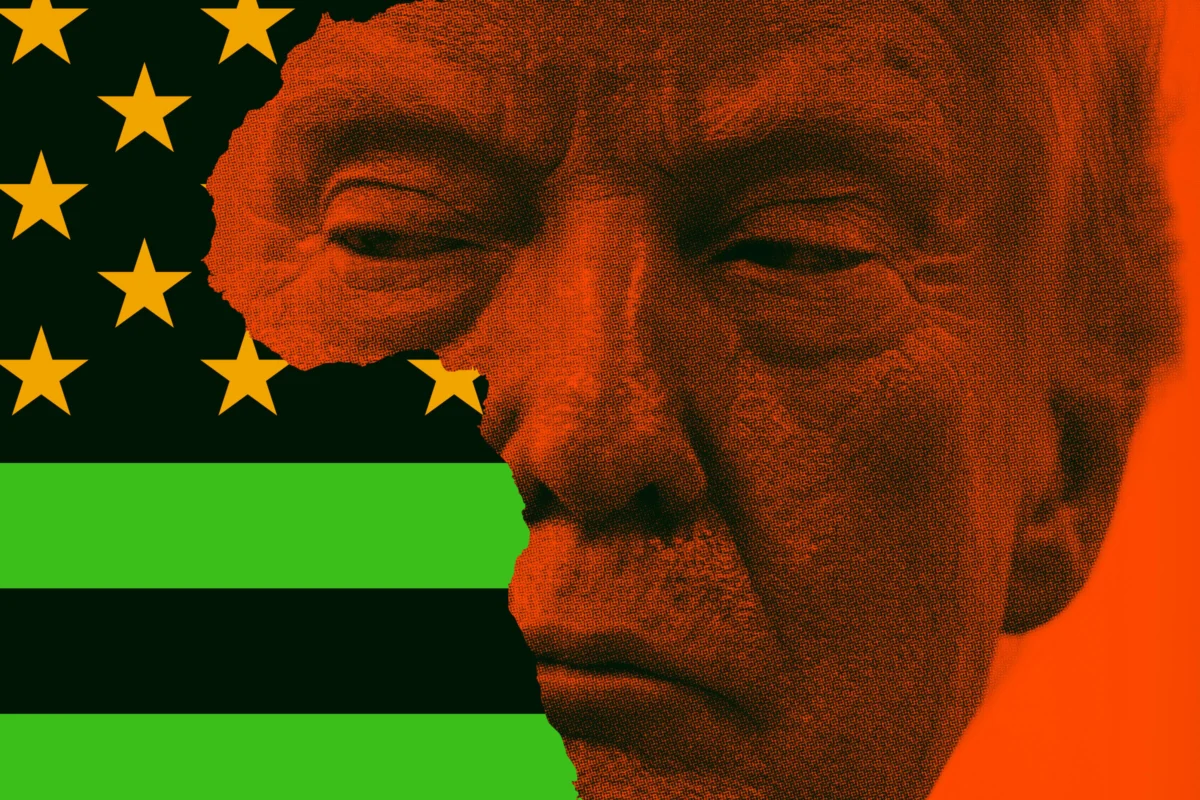
In a chilling display of transactional foreign policy, the Trump administration has reportedly devised a plan to weaponize life-saving humanitarian aid, threatening to withhold critical HIV medication from Zambia unless the southern African nation grants American companies preferential access to its vast mineral resources, primarily copper. This audacious move, uncovered through a State Department memo obtained by The New York Times, marks a dramatic escalation in what critics are calling a "medical extortion campaign," deeply embedding itself within a broader, often controversial, set of second-term headlines concerning Donald Trump’s engagement with the African continent. From the executive branch’s directive for airstrikes in Nigeria to the imposition of travel bans affecting 29 countries, and the cultivation of chummy alliances with military juntas in nations like Burkina Faso, Mali, and Niger, Trump’s approach to Africa has consistently prioritized perceived American self-interest over established diplomatic norms, human rights, and long-term stability. However, the proposed action against Zambia stands out for its direct threat to the lives of over a million people, raising profound ethical and humanitarian questions about the future of global aid and international relations.
The specifics of the reported plan are stark and deeply troubling. A memo prepared for Senator Marco Rubio, a key figure in the administration’s foreign policy apparatus, explicitly outlines a strategy to leverage Zambia’s profound dependency on U.S. support for HIV treatment programs. The document, viewed by The New York Times, contains language that leaves little room for ambiguity regarding the administration’s intentions: "we will only secure our priorities by demonstrating willingness to publicly take support away from Zambia on a massive scale." The "support" in question amounts to some $115 million, a sum vital for maintaining existing HIV treatment initiatives. According to a 2025 fact sheet from the Centers for Disease Control and Prevention (CDC), U.S. aid programs are responsible for supporting treatment for an astonishing 98 percent of Zambians living with HIV – a staggering figure representing over 1.3 million individuals. To suddenly withdraw or significantly reduce this lifeline would not merely be a setback; it would precipitate a catastrophic public health crisis, unraveling decades of progress in the fight against HIV/AIDS in one of the continent’s most affected regions.
The humanitarian implications of such a withdrawal are almost impossible to overstate. Zambia, like many sub-Saharan African nations, has a high prevalence of HIV, with significant segments of its population relying on antiretroviral therapy (ART) to manage the virus and prevent its transmission. The availability of these medications, largely facilitated by international aid initiatives like the U.S. President’s Emergency Plan for AIDS Relief (PEPFAR) – though not directly named in the original reporting, it is the primary vehicle for such U.S. aid – has transformed HIV from a death sentence into a manageable chronic condition for millions. Interrupting this supply chain, especially on a "massive scale," would lead to widespread treatment failure, drug resistance, a resurgence in opportunistic infections, and a significant increase in mortality rates. It would not only devastate individual lives and families but also destabilize communities and strain Zambia’s already challenged healthcare infrastructure to the breaking point. The very fabric of society, painstakingly rebuilt after the initial ravages of the epidemic, would be at risk of tearing apart, all for a geopolitical gambit.
At the heart of Trump’s demands lies a raw desire for access to Zambia’s mineral wealth, particularly copper. The rationale, as noted in the memo, is presented as a strategic move to "box Chinese interests out" of the country, aligning with Trump’s hawkish geopolitical ambitions that have increasingly centered around securing critical mineral supplies. Copper, often referred to as "red gold," is not merely another commodity; it is an indispensable component in the modern global economy. Its applications range from electrical wiring and plumbing to renewable energy technologies like solar panels and wind turbines, and critically, in the burgeoning electric vehicle (EV) industry. As the world transitions towards greener technologies and electrifies its infrastructure, the demand for copper is projected to skyrocket, making control over its supply chains a matter of significant national security and economic power. The U.S., like other major industrial nations, is acutely aware of its reliance on foreign sources for these vital minerals, and the competition with China for influence and access in resource-rich regions like Africa is fierce.
However, the administration’s justification for targeting Zambia specifically appears deeply flawed and opportunistic. While Zambia is indeed rich in copper and ranks as the world’s seventh-largest producer, the latest UN data reveals that only 31 percent of its mineral exports are bound for China. Switzerland, perhaps surprisingly to some, is a far larger recipient, accounting for a substantial 62 percent of Zambia’s unrefined copper trade. This discrepancy undermines the narrative that Zambia is primarily a Chinese economic satellite that needs to be "liberated" for American interests. Furthermore, if the primary goal is to secure copper and counter Chinese influence, other nations present far larger stakes. Chile, for instance, is the world’s largest copper producer, and a much bigger slice of its copper exports goes to China. Yet, Chile receives only a few million dollars in U.S. aid annually, a significantly weaker bargaining chip for an administration keen on transactional diplomacy. This comparison strongly suggests that Zambia’s appeal to the Trump administration isn’t its unique mineral wealth or its outsized Chinese ties, but rather its profound dependency on U.S. aid. This dependency, in the administration’s cynical calculus, transforms the welfare of 1.3 million people into a readily exploitable point of leverage.
This approach transforms humanitarian assistance from an act of global solidarity into a tool of coercive foreign policy, stripping it of its moral authority and turning it into a commodity to be bartered. The phrase "strategic convenience" perfectly encapsulates this cynical logic. The people of Zambia, reliant on American generosity for their very survival, are not seen as partners or beneficiaries of humanitarian goodwill, but rather as pawns in a larger geopolitical game. Their lives become a means to an end: a "squeeze meant to inflict maximum cruelty with minimum effort" to extract mineral concessions. This strategy not only risks devastating human lives but also fundamentally undermines the principles of international cooperation and humanitarian aid that have been painstakingly built over decades. It signals to nations around the world that American assistance comes with strings attached, not of accountability or good governance, but of resource extraction and geopolitical alignment, irrespective of the human cost.
Beyond the immediate crisis in Zambia, such actions carry profound long-term implications for U.S.-Africa relations. For decades, American foreign policy in Africa has aimed to foster stability, promote democracy, and address pressing development and health challenges. While imperfect, this engagement has often been seen as a counterweight to other global powers and a source of genuine support. Should the Trump administration proceed with this "medical extortion," it would severely damage U.S. credibility and goodwill across the continent. African nations might view American promises of partnership with deep suspicion, potentially pushing them into closer alliances with powers perceived as less coercive, or at least less willing to sacrifice human lives for mineral wealth. It would also set a dangerous precedent, potentially emboldening other nations to use humanitarian aid as a bargaining chip, further eroding the norms of international conduct.
The brazenness of the State Department memo’s language, emphasizing a "willingness to publicly take support away," suggests an administration unconcerned with global condemnation or the moral outrage such actions would provoke. It reflects a foreign policy philosophy where power is wielded without compunction, where national interests are defined narrowly, and where human lives can be traded for economic advantage. This incident is not an isolated anomaly but rather fits into a pattern of transactional and often confrontational foreign policy that has characterized the Trump era, especially concerning regions deemed less strategically critical in traditional geopolitical terms. The earlier actions – airstrikes, travel bans, and alliances with non-democratic regimes – were precursors to this more direct and alarming threat to human life.
In conclusion, the proposed withholding of HIV medication from Zambia by the Trump administration represents a nadir in contemporary foreign policy, a stark illustration of how humanitarian aid can be weaponized for raw geopolitical and economic gain. It threatens to unleash a preventable humanitarian catastrophe on over a million vulnerable individuals, all to secure access to copper and "box out" Chinese influence. This cynical "shakedown" not only imperils countless lives but also undermines the fundamental ethical principles of international aid, damages U.S. standing in Africa and globally, and sets a perilous precedent for the future of diplomatic engagement. The world watches, horrified, as the Trump administration seemingly prepares to inflict maximum cruelty with minimum effort, all for the sake of precious minerals.
More on Trump and Africa: Trump’s HHS Trashes Top African Health Organization as ‘Fake’ and ‘Powerless’