anjir abdul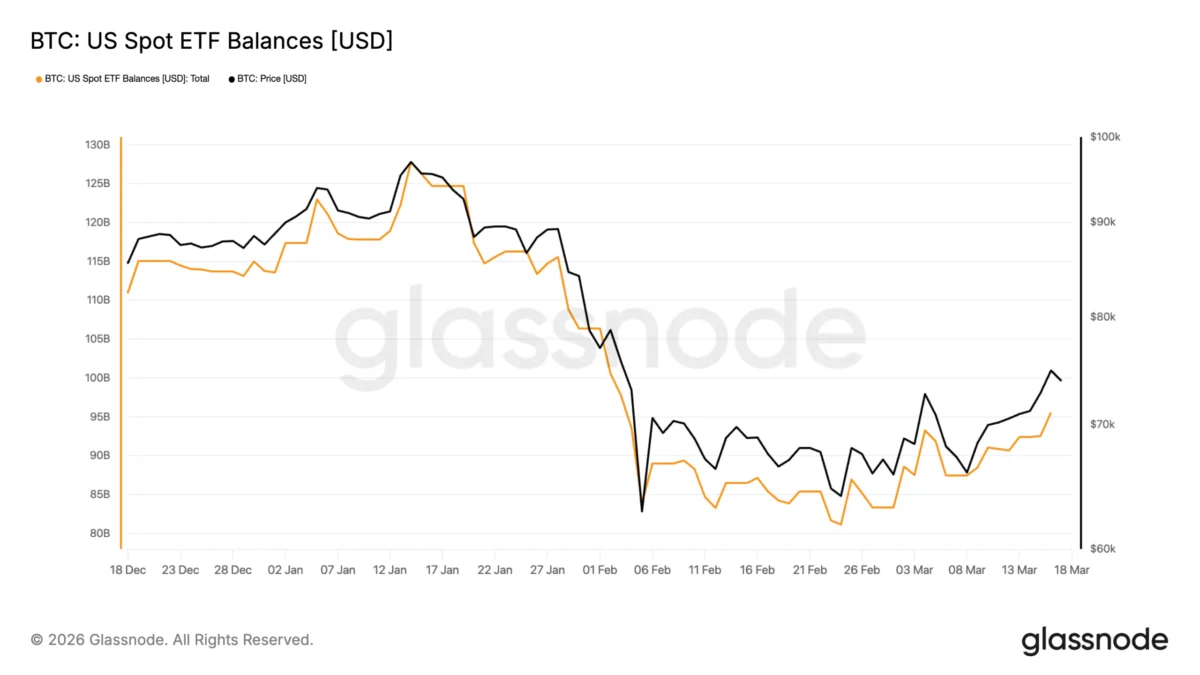
The most striking evidence of this divergence comes from the 52-week rolling correlation between BTC and the tech-heavy Nasdaq Composite Index (IXIC), which has plunged to -0.06. This figure represents the lowest correlation observed since December 2018 and marks an astonishing reversal from multi-year trends where the correlation consistently hovered between a strong positive range of 0.60 and 0.92. Historically, Bitcoin has often mirrored the movements of growth-oriented tech stocks, largely being categorized as a risk-on asset susceptible to similar macroeconomic pressures. However, the correlation flipped decisively negative in late February, precisely as the geopolitical tensions between the US, Israel, and Iran escalated into direct conflict. Since February 28, the onset of the war, Bitcoin’s price has surged by more than 15%, demonstrating remarkable resilience and upward momentum, while the Nasdaq has simultaneously experienced a decline of approximately 2%. This stark contrast suggests a fundamental re-evaluation by traders, who appear to be increasingly treating Bitcoin as a legitimate geopolitical hedge and a store of value amidst global instability, rather than merely another tech-correlated risk asset.

Several powerful catalysts are fueling this decoupling, fundamentally reshaping Bitcoin’s market dynamics. A primary driver of Bitcoin’s recent strength is the relentless and aggressive accumulation strategy employed by Michael Saylor’s Strategy (formerly MicroStrategy). Over the past two weeks alone, the company executed a colossal purchase of 40,331 BTC, significantly increasing its already substantial holdings. A notable aspect of this acquisition spree is its funding mechanism: part of the purchase was financed through at-the-market (ATM) sales of Strategy’s STRC preferred stock. This method allows the company to continuously raise capital and deploy it into Bitcoin, underscoring Saylor’s unwavering conviction in the digital asset. This buying spree is not merely large in absolute terms; it amounted to roughly 9 to 10 times the total Bitcoin mined during the same period, illustrating an extreme imbalance where demand is dramatically outstripping new supply. Such a supply shock, particularly from a prominent institutional player, inevitably exerts significant upward pressure on Bitcoin’s price.
Adding to this robust demand is the unprecedented success of US spot Bitcoin exchange-traded funds (ETFs). Since their inception, these ETFs have attracted more than $12.22 billion in cumulative inflows, providing a critical new avenue for traditional investors to gain exposure to Bitcoin without the complexities of direct ownership. The accessibility offered by these regulated investment vehicles has unleashed a torrent of institutional and retail capital, creating a continuous and powerful source of demand that was largely absent before their approval. These ETFs represent a structural shift in how mainstream finance interacts with Bitcoin, legitimizing it further and integrating it into broader investment portfolios.

Another significant factor bolstering Bitcoin’s appeal, particularly in the context of the current geopolitical climate, is the surge in stablecoin liquidity, explicitly linked to heightened demand from the Middle East. The market capitalization of USDC, a major dollar-backed stablecoin, has climbed to a record near $79.57 billion, a substantial increase from approximately $70 billion in early February. This surge in USDC supply is reportedly driven by a sharp increase in demand for dollar-backed stablecoins in financial hubs like Dubai, as capital seeks refuge from the uncertainty and potential repercussions of the US and Israel-Iran conflict. The rising USDC supply indicates a stronger flow of dollar liquidity into the digital asset ecosystem, which subsequently translates into increased demand for Bitcoin, especially when combined with Strategy’s ongoing purchases tightening available supply. This confluence of factors paints a compelling picture of Bitcoin serving as a digital safe haven during times of conventional geopolitical instability. Joe Consorti, head of growth at Bitcoin equity company Horizon, has articulated this sentiment, stating that Bitcoin is "passing its geopolitical stress test." He further noted that certain macro models now hint at a potential price target of $100,000 for Bitcoin in the coming months, underscoring the growing confidence in its role as an uncorrelated asset.
Despite this recent divergence and the compelling arguments for Bitcoin’s emergence as a geopolitical hedge, not all analysts are convinced that Bitcoin has fundamentally and structurally decoupled from traditional equities. BitMEX co-founder Arthur Hayes, a prominent voice in the crypto space, issued a cautionary note in a March 5 post, suggesting that Bitcoin’s recent rally toward the mid-$70,000 range could be a "dead cat bounce." This term refers to a temporary, short-lived recovery of asset prices after a significant decline, often preceding further downturns. Hayes’s skepticism stems from his belief that continued weakness in Software-as-a-Service (SaaS) stocks, driven by tighter global financial conditions and elevated interest rates, would inevitably drag Bitcoin prices lower. He argues that Bitcoin remains more closely tied to US SaaS stocks than to the broader Nasdaq index. Unlike the Nasdaq, which includes a diverse array of sectors, including more defensive industries, SaaS companies like Salesforce, Adobe, and Zoom are characterized by high growth expectations and are particularly sensitive to liquidity conditions. These assets have historically moved in tandem with macroeconomic factors that also influence the cryptocurrency market, making their performance a crucial barometer for Bitcoin’s underlying health. Hayes’s long-standing position is that he is waiting to buy Bitcoin until the Federal Reserve eases its monetary policy, reinforcing the macro link he perceives.

This caution from Hayes is reflected in other market data. The Coinbase Premium Index, which measures the difference in Bitcoin’s price on Coinbase (a major US exchange) compared to other global exchanges, has remained negative on a 30-day rolling basis. A negative premium typically indicates weaker spot demand from US institutional and retail investors, suggesting that while ETF inflows are strong, the broader US market may not be exhibiting robust organic buying pressure to sustain the rally. This lack of strong institutional follow-through at the spot level could indeed signal underlying weakness, despite the headline-grabbing price increases.
Furthermore, Bitcoin’s recent pullback from the formidable $76,000 resistance area, which also aligns with the upper trendline of a prevailing bear flag pattern, raises the odds of a potential decline. Technical analysis suggests that if Bitcoin fails to decisively break above this resistance, it could retreat toward the lower trendline of the bear flag, currently hovering around $68,000. A decisive breakdown below this $68,000 support level could trigger a more significant downturn, risking a crash toward a measured downside target at approximately $51,000, according to technical projections.

In conclusion, Bitcoin’s recent negative correlation with tech stocks amidst the US–Iran conflict presents a complex and evolving narrative. While substantial institutional accumulation, robust ETF inflows, and increased stablecoin demand driven by geopolitical uncertainty strongly support its emerging role as a safe-haven asset, influential voices like Arthur Hayes caution against premature declarations of decoupling. The interplay of geopolitical events, structural shifts in market demand, macroeconomic liquidity conditions, and critical technical price levels will continue to shape Bitcoin’s trajectory and determine whether its current divergence is a temporary anomaly or a fundamental redefinition of its market identity. Investors are left to weigh the compelling evidence of Bitcoin’s resilience against traditional market skepticism, as the digital asset navigates an increasingly volatile global landscape.
This article does not contain investment advice or recommendations. Every investment and trading move involves risk, and readers should conduct their own research when making a decision. While we strive to provide accurate and timely information, Cointelegraph does not guarantee the accuracy, completeness, or reliability of any information in this article. This article may contain forward-looking statements that are subject to risks and uncertainties. Cointelegraph will not be liable for any loss or damage arising from your reliance on this information.