Faris Adani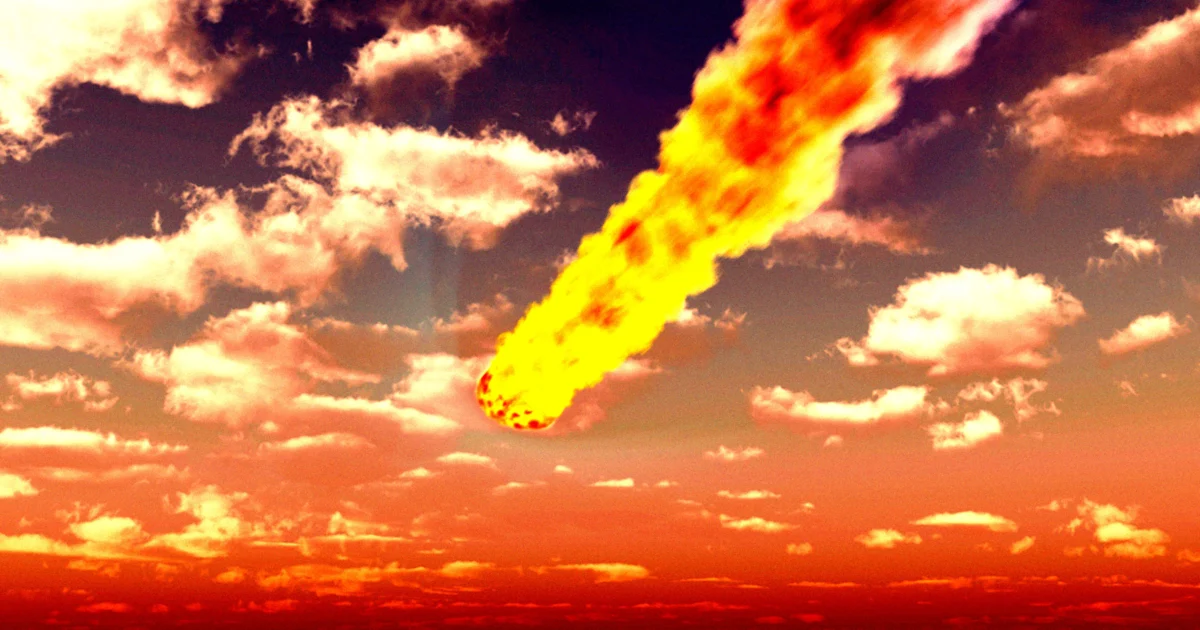
A cascade of unsettling "loud booms" and a profound "series of rumbling" shattered the Tuesday morning tranquility across Cleveland and broader Northeast Ohio, leaving residents bewildered and searching for answers. At approximately 9:00 AM Eastern Time, the serene sky above the Great Lakes region was momentarily transformed into a canvas of cosmic drama, culminating in concussive sound waves that reverberated through homes and workplaces. The sudden, intense auditory phenomena prompted a flurry of online speculation, with social media platforms and local forums quickly becoming hubs for eyewitness accounts and theories. One Reddit user, clearly perplexed by the experience, posted, "Sounded like a few sonic booms, and then rumbling. Not entirely consistent with aircraft, or thunder." This sentiment was echoed by countless others, who described the event as distinctly different from conventional meteorological or anthropogenic noises. Another resident, expressing a deeper level of concern, queried, "Should I be concerned I heard it sounded like someone dropped something heavy on the roof of my building?" The visceral impact of the event underscored the immediate sense of alarm and uncertainty that gripped the community, a testament to the primal human reaction to the unknown manifesting in such a powerful, unexpected manner. The collective unease highlighted the profound impact such celestial visitors can have, even from a great distance, as the unseen force of a bolide’s atmospheric entry rippled across the landscape.
Swiftly responding to the widespread reports, officials from the National Weather Service (NWS) in Cleveland moved to clarify the bewildering occurrences. Their definitive confirmation identified the source of the booms and rumbling as "likely a result of a meteor," specifically a fireball that had dramatically entered Earth’s atmosphere. This classification as a "fireball" denotes an exceptionally bright meteor, often surpassing the brilliance of Venus in the night sky, or even visible in broad daylight, as was the case with this particular event. The signature "loud booms" were attributed to sonic booms, a phenomenon that occurs when an object travels through the air faster than the speed of sound, creating shockwaves that propagate to the ground. For a meteor, this supersonic travel happens as it plummets through the atmosphere, compressing the air in front of it and leaving a turbulent wake. The sheer scale of the sound indicated a significant size and velocity for the incoming space rock, generating enough energy to create a widespread acoustic footprint that startled an entire metropolitan area. This scientific explanation provided much-needed context, transforming a moment of public anxiety into an extraordinary astronomical observation.
Further corroborating the NWS’s assessment, compelling visual evidence emerged, painting a clearer picture of the celestial intruder. A map, meticulously constructed using data from NASA’s advanced Geostationary Lightning Mapper (GLM), pinpointed the exact location of a "significant flare-up" associated with the meteor’s atmospheric entry. The GLM, typically used to detect lightning strikes from geostationary orbit, possesses the sensitivity to identify other transient luminous events, including meteors, by observing their intense light emissions. This technological insight allowed scientists to trace the bolide’s path and estimate its point of peak luminosity, providing critical data for understanding its trajectory and potential size. Adding a dynamic visual dimension, the National Weather Service in Pittsburgh, Pennsylvania, shared a remarkable video. Captured by an unknown source, the footage showcased the meteor ablaze against the backdrop of the clear morning sky, a luminous streak plummeting earthward. This visual confirmation, depicting the meteor’s brilliant descent, offered a breathtaking glimpse into a phenomenon rarely witnessed firsthand by so many, transforming abstract scientific data into a tangible, awe-inspiring spectacle.
The terminology surrounding these forceful celestial events can often be a source of confusion, making it vital to distinguish between meteoroids, meteors, and meteorites. A meteoroid is the initial stage: a solid piece of debris, typically originating from asteroids or comets, that travels through space. These space rocks can range in size from tiny dust grains to small asteroids, orbiting the Sun for potentially millions of years. When a meteoroid’s trajectory intersects with Earth’s orbit and it enters our planet’s atmosphere, it undergoes a dramatic transformation, heating up intensely due to friction with atmospheric gases. At this point, it becomes a meteor, often erroneously referred to as a "shooting star" due to its luminous trail. This incandescence is caused by the ablation of the meteoroid’s surface, as well as the ionization of atmospheric gases around it. Most meteors burn up entirely during this fiery descent, leaving only a fleeting streak of light. However, if a portion of the meteoroid survives the atmospheric journey and successfully impacts the Earth’s surface, it is then classified as a meteorite. These cosmic remnants provide invaluable scientific data, offering direct samples of material from beyond Earth, aiding our understanding of the early solar system’s composition and history.
Our planet’s robust atmosphere acts as an incredibly efficient shield, protecting us from a constant bombardment of extraterrestrial material. It is estimated that a staggering 97,000 pounds (approximately 44,000 kilograms) of meteoritic material enters Earth’s atmosphere every single day. The vast majority of this material, however, never reaches the ground. As meteoroids encounter the dense atmospheric layers, the extreme friction and compression cause them to heat up rapidly, often reaching temperatures in the thousands of degrees Celsius. This intense heat leads to vaporization, effectively disintegrating most incoming objects into dust and gas. Only the largest and most robust meteoroids can endure this fiery ordeal, and even then, they are typically significantly reduced in size before they impact the surface. While the atmosphere performs its protective duty admirably, small remaining amounts can indeed survive the ordeal, plummeting down to the surface as meteorites. These rare survivors have occasionally made dramatic entrances, famously punching through roofs, as was the case with a meteorite that crashed into a New Jersey home, or even smashing into the ground right next to particularly unfortunate individuals, as documented by various close-call incidents captured on video.
Despite these occasional dramatic impacts, the chances of any individual being struck by a meteorite are, fortunately, infinitesimally slim. Statistically speaking, you are far more likely to win the lottery or be struck by lightning than to be directly hit by a piece of space rock. However, history does record a handful of remarkable instances where meteorites have made contact with Earth’s inhabitants or their property. One of the most famous modern examples is the Chelyabinsk meteor event in 2013, where a superbolide exploded over Chelyabinsk, Russia, generating a powerful shockwave that injured over 1,500 people, primarily from shattered glass, and caused extensive damage to buildings. While no direct impact occurred on a person, it highlighted the destructive potential of larger atmospheric entries. The Tunguska event of 1908 in Siberia, which flattened an estimated 80 million trees over 2,150 square kilometers, is another stark reminder of the immense energy these objects can carry, though it’s believed the object disintegrated before hitting the ground. In terms of direct hits on property, the Peekskill meteorite in 1992 famously struck a parked Chevrolet Malibu, becoming one of the most well-documented meteorite falls in history. Such events, while rare, serve as potent reminders of the dynamic cosmic environment in which our planet resides.
While the latest meteor strike left some Cleveland residents shaken and others genuinely concerned, the internet, as it often does, quickly became a platform for a mix of awe, relief, and characteristic humor. The initial alarm soon gave way to a collective sense of wonder and a touch of local pride. Social media users across various platforms engaged in lively discussions, sharing their experiences and, inevitably, cracking jokes about the extraordinary event. One user on X (formerly Twitter) playfully quipped, "Another reason why Cleveland is the center of the universe," encapsulating the unique blend of local pride and self-deprecating humor often found in communities experiencing unusual phenomena. This lighthearted response demonstrated the resilience and quick wit of the public, turning a moment of potential anxiety into a shared, memorable experience. The online discourse created a virtual town square where people could process the event collectively, from serious scientific inquiry to humorous speculation about alien visitors or divine interventions.
Such meteor events, while not daily occurrences, are far from unprecedented. Earth is constantly bombarded by space debris, though most of it is too small to cause any noticeable effect or burns up harmlessly high in the atmosphere. Larger, brighter meteors—fireballs like the one seen over Ohio—occur globally several times a year, though they are often over unpopulated areas or obscured by daylight or cloud cover. Events generating sonic booms and widespread reports are less common but still occur with a certain regularity, highlighting the ongoing dance between our planet and the detritus of the solar system. Organizations like the American Meteor Society (AMS) actively track these events, relying on eyewitness accounts and scientific data to build a comprehensive database of meteor sightings, which contributes to our understanding of meteoroid populations and their interaction with Earth. The Cleveland meteor serves as a vivid reminder of this constant celestial ballet, underscoring the dynamic nature of our cosmic neighborhood and the fascinating phenomena it can produce.
In conclusion, the powerful booms and rumbling that rattled Northeast Ohio on a Tuesday morning were not merely an unusual weather phenomenon or a distant explosion but a spectacular, albeit fleeting, visitation from the cosmos. The swift identification by the National Weather Service, backed by NASA’s cutting-edge GLM data and eyewitness video, transformed a moment of widespread confusion into a significant astronomical event. This "fireball" served as a dramatic, real-world lesson in astrophysics, clarifying the distinctions between meteoroids, meteors, and meteorites, and showcasing the protective power of Earth’s atmosphere. While the immediate reaction spanned from alarm to fascination, the incident ultimately united the community in a shared experience of cosmic wonder, reminding us of the dynamic universe that exists just beyond our protective atmospheric veil. It underscores the continuous, albeit often unseen, celestial activity that shapes our understanding of space and our place within it, encouraging us all to occasionally look up and ponder the infinite possibilities above.