anjir abdul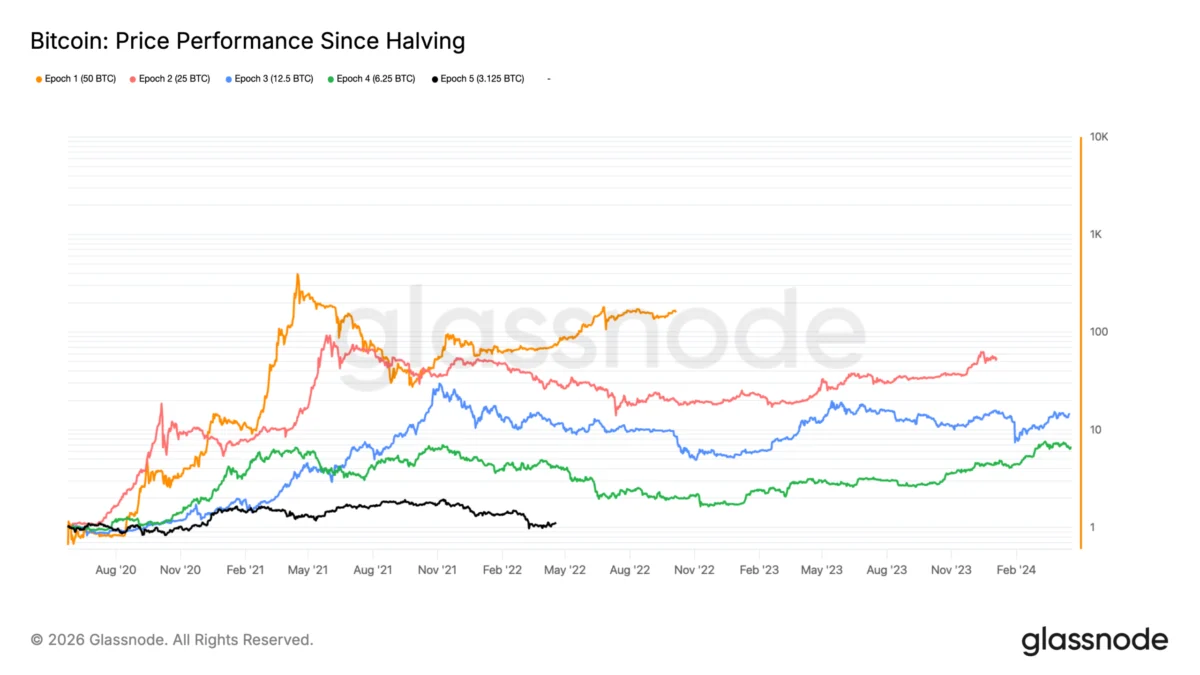
Key takeaway: Strategy’s STRC-funded Bitcoin accumulation is dramatically outstripping new mining supply, potentially redefining Bitcoin’s market cycles and diminishing the relative impact of future halvings by creating a persistent, powerful demand shock that could drive prices significantly higher.
Strategy’s acquisition pace has been nothing short of astounding, consistently outpacing the global supply of newly mined Bitcoin by significant margins. In the week concluding on March 15, the company made headlines by purchasing a staggering 22,337 BTC. This colossal acquisition was substantially funded by approximately $1.18 billion generated from sales of its preferred stock, STRC. To put this into perspective, this single week’s haul by Strategy alone is equivalent to roughly seven weeks of the entire global Bitcoin mining output, which currently stands at an average of 450 BTC per day. This demonstrates an absorption capacity that far exceeds the rate at which new Bitcoin is introduced into the ecosystem.

The aggressive accumulation pattern wasn’t an isolated incident. In the preceding week, from March 2 to March 8, Strategy added another substantial 17,994 BTC to its reserves, a purchase valued at $1.28 billion. A significant portion of this capital, around $377 million, was also raised through STRC sales. This acquisition alone accounted for approximately five to six weeks of newly mined BTC, further highlighting the company’s relentless pursuit of the digital asset. This consistent, multi-week buying spree paints a clear picture of Strategy’s strategic intent to corner a substantial portion of Bitcoin’s available supply.
During peak buying sessions, such as the one observed on March 12, the capital generated specifically from STRC-related activity was estimated to support the purchase of more than 4,000 BTC in a single day. This daily acquisition figure is nearly nine times the average daily new mining supply, showcasing the immense, concentrated demand that STRC facilitates. The financial ingenuity of utilizing preferred stock allows Strategy to continuously raise capital specifically for Bitcoin purchases, effectively turning its own equity into a persistent Bitcoin acquisition engine. This mechanism provides a stable and scalable funding source, differentiating Strategy’s buying from more volatile, market-dependent institutional inflows.
Broader post-halving data further substantiates the growing influence of corporate treasuries in the Bitcoin market. Led by Strategy’s STRC-fueled endeavors, institutional entities have been absorbing Bitcoin at an average rate of approximately 2.8 times the new mining supply over extended periods. Focusing solely on Strategy, the company itself has been buying roughly 1.8 times the amount of BTC mined in shorter, more concentrated periods. This sustained institutional demand, particularly from Strategy, represents a structural shift in the Bitcoin market, introducing a new, powerful buyer that operates independently of traditional retail or speculative demand cycles. The financial structure of STRC, offering investors exposure to Bitcoin’s appreciation without direct custody or the volatility of common stock, has proven to be a highly effective vehicle for channeling substantial capital into BTC.

This unprecedented rate of institutional accumulation, particularly through STRC, has led many market analysts to ponder whether Strategy may be breaking Bitcoin’s traditional four-year halving cycle. Historically, Bitcoin’s price performance has been largely dictated by its pre-programmed supply shocks known as halvings. Every four years, the reward for mining new blocks is cut in half, effectively reducing the rate at which new Bitcoin enters circulation. This reduction in supply, coupled with consistent or increasing demand, has historically reduced miner selling pressure and set the stage for explosive bull runs, followed by market tops and eventual bear markets. The halving event is considered the primary supply shock, acting as a periodic catalyst for significant price movements.
The traditional four-year cycle posits that 2026 could naturally shape up as a “bear-market year,” following the typical post-halving peak and subsequent correction. This theory, championed by analysts like Benjamin Cowen, relies on the historical pattern where each halving event marks the beginning of a new cycle, with a bull run peaking roughly 12-18 months after the halving, followed by a multi-year bear market before the next halving resets the cycle. However, Strategy’s STRC-funded buying spree introduces a novel element that could fundamentally alter this established pattern. If a single entity can consistently purchase more Bitcoin than is being created by miners, the fundamental supply-demand dynamics are drastically altered. As trader "Grain of Salt" provocatively suggested, in such a scenario, the halvings might “no longer matter” as the market’s dominant supply shock.
The argument here is not that halvings cease to exist or have no impact, but rather that their relative importance as the primary market driver could be significantly diminished. If a constant, large-scale demand source like Strategy’s STRC is perpetually soaking up newly minted Bitcoin and even tapping into existing supply, the periodic reduction in miner rewards might become a secondary factor. The focus shifts from a pre-programmed supply-side event to a continuous, institutionally driven demand-side phenomenon. This implies that Bitcoin’s next major price moves may depend less on its next halving in 2028, and more on Strategy’s ability to sustain its aggressive accumulation strategy, effectively reducing the number of potential new "wholecoiners" (those owning a full Bitcoin) by removing supply from the open market. The implications are profound, suggesting a maturation of the asset where institutional adoption provides a more stable and continuous demand floor.

STRC’s influence has effectively added a new, powerful layer of demand to the Bitcoin market, becoming a crucial factor as Bitcoin retests its robust six-year ascending trendline support on the monthly chart. This significant technical support zone has historically marked pivotal cycle bottoms, providing strong bounce points in 2018, 2020, and 2022. The latest retest of this critical trendline occurred in March, prompting a wave of optimism from analysts. Market observers such as Vivek Sen have pointed to this retest as a strong indicator that Bitcoin may be setting up for another major rebound, signaling the potential end of any bearish sentiment and the beginning of a renewed upward trajectory. The resilience shown at this long-term support level, combined with the underlying institutional demand, paints a bullish picture.
Further bolstering this perspective, trader Rob Grittins elaborated that a “meaningfully different demand structure” for Bitcoin, primarily orchestrated by Strategy’s STRC share sales, is poised to trigger a new and potentially unprecedented bull market following a decisive bounce from the six-year trendline. This "different demand structure" refers to the sustained, strategic buying from large, well-capitalized entities like Strategy, which stands in stark contrast to the more speculative, retail-driven rallies of previous cycles. Institutional demand tends to be less volatile, driven by long-term investment theses rather than short-term trading sentiment, providing a more stable foundation for price growth. This shift in demand profile suggests a more mature market where significant capital inflows can sustain rallies over longer periods.
Historically, rebounds from this very same six-year trendline have preceded massive rallies in BTC price, with the last such rebound initiating an approximate 450% surge. If Bitcoin were to replicate a similar 450% gain from its current value, it would propel the cryptocurrency to well over $400,000. This ambitious price target aligns with the predictions of multiple prominent analysts who have, in the past, foreseen Bitcoin reaching such stratospheric levels, often citing increasing scarcity, global adoption, and macroeconomic factors. Strategy’s consistent buying, by removing supply from the market, acts as a potent accelerator for such a price trajectory. The sheer volume of Bitcoin being absorbed creates a supply deficit that, when met with even moderate additional demand, could lead to exponential price appreciation.

Strategy’s conviction in Bitcoin is evident in its recent performance, with its Bitcoin holdings already up a robust 13.2% quarter-to-date in Q1 2026. This impressive accumulation rate puts the company on pace for its fastest quarterly Bitcoin acquisition since Q4 2024, demonstrating a clear acceleration in its "Bitcoin strategy." What makes this even more remarkable is that this aggressive accumulation is occurring despite a prevailing bearish sentiment in broader risk-on markets, which have been heavily influenced by an escalating US–Iran conflict. While geopolitical tensions typically lead to a flight from risk assets, Strategy’s unwavering commitment to Bitcoin, fueled by STRC, underscores its belief in Bitcoin as a long-term store of value and a hedge against global instability. This resilience in the face of macro headwinds further highlights the unique and powerful demand mechanism that STRC has introduced into the Bitcoin ecosystem, potentially rendering traditional market cycles and even the much-anticipated halvings, secondary to its continuous, strategic buying power.
This article does not contain investment advice or recommendations. Every investment and trading move involves risk, and readers should conduct their own research when making a decision. While we strive to provide accurate and timely information, Cointelegraph does not guarantee the accuracy, completeness, or reliability of any information in this article. This article may contain forward-looking statements that are subject to risks and uncertainties. Cointelegraph will not be liable for any loss or damage arising from your reliance on this information.