Faris Adani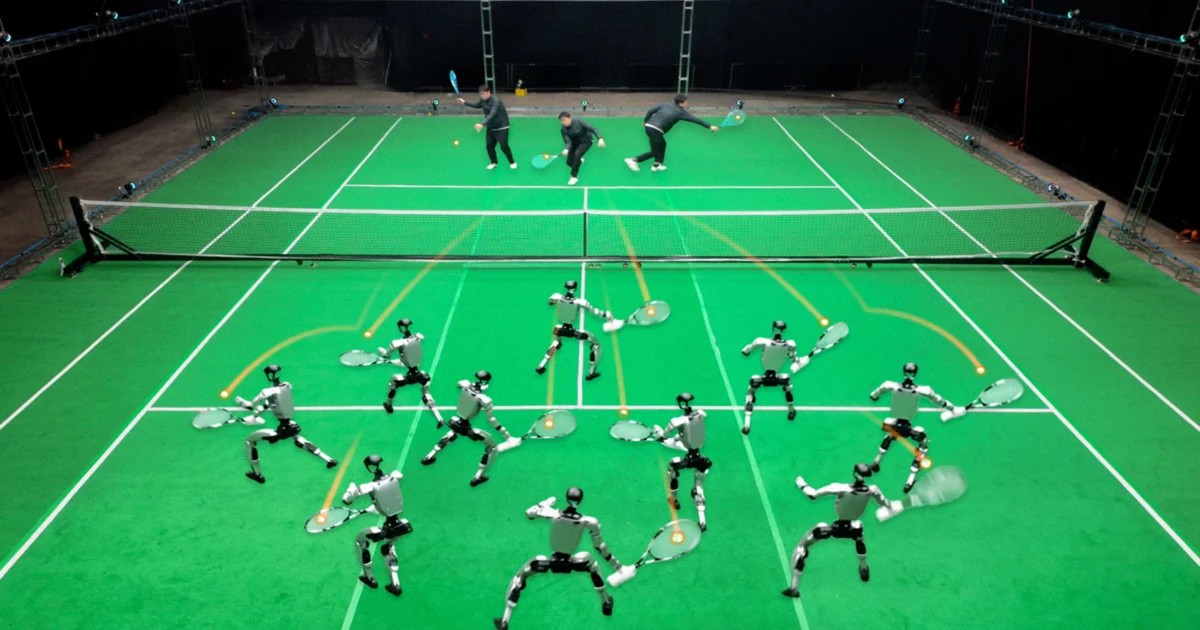
The realm of humanoid robotics is witnessing an unprecedented surge in innovation, with advancements pushing the boundaries of what these bipedal automatons can achieve. From the meticulous assembly lines of electric vehicle factories to the intricate logistics of package sorting facilities, and even to the captivating displays of carefully choreographed martial arts, robots are demonstrating an increasingly sophisticated mastery over complex physical tasks. Beyond industrial and entertainment applications, their capabilities are being tested in more demanding environments, with reports of humanoid robots being deployed to the frontlines of conflicts like the Ukraine-Russia war and even encountering unexpected social challenges, such as startling elderly citizens on public streets, highlighting their nascent integration into human society. Sports, too, have emerged as a fertile ground for showcasing robotic agility and precision, ranging from robots skillfully sinking basketball hoops to engaging in live, crowd-drawing kickboxing matches. Now, a new benchmark has been set, demonstrating a remarkable leap in athletic interaction: the Chinese AI robotics company Galbot has engineered software that empowers a Unitree G1 humanoid robot to play tennis with surprising efficacy, holding its own in rallies against a human engineer.
The achievement, showcased in a video posted by Galbot to social media, depicts the white Unitree G1 robot wielding what appears to be a standard, unmodified tennis racket. With an almost uncanny human-like fluidity, the robot shuffles across the court, precisely timing its movements to return the ball with consistent accuracy. This demonstration moves beyond mere mechanical imitation, signifying a pivotal shift towards intelligent, decision-driven athletic interaction. Galbot’s emphatic claim asserts that, for the first time, a humanoid robot can sustain "high-dynamic, long-horizon tennis rallies with millisecond-level reactions, precise ball striking, and natural whole-body motion." This statement underscores not just the robot’s physical prowess but also the sophistication of its underlying control systems, capable of processing real-time data and executing complex maneuvers with extreme responsiveness. The ability to react in milliseconds is crucial in a fast-paced sport like tennis, where fractions of a second can determine the outcome of a point. Furthermore, "natural whole-body motion" suggests that the robot isn’t just mechanically hitting the ball, but doing so with an efficiency and grace that mimics human movement, a significant challenge in robotics.
While the current demonstration features relatively lighthearted volleys from the human engineer, making direct comparisons to the relentless power and strategic genius of tennis legends like Novak Djokovic or Serena Williams premature, the foundational capabilities exhibited are undeniably impressive. The sheer act of tracking a moving ball, positioning itself correctly, swinging a racket with appropriate force and angle, and repeating this sequence over extended rallies represents a monumental engineering feat. Previous robotic sports endeavors, while impressive, often involved more controlled environments or simpler actions. A robot shooting hoops, for instance, typically involves a fixed target and a predictable trajectory. Kickboxing, while dynamic, relies on pre-programmed sequences and reactive blocks. Tennis, however, introduces variables like unpredictable ball trajectory, spin, varying speeds, and the need for dynamic footwork and racket control, all in a rapidly changing environment. The Unitree G1’s performance hints at a future where robots could potentially serve as advanced training partners, or even compete in specialized robotic sports leagues, pushing the boundaries of athletic performance in unexpected ways.
The core of this breakthrough lies in Galbot’s innovative algorithm, dubbed LATENT (Learning Athletic Humanoid Tennis Skills from Imperfect Human Motion Data). This system deviates from conventional robotic training methods that often require vast amounts of perfectly curated and labeled data. Instead, LATENT leverages "imperfect human motion data," which, according to a yet-to-be-peer-reviewed paper by the company’s engineers, consists "only of motion fragments that capture the primitive skills used when playing tennis rather than precise and complete human-tennis motion sequences from real-world tennis matches." This approach is a significant departure, recognizing that while perfect data is ideal, it is often difficult and expensive to acquire. The engineers’ "key insight" was that even such "quasi-realistic data" could still provide valuable "priors about human primitive skills in tennis scenarios." This means the system doesn’t need to observe thousands of perfect forehands and backhands from professional matches. Instead, it can learn fundamental movements – how a human arm swings, how the body shifts weight, how a racket makes contact – from more readily available, less-than-pristine datasets.
The process involves a sophisticated methodology where these imperfect motion fragments are subjected to "further correction and composition." This likely entails using advanced machine learning techniques, such as reinforcement learning and motion planning algorithms, to refine and integrate these primitive skills into a cohesive, functional policy. The goal is to develop a "humanoid policy that can consistently strike incoming balls under a wide range of conditions and return them to target locations, while preserving natural motion styles." This implies that the robot is not merely mimicking movements but understanding the underlying physics and biomechanics to adapt its actions in real-time. It needs to predict ball trajectory, calculate optimal racket angles, generate the necessary force, and maintain balance – all while ensuring its movements appear smooth and efficient, rather than jerky or robotic. The ability to learn from imperfect data is particularly groundbreaking because it opens up new avenues for training robots in complex, real-world tasks where perfectly controlled data is scarce. This could dramatically accelerate the development cycle for humanoid robots, making them more adaptable and versatile across a multitude of applications. The ongoing peer-review process for the paper will undoubtedly provide further insights and validation for these pioneering techniques.
Despite the undeniable progress, it is crucial to temper excitement with a realistic assessment of current limitations. The "lighthanded volleys" observed in the demonstration video are a testament to the controlled environment of this initial showing. Professional tennis demands not only precise returns but also powerful serves, strategic placement, varying spins, rapid changes in direction, and exceptional endurance over multiple sets. The Unitree G1, while impressive in its current capacity, has a long journey ahead before it can truly contend with human athletes at the highest level. Challenges remain in replicating the sheer power generated by human musculature, the nuanced strategic thinking required to outmaneuver an opponent, and the resilience to perform under pressure. Furthermore, adapting to an opponent’s unique playing style, anticipating their next move, and exploiting weaknesses are cognitive tasks that even advanced AI systems are still grappling with in dynamic, real-time scenarios. However, the foundational work laid by Galbot in teaching a robot to react dynamically and learn from realistic, albeit imperfect, human motion data represents a significant step towards addressing these complex challenges.
The implications of the LATENT framework extend far beyond the tennis court. As the engineers themselves conclude in their paper, "Although this work primarily focuses on the tennis return task, the proposed framework has the potential to generalize to a broader range of tasks where complete and high-quality human motion data are unavailable." This is a profound statement, suggesting that the methodology for learning complex motor skills from fragmented, real-world observations could be applied across various industries. Imagine robots learning intricate assembly tasks in factories where only partial demonstrations are available, or performing delicate surgical procedures by studying imperfect human hand movements. In disaster relief scenarios, where data is inherently chaotic and incomplete, robots trained with such a framework could potentially navigate rubble, provide aid, or perform search and rescue operations with greater autonomy and adaptability. The ability to synthesize coherent, effective policies from less-than-ideal data could be a game-changer for deploying robots in unstructured and unpredictable environments, from space exploration to elder care, where real-world variability is the norm.
This breakthrough positions Galbot and Unitree at the forefront of a rapidly evolving competitive landscape in humanoid robotics, which includes major players like Boston Dynamics, Figure AI, Tesla Bot, Xiaomi, and Agility Robotics. Each company is pushing the boundaries of locomotion, manipulation, and intelligent behavior. Galbot’s focus on learning complex athletic skills from imperfect data provides a unique advantage, potentially allowing for faster development and deployment of robots in diverse, human-centric tasks. It underscores a paradigm shift in how we approach robot training, moving from meticulously programmed movements to more adaptive, learning-based approaches inspired by human cognition. As these systems continue to evolve, we can anticipate robots becoming increasingly integrated into our daily lives, performing tasks that require not just strength and precision, but also agility, adaptability, and a nuanced understanding of human-like motion. The Unitree G1’s tennis match is more than just a captivating spectacle; it’s a powerful glimpse into a future where robots can master complex physical challenges, transforming industries and redefining the very nature of human-robot interaction.