Faris Adani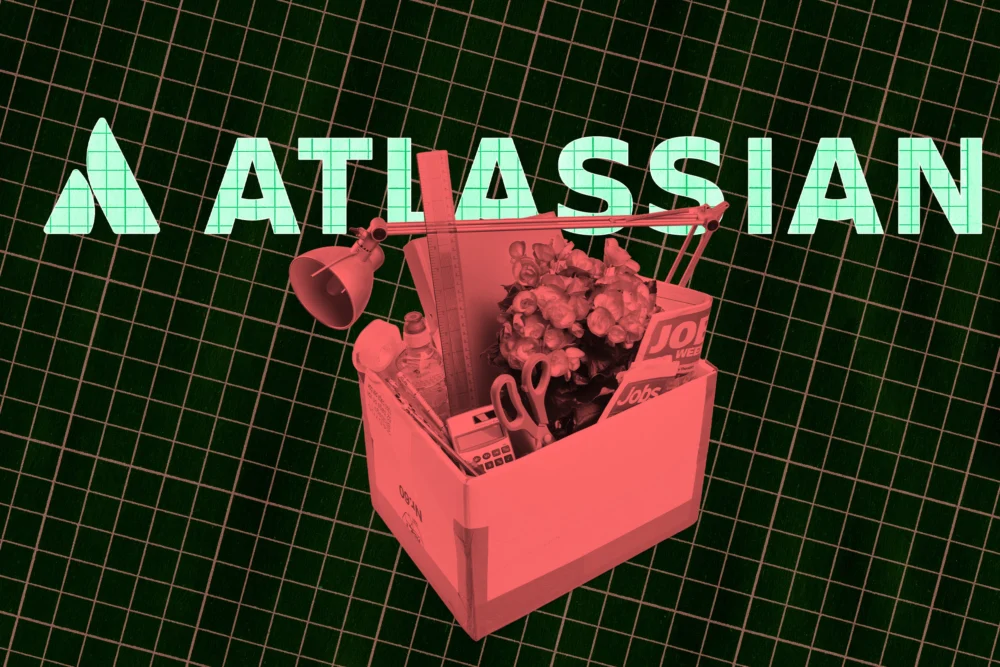
In a significant move reverberating through the global technology sector, prominent Australian software giant Atlassian announced on Thursday, March 11, 2026, its decision to lay off approximately 1,600 employees, representing ten percent of its total workforce, as it embarks on a strategic reorientation to prioritize the burgeoning field of artificial intelligence. This sweeping organizational change, disclosed by the company renowned for its ubiquitous collaboration tools such as Jira, Confluence, Trello, and Bitbucket, underscores a growing trend within the tech industry where AI is increasingly cited as a catalyst for profound shifts in operational models and staffing requirements. Atlassian, a key player in the enterprise software ecosystem, articulated its intention to "rebalance" its resources, specifically channeling investment and talent towards shaping "the future of teamwork in the AI era," as reported by Reuters. The geographical distribution of these significant workforce reductions highlights a global impact, with North America bearing the brunt of the cuts, accounting for 40 percent of the firings, or roughly 600 individuals. Australia, Atlassian’s home base, is set to see 30 percent of the layoffs, while India will experience 16 percent. Despite the substantial scale of the job eliminations, Atlassian’s CEO, Mike Cannon-Brookes, was careful to nuance the narrative, asserting in an internal memo to employees that the company’s "approach is not ‘AI replaces people.’" However, he conceded with striking candor that "it would be disingenuous to pretend AI doesn’t change the mix of skills we need or the number of roles required in certain areas. It does." This delicate framing by Cannon-Brookes reflects a broader, industry-wide tightrope walk, attempting to embrace AI’s transformative potential while mitigating fears of widespread human displacement.
Atlassian’s pivot is not occurring in a vacuum; rather, it mirrors a series of similar announcements from other leading technology firms wrestling with the implications of advanced AI. The recent past has witnessed an palpable sense of market anxiety surrounding AI’s disruptive capabilities, culminating in a near-trillion dollar stock sell-off just last month. This financial tremor was largely instigated by the highly anticipated release of Anthropic’s new Claude Cowork agent, a sophisticated AI tool that promised to automate a range of complex white-collar tasks, including intricate legal work, sending shockwaves through Wall Street. The intensity of this apprehension prompted swift intervention from key figures in the AI domain, notably Nvidia chief Jensen Huang, who publicly dismissed the notion that AI could entirely supersede traditional software as "illogical," striving to temper the spiraling fears. The Atlassian layoffs also draw parallels with the drastic measures taken by Twitter founder and Block CEO Jack Dorsey, who, late last month, announced the termination of 4,000 employees – a staggering forty percent of his fintech company’s global workforce. Dorsey explicitly attributed these cuts to AI, stating that it had "fundamentally" altered "what it means to build and run a company," ushering in a "new way of working" characterized by leaner, more agile teams. Preceding these significant reductions, reports emerged of internal dissent at Block, with employees expressing frustration over mandates from leadership to maximize AI utilization in their daily workflows, highlighting the pressure points such shifts can create within an organization.
From an analytical standpoint, some industry observers have expressed enthusiasm for tech firms’ aggressive reorientation towards AI. Gil Luria, an analyst at DA Davidson, commented to Reuters that "Software companies such as Atlassian have an opportunity to make their business more efficient by adopting AI tools, especially within their product development." This perspective emphasizes AI’s potential as an efficiency multiplier, enabling companies to streamline processes, automate repetitive tasks, and accelerate innovation cycles, thereby potentially reducing the need for human intervention in certain areas of product development, testing, and maintenance. For Atlassian, this could translate into AI-powered features within Jira for automated task assignment and progress tracking, smart suggestions in Confluence for document creation, or even AI-assisted code reviews in Bitbucket. The strategic rationale is clear: embed AI deeply into their product suite to enhance functionality for customers, while simultaneously leveraging AI internally to optimize operations and reduce overhead.
However, the human dimension of these technological shifts cannot be overlooked. Professionals Australia, the union representing Atlassian workers, voiced strong condemnation regarding the manner in which the layoffs were executed, specifically pointing to the lack of consultation or prior warning given to employees about such a monumental restructuring. Paul Inglis, a director at Professionals Australia, articulated the union’s dismay to The Guardian, stating, "These are experienced professionals who have helped build one of Australia’s most successful technology companies from the ground up. They deserve respect, transparency and proper consultation when major decisions about their livelihoods and their future careers are made." This reaction underscores the ethical imperative for companies to manage technological transitions with empathy and accountability, acknowledging the significant impact on individual lives and careers. The abrupt nature of such announcements can erode employee trust, foster anxiety, and potentially damage a company’s reputation as an employer, regardless of the strategic business justifications.
While AI has increasingly been cited as a primary driver for workforce reductions across various industries, a growing chorus of experts and critics argues that the technology’s often over-hyped capabilities may serve as a convenient narrative to obscure other underlying reasons for mass layoffs. These alternative explanations frequently include factors such as aggressive overhiring during the pandemic-induced tech boom, which led to bloated headcounts that became unsustainable in a shifting economic climate; poor management decisions that resulted in misallocated resources or failed projects; or a broader economic downturn characterized by rising interest rates, inflationary pressures, and a tightening of venture capital funding. In this view, AI becomes a powerful, futuristic justification for efficiency drives that might have been necessary regardless, providing a forward-looking explanation that deflects from past strategic missteps or current economic headwinds. Distinguishing between genuine AI-driven displacement and AI being used as a convenient scapegoat for other corporate or economic challenges remains a complex and ongoing debate.
The implications of Atlassian’s decision extend beyond its immediate workforce, reflecting a pivotal moment in the evolution of work itself. The "rebalancing" of skills and roles that CEO Mike Cannon-Brookes alluded to suggests a future where certain tasks traditionally performed by humans will be augmented or entirely automated by AI, necessitating a fundamental shift in the competencies organizations seek. This might mean a reduced demand for roles focused on routine data entry, basic customer support, or manual testing, and an increased demand for AI engineers, data scientists, prompt engineers, and professionals adept at overseeing and integrating AI systems. The challenge for both companies and governments will be to facilitate this transition through robust reskilling and upskilling programs, ensuring that displaced workers have pathways to new opportunities rather than being left behind by rapid technological advancement.
Moreover, the market’s volatile reaction to developments like Anthropic’s Claude Cowork highlights a deeper societal concern about the future of white-collar employment. While AI has historically been associated with automating manual labor, its increasing sophistication in cognitive tasks poses a new set of questions about knowledge work. The reassurances from figures like Jensen Huang, emphasizing AI’s role as an augmentative tool rather than a wholesale replacement for human ingenuity, offer a more optimistic outlook. However, the consistent drumbeat of layoffs citing AI, whether as a primary cause or a contributing factor, keeps the specter of job displacement alive. The controversy surrounding Jack Dorsey’s "Love" hat worn during the announcement of Block’s layoffs, as detailed in related news, further exemplifies the disconnect that can arise between corporate messaging and the profound human impact of such decisions. Ultimately, Atlassian’s pivot serves as a microcosm of a larger, ongoing transformation, where the promise of AI-driven efficiency and innovation must be carefully weighed against the imperative for ethical leadership, transparency, and a genuine commitment to the well-being of the human workforce that continues to build and sustain the digital world. The journey into the "AI era" promises unprecedented change, but navigating it successfully will require more than just technological prowess; it will demand profound social and ethical foresight.