Faris Adani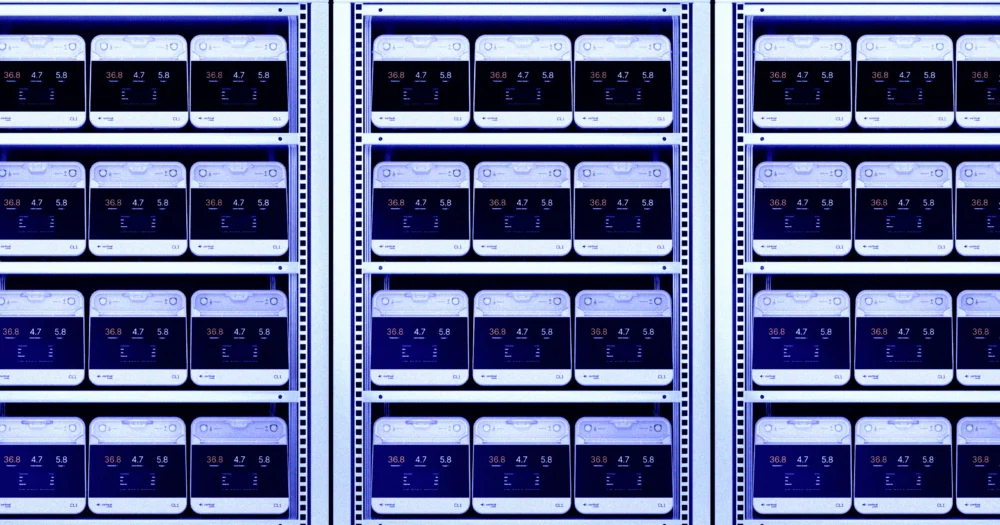

Cortical Labs
Sign up to see the future, today
Can’t-miss innovations from the bleeding edge of science and tech
New Data Centers Will Be Powered by Human Brain Cells. In a groundbreaking leap for neuromorphic computing, Australian biotech pioneer Cortical Labs is poised to revolutionize the landscape of artificial intelligence infrastructure with the unveiling of its “biological data centers” in Melbourne, Australia, and Singapore, marking a profound shift from conventional silicon-based processors to living “wetware.” This ambitious undertaking, as reported by Bloomberg, leverages arrays of Cortical Labs’ proprietary CL1 biological computers, each powered by hundreds of thousands of living human neurons, to tackle computational challenges that currently burden traditional AI hardware.
The journey towards these bio-centric data centers began gaining significant public attention last year when Cortical Labs first introduced its CL1 system, proudly touting it as the “world’s first code deployable biological computer.” This initial iteration comprised a remarkable 200,000 living human neurons meticulously cultivated and integrated onto a specialized microchip. The core principle behind CL1 involves a symbiotic relationship between biological intelligence and digital interfacing: electrical signals are sent to the neurons, which are derived from human blood stem cells, and the embedded chips then record the neurons’ complex electrical responses as computational output. This innovative approach moves away from the rigid, sequential processing of von Neumann architecture towards a more fluid, parallel, and event-driven computation, mimicking the brain’s inherent efficiency.
The capabilities of these biological units have shown a rapid and impressive progression. In 2022, researchers at Cortical Labs successfully demonstrated a rudimentary form of learning by teaching the neural networks within the CL1 to play the classic video game Pong. While a significant proof-of-concept, this achievement paled in comparison to their subsequent breakthrough. By February of the preceding year (2025, relative to the article’s 2026 publication date), the company showcased an astonishing advance: the same neuronal assemblies had been trained to play the seminal first-person shooter game, Doom. This transition from Pong’s simple paddle mechanics to Doom’s intricate spatial navigation, object recognition, and strategic decision-making represented a monumental leap in the complexity of tasks that could be handled by biological computers. It underscored the neurons’ capacity for complex adaptation, learning from environmental feedback, and exhibiting emergent intelligence far beyond mere pattern recognition. This ability to embody a more sophisticated form of “intelligence” within a biological substrate has propelled the vision of scalable “wetware” into tangible reality.
Now, Cortical Labs is ready to scale this pioneering technology into an industrial application. Instead of the vast, energy-hungry server farms populated by Nvidia’s cutting-edge GPUs, these new facilities will house racks upon racks of CL1 biological computers. The term “wetware” itself, coined to describe this fusion of biological and computational elements, evokes a sense of both awe and unease, highlighting the profound implications of using living tissue as a computational medium. This is not merely an academic exercise; it’s a strategic move into the future of data processing.
To bring this vision to fruition, Cortical Labs has forged a critical partnership with DayOne Data Centers, a collaboration designed to provide the necessary infrastructure and expertise for deploying and maintaining these novel systems. The initial rollout includes two strategically located facilities. The Melbourne data center is slated to host 120 CL1 units, serving as an early-stage hub for testing and refinement. The ambitions for the Singapore location are significantly grander, with DayOne Data Centers planning to deploy as many as 1,000 CL1 units. This scale suggests a genuine intent to establish a viable alternative to conventional data processing, offering a glimpse into a future where biological systems could underpin significant portions of global computing power.
One of the most compelling arguments for adopting biological computers lies in their staggering energy efficiency, a critical advantage in an era increasingly grappling with the environmental footprint of digital infrastructure. Cortical Labs emphatically claims that future biological data centers will consume merely “a fraction of the power used by conventional AI processors.” CEO Hon Weng Chong elaborated on this, stating that each CL1 node requires less power than a handheld calculator to operate. To put this into perspective, a modern high-end GPU, like those manufactured by Nvidia and widely used in AI data centers, can consume hundreds of watts, with entire racks demanding kilowatts of power. The aggregate power savings from scaling thousands of CL1 units could be transformative, drastically reducing operational costs and environmental impact. This inherent efficiency stems from the brain’s own design, which performs incredibly complex computations using only about 20 watts of power – a stark contrast to the massive energy demands of today’s supercomputers attempting to emulate similar feats. Biological neurons operate in an analog, massively parallel fashion, firing only when necessary (sparse coding), which inherently conserves energy compared to the continuous clock cycles and transistor switching in digital silicon.
Despite the tantalizing promise, numerous critical questions and challenges remain. Most pressing is the issue of practical utility and computational equivalence. While playing Doom is a compelling demonstration, it is not yet clear what specific real-world applications these units can effectively handle, nor how their computational prowess compares directly to the speed, throughput, and accuracy of current top-of-the-line data center chips. Can they efficiently train large language models, perform complex simulations, or process vast datasets with the speed and reliability expected in enterprise-grade computing? Researchers must define benchmarks and metrics to objectively evaluate “wetware” performance against established “hardware” standards.
Beyond performance, the operational aspects of biological data centers present unique hurdles. The longevity and stability of neuronal cultures are crucial; unlike silicon chips that operate for years, biological systems require continuous nutrient supply, precise temperature and pH control, and careful waste removal to prevent degradation. Questions surrounding error rates, system reliability, and the graceful degradation of biological components will need robust engineering solutions. Furthermore, the ethical implications of creating and deploying systems powered by human brain cells are profound. Concerns about the potential for rudimentary consciousness or sentience, even if speculative, will inevitably arise and demand careful consideration, ethical guidelines, and public dialogue. The source of the stem cells, issues of informed consent, and the responsible disposal of biological waste are also aspects that require transparent and ethically sound frameworks.
Nonetheless, if these challenges can be effectively addressed, Cortical Labs’ approach offers an elegant and timely response to the burgeoning environmental crisis precipitated by traditional AI data centers. The proliferation of AI has led to an exponential increase in data center construction, which in turn has created significant environmental burdens. These facilities are notorious for generating copious amounts of noise from their cooling systems, consuming staggering amounts of water for cooling towers (often draining local resources), and placing immense strain on regional electricity grids, often leading to increased local electricity prices. The energy demands of AI are projected to grow exponentially, threatening to derail climate change mitigation efforts. By offering a fundamentally more energy-efficient paradigm, “wetware” could represent a critical pathway towards more sustainable and environmentally responsible advanced computing.
The ambitious plans of Cortical Labs, in partnership with DayOne Data Centers, signify a bold new frontier in computing, one that blurs the lines between biology and technology. While the journey from playing Pong to powering global AI infrastructure is fraught with scientific, engineering, and ethical complexities, the potential reward – a vastly more efficient, perhaps even more intelligent, form of computation – is immense. The establishment of these biological data centers is not just an engineering feat; it’s a philosophical statement about the future of intelligence and our relationship with the natural world, pushing the boundaries of what we conceive as a “computer” and inviting us to reconsider the very substrate of thought. The future of data processing might just be alive.