Faris Adani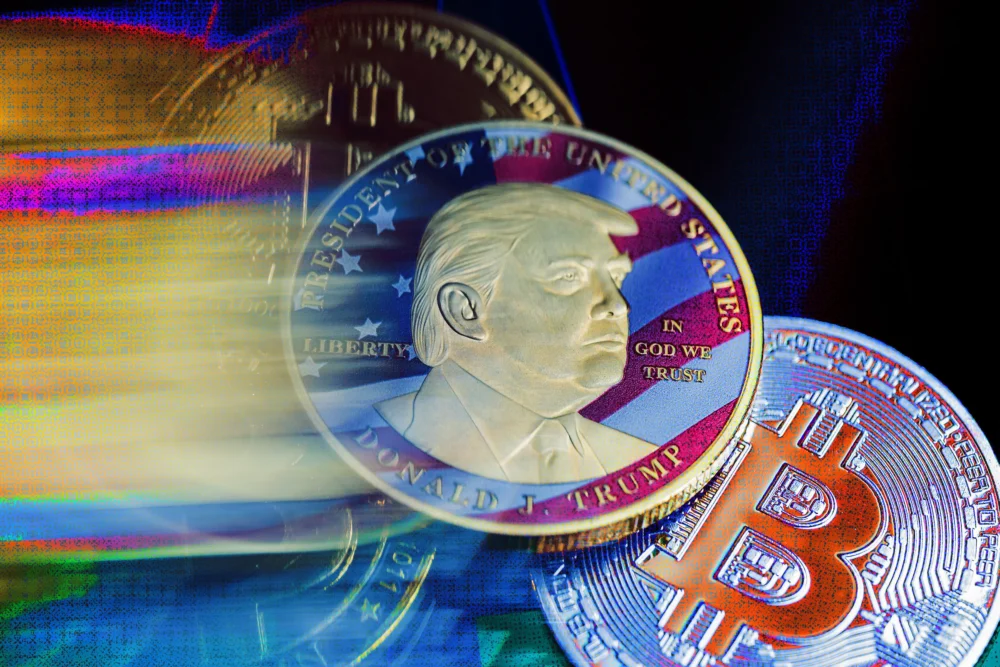
The speculative world of cryptocurrency, known for its dizzying highs and devastating lows, has seen few collapses as dramatic and politically charged as that of the Donald Trump-themed meme coin, $TRUMP. Launched with characteristic fanfare ahead of what was anticipated to be his second inauguration in January of last year, the Solana-based token initially captivated a fervent base of supporters and opportunistic investors alike. Its meteoric rise, briefly propelling its value to over $75, offered a tantalizing glimpse of instant wealth, momentarily adding billions in "paper wealth" to the former president’s reported net worth and fueling headlines about his ascendancy among the world’s wealthiest individuals. This initial surge, however, proved to be a fleeting illusion, as the coin has since embarked on a relentless downward trajectory, a financial mirror reflecting the fluctuating fortunes of its namesake’s approval ratings and political standing.
Indeed, the fall of $TRUMP has been spectacular, even by the standards of a figure whose business ventures have, at times, faced their own well-documented challenges. On a recent Tuesday night, the meme coin plunged to a meager $2.87, marking its lowest point since its inception. This precipitous drop represents a staggering 96 percent plummet from its all-time high, a brutal correction that has undoubtedly left countless investors, many of whom were loyal Trump supporters, with significantly diminished portfolios. By press time, the value had eroded even further, resting at a dismal $2.73, signaling continued volatility and a seemingly relentless march towards irrelevance.
This dramatic downturn for $TRUMP coin arrives amidst a broader period of turbulence for the cryptocurrency market as a whole. Even established digital assets like Bitcoin have not been immune, experiencing a significant dip of over 38 percent in value over the past six months. This market-wide correction can be attributed to a confluence of factors, including rising interest rates, global economic uncertainties, tightening regulatory scrutiny, and a general shift away from high-risk assets. However, unlike the politically tethered meme coin, Bitcoin has recently shown tentative signs of stabilization and potential recovery, buoyed by factors such as the anticipation of its halving event, increasing institutional adoption, and a resilient, if sometimes fickle, investor base. The contrast highlights $TRUMP’s unique vulnerability, demonstrating that its fate is intrinsically linked not just to market sentiment but to the polarizing persona it embodies.
The very existence of a meme coin bearing the name of a sitting or former president, or even a leading presidential candidate, raises profound ethical questions and presents a glaring conflict of interest. The intertwining of political influence with speculative financial instruments creates a murky landscape ripe for exploitation and potential abuse. Critics argue that such ventures blur the lines between political endorsement and financial speculation, leveraging public trust and partisan loyalty for personal gain. It establishes a dangerous precedent where a public servant, or someone aspiring to public office, can directly benefit from the volatile trading of a token named after them, without clear regulatory oversight or accountability mechanisms.
Adding to the controversy and what many perceive as the sleaziness of the entire venture are the compelling allegations of a "rug pull" — a common scam in the crypto world. In a classic rug pull, developers or early investors of a new cryptocurrency project hype up the coin, encouraging others to buy in and drive up its price. Once the value has sufficiently inflated, these insiders abruptly sell off their massive holdings, cashing out at peak prices and leaving later investors with nearly worthless assets. The sudden sell-offs by an early, privileged group of investors just days after $TRUMP’s launch bear all the hallmarks of this deceptive practice. Reports indicate that these initial investors, who acquired the token at dirt-cheap prices immediately following its official announcement, collectively cashed out nearly $700 million. One particularly egregious example highlighted an individual who reportedly set up an account just hours before Trump launched the coin and subsequently walked away with a staggering $109 million.
These swift and massive divestments by insiders inevitably triggered a collapse in the coin’s price, leaving the average investor, many of whom were likely enthusiastic but financially unsophisticated Trump supporters, holding the bag. They bought into the hype, perhaps driven by a sense of loyalty or the dream of participating in a movement, only to find their investments decimated while a select few reaped exorbitant profits. This pattern not only erodes trust in the cryptocurrency space but also raises serious concerns about the financial exploitation of a political base.
Despite the devastating losses incurred by many of its retail investors, the venture proved to be a gangbusters business for those at the top. The Trump family, or entities associated with them, reportedly raked in over $100 million in trading fees within just two weeks post-launch. This figure underscores the immense financial incentives behind such politically branded crypto projects. By January, financial publications like the Financial Times reported that the $TRUMP coin, along with its successor, the First Lady-themed $MELANIA coin, had collectively generated an astonishing approximately $427 million in sales and trading fees. These figures paint a stark picture of significant financial windfalls flowing to the creators and early beneficiaries of these tokens, even as their values plummeted for the vast majority of latecomers.
The saga of the $TRUMP meme coin serves as a cautionary tale at the volatile intersection of celebrity, politics, and decentralized finance. It highlights the inherent risks of investing in highly speculative assets, particularly those whose value is tethered to public figures and political sentiment rather than tangible utility or robust technological innovation. Beyond the financial losses, it underscores the ethical morass created when political figures, or those around them, engage in activities that appear to monetize their influence through unregulated and often manipulative financial instruments. While the allure of quick riches in the crypto world remains potent, the spectacular implosion of $TRUMP coin stands as a stark reminder that in this wild west of digital assets, even the most charismatic figures cannot guarantee a safe landing for their followers’ investments. The "disaster" of $TRUMP is not just a story of a failing digital token; it is a narrative of trust betrayed, financial vulnerabilities exposed, and the enduring consequences when the lines between political allegiance and speculative finance become dangerously blurred.