anjir abdul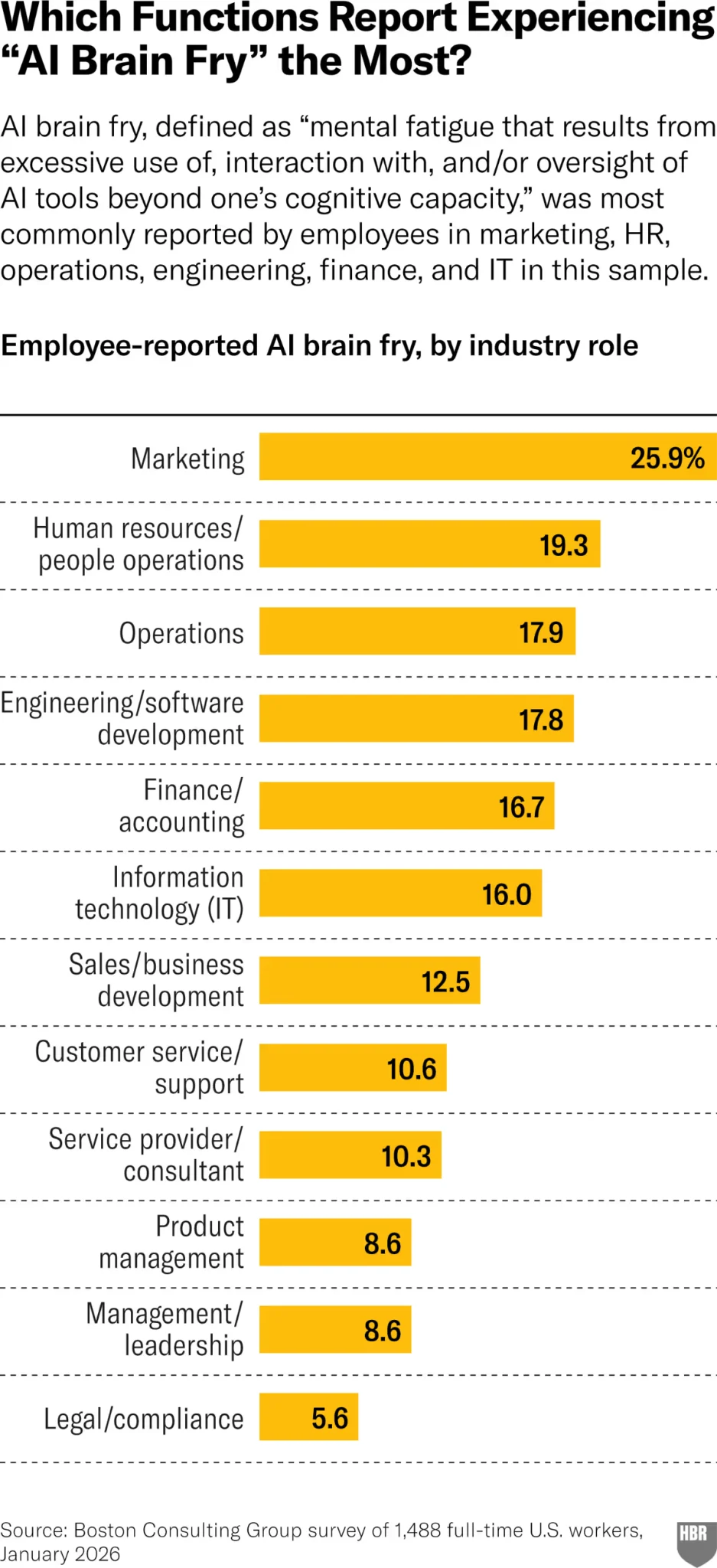
The promise of artificial intelligence was a future where laborious tasks diminished, freeing human workers for more creative, strategic, and fulfilling endeavors. However, new research indicates a starkly different reality, revealing that the excessive use and constant oversight of AI tools in the workplace are leading to a novel form of cognitive exhaustion dubbed “AI brain fry.” This emerging phenomenon contradicts the very assurance that AI would alleviate job pressures, instead intensifying work and imposing significant mental strain on employees across various sectors.
Researchers from the Boston Consulting Group (BCG) and the University of California, in a compelling study published recently in the Harvard Business Review, shed light on this concerning trend. Their findings challenge the prevailing narrative of AI as an unmitigated productivity booster, suggesting that its integration into daily workflows is creating unforeseen psychological burdens. The study, which surveyed nearly 1,500 full-time U.S. workers, found that a significant 14% reported experiencing what they termed “AI brain fry.” This condition is defined as “mental fatigue that results from excessive use of, interaction with, and/or oversight of AI tools beyond one’s cognitive capacity.”
The symptoms described by respondents painted a vivid picture of this novel workplace ailment. Individuals reported a pervasive “mental hangover,” characterized by a persistent “fog” or a disorienting “buzzing” sensation that made clear thinking nearly impossible. Beyond these subjective experiences, workers also suffered from tangible physical and cognitive impairments, including frequent headaches, noticeably slower decision-making processes, and a profound difficulty in maintaining focus. These symptoms collectively point to a state of cognitive overload, where the brain struggles to process the constant influx of information and demands associated with managing and supervising AI systems.
Notably, the study identified specific roles as being more susceptible to AI-induced brain fry. Marketing and Human Resources professionals reported the highest levels of this mental fatigue. This finding suggests that roles requiring high levels of creativity, nuanced communication, and intricate human interaction – areas where AI tools are often employed for content generation, initial drafts, or data analysis – might be particularly vulnerable. The constant need to scrutinize AI-generated output for accuracy, tone, and appropriateness, combined with the inherent ambiguity of these tasks, could explain why these professionals experience greater cognitive load.
The push for AI adoption has been relentless, driven by AI companies touting their products as revolutionary productivity enhancers. The narrative has largely centered on AI’s ability to offload significant portions of workloads, thereby streamlining operations and boosting efficiency. This message has resonated with many organizations, some of which have gone so far as to integrate AI use into their performance metrics. This corporate imperative often translates into pressure on employees to not only adopt but actively utilize AI tools, sometimes without a clear understanding of optimal application or potential drawbacks.
A prominent example of this aggressive integration comes from the cryptocurrency exchange Coinbase. CEO Brian Armstrong publicly stated that he had dismissed engineers who resisted using AI tools, underscoring a corporate culture that prioritizes AI adoption. Furthermore, Armstrong set an ambitious goal late last year to have AI generate nearly half of the platform’s code. While such directives aim for efficiency and innovation, they can inadvertently create an environment where employees feel compelled to interact with AI tools even when it might not be the most effective or healthy approach, leading to the very brain fry the research highlights.
The intensification of work, contrary to AI’s promise of simplification, stems from several factors. As enterprises increasingly deploy "multi-agent systems," employees find themselves constantly "toggling between more tools." This ceaseless switching between different AI interfaces, human collaboration platforms, and traditional software introduces significant cognitive overhead. The researchers eloquently noted, “Contrary to the promise of having more time to focus on meaningful work, juggling and multitasking can become the definitive features of working with AI.” This constant context-switching, a known drain on mental resources, prevents deep work and contributes to the feeling of being overwhelmed rather than empowered.
The repercussions of AI brain fry extend far beyond individual discomfort, carrying “significant costs” for organizations. The research identified a clear correlation between AI-induced mental strain and increased employee errors, heightened decision fatigue, and a greater intention to quit. These outcomes directly impact productivity, quality of work, and talent retention, posing substantial financial and operational risks for businesses.
Specifically, study respondents suffering from AI brain fry experienced 33% more decision fatigue compared to their counterparts who did not. Decision fatigue, a state where the quality of decisions deteriorates after a long session of decision-making, can be incredibly costly. For large companies, the cumulative effect of impaired judgment across numerous employees could translate into millions of dollars annually in suboptimal choices, missed opportunities, or rectifying errors. This includes anything from strategic missteps to flawed operational decisions, all stemming from a workforce whose cognitive resources are depleted.

Moreover, those grappling with AI brain fry were approximately 40% more likely to express an active intent to quit their jobs. This statistic is alarming in today’s competitive labor market, where employee retention is a critical challenge. The mental toll of constant oversight and interaction with AI is evidently pushing valuable talent towards the exit, leading to increased recruitment costs, loss of institutional knowledge, and disruption to team dynamics. The cost of replacing an employee can range from half to double their annual salary, making this a significant financial burden for organizations failing to address AI brain fry.
Perhaps most concerning is the impact on work quality. Respondents reporting AI brain fry also self-reported making nearly 40% more major errors than those who did not experience it. A “major error” was defined as one with “serious consequences, such as those that could affect safety, outcomes, or important decisions.” This could manifest in critical coding bugs, flawed marketing campaigns, incorrect financial analyses, or mismanaged HR cases, all with potentially severe repercussions for the company’s reputation, bottom line, and even legal standing. The very tools meant to enhance precision and reduce human error are, ironically, leading to an increase in critical mistakes when improperly managed.
Despite these significant challenges, the research also presented a crucial nuance: AI is not inherently detrimental to worker well-being. The study found that when AI is strategically deployed to replace repetitive and routine tasks, it can significantly decrease burnout. Burnout, a state of chronic workplace stress characterized by feelings of exhaustion, cynicism, and reduced effectiveness, is a pervasive issue in modern workplaces.
Respondents who leveraged AI to reduce the time spent on mundane, predictable tasks reported their levels of burnout were 15% lower than those who did not use AI in this manner. This suggests a clear distinction: AI excels at automation, data processing, and handling predictable workflows, thereby freeing human workers from the drudgery that often contributes to burnout. Examples include automating data entry, drafting initial versions of standard emails, scheduling meetings, or performing preliminary research. By offloading these tedious elements, employees can allocate their cognitive energy and time to more complex problem-solving, creative thinking, and interpersonal engagement—tasks that are uniquely human and often more fulfilling.
In light of these findings, the researchers offered critical recommendations for company leaders aiming to harness AI’s potential without inducing brain fry. Firstly, organizations must “clearly define AI’s purpose in the organization.” This involves articulating a coherent vision for AI integration, outlining specific objectives, and ensuring that employees understand how AI tools fit into the broader strategic goals. Without this clarity, AI adoption can become haphazard, leading to confusion and inefficient use.
Secondly, leaders need to explicitly “explain how workloads will change with the tool.” This requires transparent communication, comprehensive training, and realistic expectations about the evolving nature of roles. It’s crucial to acknowledge that AI might not simply reduce workload but fundamentally alter the type of work, demanding new skills in oversight, prompt engineering, and critical evaluation.
Finally, companies should prioritize “measurable outcomes” for AI utilization rather than simply incentivizing the quantity of use. The researchers cautioned that “incentivizing quantity of use will lead to waste, low-quality work, and unnecessary mental strain.” Instead, metrics should focus on genuine improvements in efficiency, accuracy, innovation, and employee well-being. This shift ensures that AI is used intelligently and purposefully, rather than becoming another performative task that adds to cognitive burden.
Beyond these recommendations, a holistic approach to AI integration is essential. Organizations should invest in comprehensive AI literacy programs that teach employees not only how to operate AI tools but also when not to use them, how to critically evaluate AI output, and understand their limitations. Encouraging regular breaks, promoting digital detoxes, and fostering a culture of open feedback regarding AI’s impact on mental health are also vital. Ultimately, the goal should be to design human-centered AI systems and workflows that augment human capabilities rather than overwhelm them.
The advent of AI in the workplace presents a complex duality: a powerful tool for progress and a potential source of unprecedented mental fatigue. The phenomenon of “AI brain fry” serves as a crucial wake-up call, urging organizations to move beyond a simplistic view of AI as a universal panacea for productivity. By thoughtfully defining AI’s role, transparently managing expectations, and prioritizing quality over mere quantity of use, businesses can navigate this new frontier. The future of work, enriched by AI, depends on a balanced approach that respects human cognitive limits while harnessing technology’s transformative power, ensuring that innovation truly serves human well-being rather than diminishing it.