Faris Adani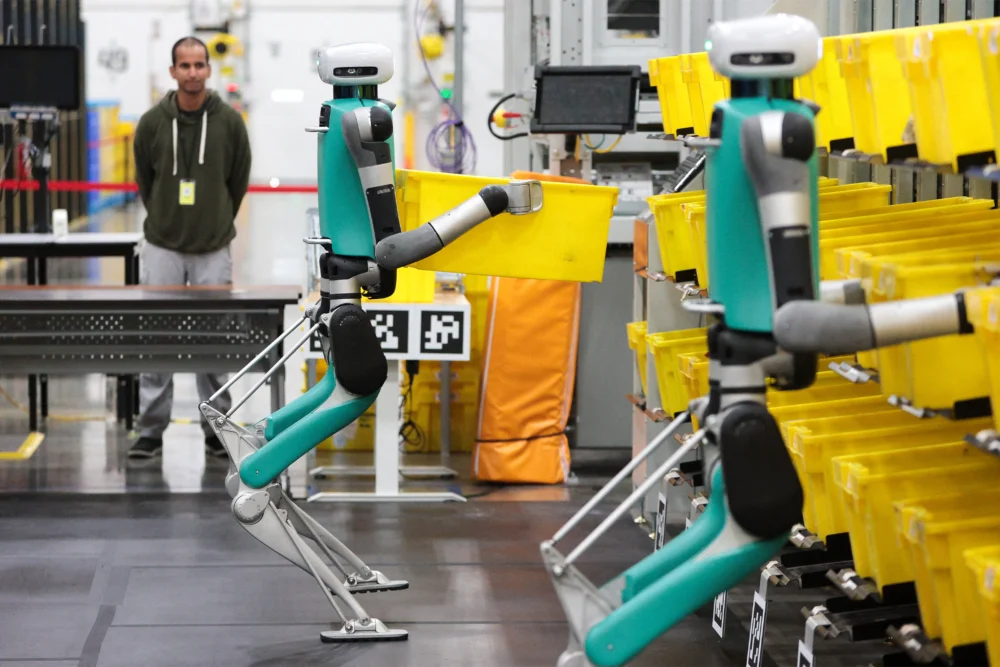
Staffers at Amazon’s pioneering robotics division are confronting a stark and perhaps ironic lesson in the era of advanced automation: even those at the forefront of designing a more efficient future are not immune to the relentless drive for operational streamlining and cost reduction. The recent job cuts within this critical branch of Amazon’s operations underscore a complex interplay of post-pandemic economic recalibration, strategic re-prioritization, and the ever-present pressure to optimize, even if it means reducing human capital in a sector dedicated to replacing it.
This week, reports from Business Insider confirmed that Amazon is implementing significant job reductions within its robotics division, a segment that has been instrumental in deploying and managing over 1 million robots across the company’s vast global network of fulfillment centers. While an exact figure for the current round of layoffs remains undisclosed, the division boasted a reported headcount exceeding 3,000 in 2025, as detailed by the New York Times. In response to inquiries from BI, an Amazon spokesperson characterized the cuts as a "relatively small number of robotics roles," attempting to temper concerns about the scale of the impact. However, the symbolic weight of these layoffs within a division synonymous with Amazon’s future strategy is undeniably substantial. In an internal message circulated to employees on Tuesday, Amazon’s Robotics Vice President, Scott Dresser, reportedly described the layoffs as "difficult but necessary," while simultaneously reiterating that the robotics branch remains a "strategic priority" for the company. This dual message reflects the delicate balance Amazon aims to strike: pursuing efficiency and cost-cutting measures while reassuring stakeholders of its continued commitment to technological advancement.
The roots of Amazon’s robotics prowess trace back to its visionary acquisition of Kiva Systems in 2012 for $775 million. This strategic move transformed Amazon’s fulfillment capabilities, replacing static conveyor belts and human-led picking with agile, orange-hued autonomous mobile robots that bring shelves directly to human workers. Over the past decade, Amazon Robotics has expanded far beyond these initial Kiva bots, now deploying a sophisticated array of robotic systems including robotic arms like Sparrow and Cardinal for item handling, advanced sortation systems, and newer autonomous mobile robots like Proteus, designed to navigate safely alongside human employees. These innovations have dramatically enhanced warehouse efficiency, accelerated delivery times, and improved safety in some respects, allowing Amazon to process billions of packages annually with unparalleled speed and scale. The division has been a cornerstone of Amazon’s operational advantage, making the decision to cut jobs here particularly noteworthy and indicative of broader strategic shifts.
These latest reductions in the robotics division are not isolated incidents but rather the newest chapter in an unprecedented period of corporate restructuring for the tech and commerce giant. Since 2022, Amazon has embarked on a sweeping layoff spree, shedding over 57,000 corporate jobs across various departments. This includes the largest single round of cuts in the company’s history, impacting over 30,000 positions in October 2025, followed by an additional significant wave of layoffs in January of the current year. These reductions have spanned a wide spectrum of Amazon’s empire, affecting divisions from Alexa and Twitch to its People Experience and Technology (PXT) team, retail operations, and even parts of Amazon Web Services (AWS) and its healthcare venture, One Medical.
The primary driver behind this extensive workforce reduction is widely attributed to what analysts term "pandemic-era overhiring." During the peak of the COVID-19 pandemic, Amazon, like many tech companies, experienced an explosive surge in demand for e-commerce services. This led to aggressive hiring campaigns and significant expansion of its logistical infrastructure to meet unprecedented consumer needs. However, as global economies have stabilized, inflation has risen, and consumer spending patterns have shifted back towards pre-pandemic norms, Amazon found itself with an inflated workforce relative to its current operational requirements. The subsequent economic slowdown and rising interest rates have compelled the company to recalibrate its expenditures and optimize its human capital, making these layoffs a direct response to a changed market landscape.
A pertinent question arises regarding the role of artificial intelligence (AI) in these layoffs. While some media narratives and public discourse often link tech layoffs directly to AI’s ability to automate tasks, the situation at Amazon appears more nuanced. The original report acknowledges that, despite staff reductions, Amazon is significantly increasing its budget through 2026, with projected capital expenditures for AI data centers soaring up to $200 billion. This substantial investment primarily targets the expansion of Amazon Web Services’ (AWS) infrastructure, enabling the development and deployment of advanced generative AI models and cloud-based AI services for its vast client base. This focus on AI infrastructure and services, rather than direct internal job replacement by AI, suggests a strategic reallocation of resources.
The layoffs in the robotics division, while perhaps indirectly influenced by the broader push for AI-driven efficiency, are not necessarily a direct result of robots becoming so advanced they require no human oversight. Instead, it might signify a shift in the types of human expertise Amazon requires. As robots become more autonomous and interconnected, the demand might pivot from traditional robotics engineers to specialists in AI, machine learning, data science, and cloud integration, who can develop sophisticated algorithms to optimize robot performance, predictive maintenance, and complex logistical orchestration. Thus, while the company remains deeply committed to automation, the skill sets deemed critical for future innovation might be evolving, leading to adjustments in the workforce composition. It’s less about AI replacing these specific robotics jobs, and more about Amazon strategically investing in the foundational AI infrastructure that will power its next generation of services and potentially, a more streamlined robotics division requiring different kinds of human talent.
This situation highlights what can be termed the "automation paradox." Those who build, maintain, and innovate in the field of automation are themselves susceptible to the very principles of efficiency and optimization that their creations embody. The current layoffs within Amazon Robotics serve as a stark reminder that in the relentless pursuit of corporate overhead reduction and strategic investment in emerging technologies like AI, no division, regardless of its perceived future-forward nature, is entirely immune from scrutiny.
The ongoing restructuring within Amazon could have several implications. For internal morale, it undoubtedly creates a climate of uncertainty, even for employees in seemingly secure, high-tech roles. For the robotics division itself, it may lead to a sharper focus on core projects, potentially prioritizing initiatives with clear, immediate ROI. Amazon’s long-term commitment to automation remains steadfast; the company’s public statements and massive infrastructure investments in AI underscore its belief in a technologically advanced future. However, the path to that future involves continuous re-evaluation of its human capital, its spending, and its strategic priorities.
Ultimately, the layoffs at Amazon’s robotics division are a microcosm of a larger trend observed across the tech industry: a necessary recalibration following a period of hyper-growth, coupled with a strategic pivot towards high-potential areas like generative AI. While the public often fears AI will directly replace jobs en masse, Amazon’s situation illustrates a more complex reality: companies are optimizing their operations, making tough personnel decisions based on economic realities, and strategically funneling resources into building the next wave of technological infrastructure. For the robotics staffers affected, it’s a hard-earned lesson in the dynamic and sometimes unforgiving landscape of modern technological progress, where even the architects of automation find themselves subject to its transformative forces.