Faris Adani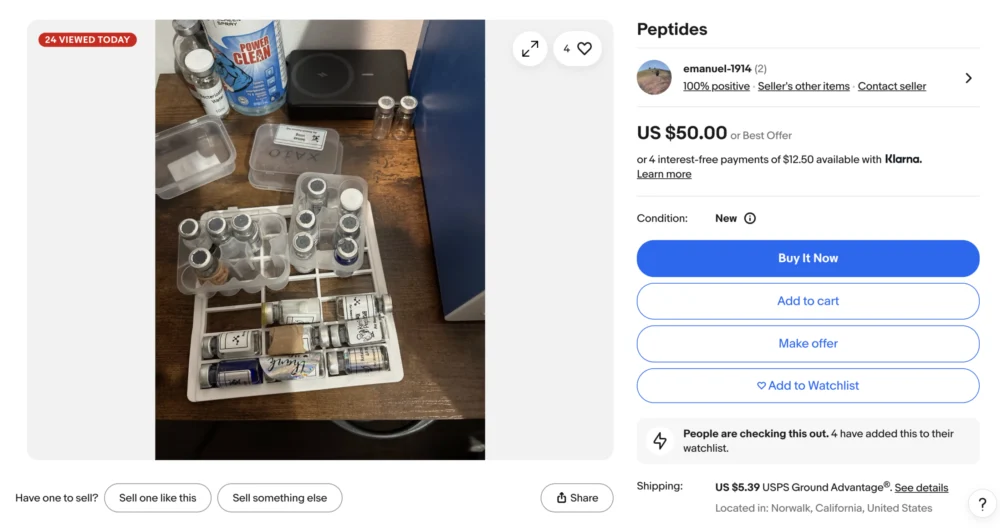


eBay / Getty / Futurism
Sign up to see the future, today

Can’t-miss innovations from the bleeding edge of science and tech
**eBay’s Shadow Market: Unregulated Russian Peptides Flood E-Commerce Giant, Raising Alarms Over Public Health and Regulatory Gaps**
A troubling investigation reveals that eBay, one of the world’s largest e-commerce platforms, is awash with an alarming array of unregulated “peptide” substances, many originating from Russia, marketed without prescription or discernible oversight. These products, ranging from pills to injectable ampoules, are fueling a growing “DIY peptide craze” and presenting significant public health risks due to their murky provenance, unverified claims, and the complete absence of regulatory scrutiny by bodies like the US Food and Drug Administration (FDA).
A quick digital expedition into eBay’s vast marketplace uncovers a veritable cornucopia of dubious substances promoted as amino acid products. Terms like “Chonluten respiratory regulators,” “Ovagen liver capsules,” “L Cartitine ampoules,” and “Gotratix A-18 supplements” read more like illicit contraband from a dystopian sci-fi narrative than legitimate health aids. While peptides themselves have genuine and often groundbreaking medical applications – such as GLP-1 receptor agonists like Ozempic and Wegovy, which are rigorously tested prescription drugs – the offerings on eBay occupy a perilous gray zone. These substances are not prescription medications, nor do they appear to be subject to any robust regulatory oversight, making their efficacy, safety, and even their actual contents highly questionable.
The rabbit hole deepens quickly beyond mere pills, revealing a battery of injectable substances that explicitly cater to the burgeoning biohacking and self-experimentation communities. Like its e-commerce counterpart Temu, eBay has become an unwitting, or perhaps indifferent, facilitator for a market flooded with “peptide” products of deeply uncertain provenance. For example, a box of “A-15 Zhenoluten Ovary peptide bioregulator” pills, purportedly developed by the St. Petersburg Institute of Bioregulation and Gerontology (SPBIG), can be purchased for around $55. The packaging claims Zhenoluten is derived from pig and cow intestines – a detail that raises immediate questions about sourcing, purity, and potential contaminants.
Further scrutiny reveals that while Zhenoluten is distributed by “Vita Stream Inc.” based in Kirkland, Washington, the actual manufacturing is carried out by a firm headquartered on Kamennoostrovsky Prospekt in Saint Petersburg, Russia. According to the Better Business Bureau, Vita Stream Inc. is majority-owned by Russian footballer Roman Eremenko. This company offers a suite of similar ingestibles on eBay, including “Gotratix,” supposedly derived from an A-18 muscle peptide complex; “Glandokort,” from an A-17 adrenal peptide complex; and “Suprefort,” originating from an A-1 pancreas peptide complex. The common thread among these products is their affiliation with SPBIG and its controversial “peptide bioregulator” theory.
The St. Petersburg Institute of Bioregulation and Gerontology, founded by Dr. Vladimir Khavinson, has long promoted a theory that specific short-chain peptides can regulate gene expression and restore the function of various organs, effectively acting as “geroprotectors” or anti-aging agents. While the institute publishes research and presents its findings at international conferences, its claims and methodologies often stand outside the mainstream scientific consensus, particularly in Western medicine, which demands rigorous, independent clinical trials for therapeutic substances. The “A-series” peptides are central to this theory, each designed to target a specific organ or system. However, none of these products, when sold on platforms like eBay, have undergone the necessary testing, approval, or even basic ingredient verification by the US Food and Drug Administration (FDA) or equivalent bodies in other developed nations. This absence of regulation means consumers are essentially participating in uncontrolled human experimentation, with no guarantees regarding product quality, dosage accuracy, sterility, or potential adverse effects.
The problem extends far beyond SPBIG’s offerings. The deeper one looks, the more alarming the inventory becomes. For $37, a customer can order a 400mg ampoule of “L Carnitine,” an amino acid derivative synthesized in the liver. Another listing features a sickly neon-orange “CoQ10 Natural Supplement,” claiming to contain “pure CoQ10,” a lipid antioxidant, along with MCT oil and “0.9 percent benzyl alcohol.” The appearance of these products, often in unbranded or crudely labeled ampoules, raises flags about manufacturing standards and storage conditions. Benzyl alcohol, for instance, is a common preservative but can be toxic in high doses, especially for infants, and its presence in an unregulated injectable substance without clear medical indication is concerning.
Beyond the substances themselves, eBay facilitates the complete ecosystem for the “DIY biohacker.” One can easily find listings for “used peptide ampoules” – a particularly concerning offering given the potential for contamination and the implication that these are being resold after initial use. The “related items” sections then lead to dozens of listings for “peptide starter kits,” reusable “peptide pens,” and, perhaps most disturbingly, medical syringes. This comprehensive availability of both the alleged substances and the tools for their self-administration transforms eBay into a veritable one-stop shop for a potentially dangerous practice. The ease with which these kits and injectables can be acquired bypasses the critical medical oversight traditionally associated with administering any substance directly into the human body.
The underlying motivations for the “DIY peptide craze” are diverse, often driven by a desire for enhanced physical performance, rapid weight loss, anti-aging benefits, or cognitive improvement. Social media, online forums, and influencer culture have amplified interest in these “research chemicals,” fostering communities where anecdotal evidence often supersedes scientific rigor. Enthusiasts, often self-proclaimed biohackers, share protocols and experiences, sometimes unaware of the profound risks they undertake. These risks include:
1. **Unknown Purity and Potency:** Products may be mislabeled, contain impurities, incorrect dosages, or entirely different substances.
2. **Lack of Sterility:** Injectable products from unregulated sources pose a high risk of bacterial or viral contamination, leading to serious infections, abscesses, or systemic illness.
3. **Adverse Side Effects:** Without clinical trials, the full spectrum of short-term and long-term side effects is unknown. These can range from allergic reactions and localized pain to organ damage, hormonal imbalances, and neurological issues.
4. **Drug Interactions:** Unregulated peptides can interact dangerously with prescription medications or other supplements.
5. **Legal Consequences:** While some peptides may exist in a regulatory gray area, purchasing and administering them without a prescription for human use can have legal repercussions.
eBay’s policies technically prohibit the sale of illegal drugs and prescription medications. However, these “peptide” products appear to exploit a loophole, often being labeled as “dietary supplements” or “for research purposes only,” even when clearly marketed and packaged for human consumption or injection. This ambiguity allows sellers to operate with impunity, and eBay, by passively permitting these transactions and taking a cut of the profits, is engaging in a serious and risky abdication of its corporate responsibility. When approached for comment on the matter, eBay did not respond, a silence that speaks volumes about their current stance.
The lack of action by such a prominent e-commerce platform highlights a significant challenge for global regulatory bodies like the FDA. Policing the vast and ever-evolving landscape of online marketplaces for unregulated health products is a monumental task. The onus often falls on consumers to exercise extreme caution, but the allure of quick fixes and the deceptive marketing of these products can easily mislead. The ease of access, combined with a lack of clear warnings and enforcement, creates a perilous frontier for public health.
Ultimately, the proliferation of unregulated Russian peptides and related paraphernalia on eBay is a stark reminder of the digital age’s double-edged sword. While e-commerce offers unparalleled convenience, it also provides fertile ground for the distribution of potentially harmful substances that circumvent established health and safety regulations. For the sake of consumer protection and public health, it is imperative that platforms like eBay take a more proactive and responsible approach to vetting the products sold on their sites, moving beyond mere technical policy adherence to ensure the safety of their users. Until then, buyer beware remains a critically understated warning in this murky online marketplace.
**More on peptides: **_GLP-1s Are an Environmental Catastrophe_