Faris Adani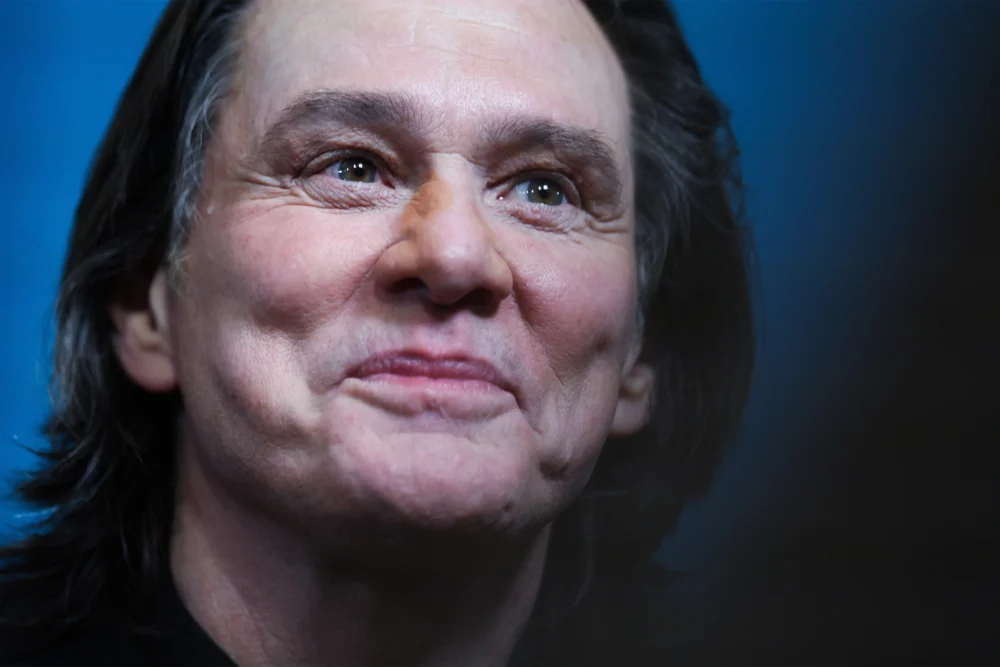
Famed Plastic Surgeon Weighs in on Jim Carrey’s Face. The recent appearance of beloved actor Jim Carrey at the prestigious César Awards in Paris ignited a firestorm of online speculation and celebrity concern, not over his accolades, but over his noticeably altered facial appearance, prompting a leading plastic surgeon to offer a professional perspective amidst the swirling rumors of clones and elaborate hoaxes.
The cinematic world gathered to honor Jim Carrey at the Cérémonie des César, France’s national film awards, where he was presented with the Honorary César Award, a testament to his iconic career and enduring impact on global entertainment. However, what should have been a moment of unadulterated celebration quickly morphed into an internet sensation, as viewers worldwide fixated on Carrey’s seemingly rejuvenated, almost unnaturally plump and smooth visage. Far from the familiar expressive lines and features that have characterized the 64-year-old comedian and dramatic actor for decades, his face presented a surprisingly unlined and swollen look, instantly sparking a torrent of questions and theories across social media platforms.
The explanations for Carrey’s appearance rapidly escalated from the plausible to the outright fantastical, mirroring the increasingly bizarre nature of online discourse. At the forefront of this digital maelstrom was drag queen and renowned makeup artist Alexis Stone, who fueled the flames with an Instagram post implying he was the one who had impersonated Carrey at the awards ceremony. Stone’s post featured a picture of what appeared to be an incredibly detailed prosthetic mask, which some online sleuths even speculated might have been generated using advanced AI technology, blurring the lines between elaborate practical effects and cutting-edge digital fabrication. The stunt, whether real or an exceptionally well-executed prank, immediately caught the attention of other prominent figures. Pop superstar Katy Perry commented with a simple yet telling bullseye emoji, suggesting she believed Stone’s claim, while actress Megan Fox expressed a more dramatic reaction, stating, “I can’t handle any more stress right now I need to know if this is real.” Their reactions underscored the potent blend of curiosity and credulity that often characterizes celebrity-watching in the digital age, where the line between reality and performance art becomes increasingly tenuous.
Had Stone truly pulled off such an audacious stunt, the logistical challenges would have been immense, far exceeding the demands of mere visual impersonation. Not only would he have needed to perfectly mimic Carrey’s physical appearance, but he would also have had to flawlessly emulate his vocal patterns and mannerisms. Crucially, at the César Awards, the man believed to be the real Carrey delivered a heartfelt and articulate speech entirely in French, a language he is not widely known to speak fluently. His representatives later clarified that Carrey had been diligently practicing French for months in anticipation of this very honor, a detail that, while seemingly mundane, added another layer of complexity to Stone’s purported deception and lent credence to the argument that it was indeed the genuine article on stage.
Yet, for a significant segment of online commentators, even this detailed explanation was insufficient to quell their burgeoning suspicions. The notion of a meticulously rehearsed French speech posed little obstacle to those convinced that Carrey had been replaced by a clone, a theory that gained surprising traction among earnest “online sleuths.” This particular conspiracy theory, though seemingly plucked from the pages of science fiction, resonated with a segment of the public already predisposed to distrust official narratives and embrace alternative, often more dramatic, explanations for celebrity events. Other theories included the deployment of a French-speaking body double, meticulously trained to replicate Carrey’s every gesture, or even the use of sophisticated deepfake technology, though the live, in-person nature of the event made such a suggestion less likely. The collective fervor reached such a pitch that Carrey’s personal representative was compelled to issue an official statement to TMZ, confirming unequivocally that the acclaimed actor had, in fact, personally appeared at the César Awards, attempting to put an end to the rampant speculation.
Despite the official confirmation, the lingering question remained: what accounted for Carrey’s distinctive facial changes? Setting aside the understandable moral apprehensions about dissecting and critiquing someone’s aging appearance, especially a public figure who has largely withdrawn from the limelight in recent years, the most probable answer is far less sensational than a clone or a body double. Dr. Terry Dubrow, a highly respected plastic surgeon renowned for his work on E!’s “Botched,” offered his expert opinion to TMZ, suggesting that Carrey had likely undergone some form of cosmetic intervention. According to Dubrow, the “plump and smooth” look was consistent with a common, albeit temporary, side effect of plastic surgery: post-operative swelling.
Swelling is a natural and expected part of the healing process following many cosmetic procedures, particularly those involving facial rejuvenation. Procedures such as facelifts, blepharoplasty (eyelid surgery), or even extensive filler injections can lead to varying degrees of edema and temporary puffiness. The body’s natural response to trauma, even controlled surgical trauma, is to send fluids and immune cells to the affected area, leading to inflammation and swelling as part of the repair mechanism. Depending on the extent of the procedure, individual healing rates, and factors like diet and hydration, this swelling can persist for days or even weeks, sometimes creating an appearance that might seem unnatural or overly “filled” until it fully subsides. Dubrow’s professional assessment provided a grounded, medical explanation, replacing the outlandish theories with a common reality of cosmetic enhancement.
This incident, however, illuminates several broader societal and cultural phenomena. Firstly, it underscores the intense and often unforgiving scrutiny that celebrities, particularly those in their later years, face regarding their physical appearance. Hollywood, like many industries centered on visual representation, places immense pressure on individuals to maintain a youthful aesthetic, leading many to seek cosmetic interventions. The double standard is often evident, with female celebrities historically facing harsher criticism for aging naturally or for undergoing visible procedures, though male actors are increasingly subject to similar pressures. Carrey, known for his dynamic and highly expressive face throughout his career, presents a particularly stark contrast when his features appear muted or altered.
Secondly, the episode highlights the profound and often destructive role the internet plays in amplifying rumors, fabricating conspiracy theories, and fostering an environment where misinformation can spread like wildfire. Social media platforms, while connecting people, also serve as echo chambers where unsubstantiated claims can gain credibility through sheer repetition and emotional resonance, often overriding factual reporting. The casual dismissal of official statements and the embrace of sensational, unverified narratives speak to a deeper cultural shift where trust in traditional media and expert opinions has eroded, replaced by a preference for dramatic, often conspiratorial, storytelling. The involvement of other celebrities like Katy Perry and Megan Fox, whether intended humorously or genuinely, further legitimized the speculation for many followers, demonstrating the powerful influence of public figures in shaping online conversations.
Finally, Dubrow’s concluding remarks, urging empathy and acknowledging that people were being “mean” to the 64-year-old actor, serve as a poignant reminder of the human cost of this relentless public dissection. While celebrities often navigate a world of privilege and adoration, they are also subjected to an unparalleled level of judgment, often losing the right to privacy regarding personal choices like medical procedures. The relentless online scrutiny, fueled by idle curiosity and a penchant for the dramatic, can undoubtedly contribute to a sense of unease and even paranoia, as Dubrow succinctly put it, “the internet is driving all of us insane.” This incident with Jim Carrey’s face, ultimately, is less about plastic surgery and more about the evolving, often disorienting, landscape of celebrity culture in the digital age, where a simple cosmetic procedure can trigger a global cascade of bizarre theories and ethical questions about how we treat public figures.