anjir abdul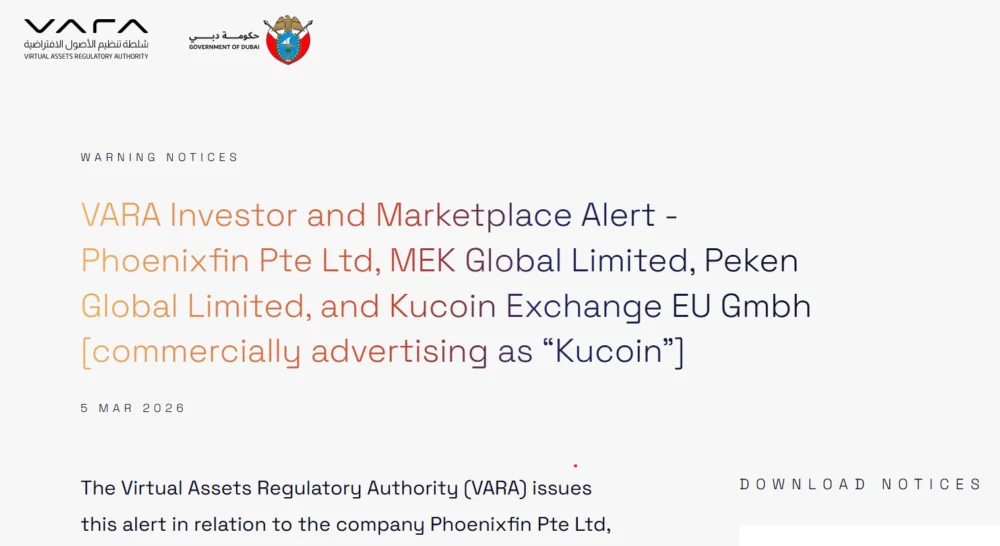
The authoritative warning, detailed in a comprehensive investor and marketplace alert published on March 5, specifically named Phoenixfin Pte Ltd, MEK Global Limited, Peken Global Limited, and Kucoin Exchange EU GmbH as the entities commercially advertising as KuCoin. VARA explicitly stated that these entities are suspected of providing virtual asset activities to individuals residing in Dubai “without the necessary regulatory approvals and misrepresenting its licensing status.” This action underscores Dubai’s resolute commitment to establishing a robust and transparent regulatory framework for the burgeoning virtual assets sector, positioning itself as a global hub for responsible innovation.
VARA’s instruction was unequivocal: the group associated with KuCoin must “cease and desist all unlicensed digital asset activities.” The regulator further stressed that KuCoin, in any of its commercial manifestations, “did not hold any licence to provide Virtual Asset services in/from Dubai.” This clear declaration serves as a critical consumer protection measure, aiming to shield investors from platforms operating outside the legal and compliance parameters set forth by the emirate. The absence of a license means that KuCoin’s operations within Dubai fall outside the supervisory purview of VARA, potentially exposing users to unregulated risks and denying them the safeguards intended by the local regulatory regime.
The watchdog elaborated that any virtual asset activities advertised or conducted by the identified KuCoin entities are in direct contravention of VARA regulations and broader United Arab Emirates legislation. Specifically, the alert cited Dubai Law No. 4 of 2022 and Cabinet Resolution No. 111/2022, two foundational pieces of legislation designed to govern the virtual asset space. These laws unequivocally mandate that all virtual asset service providers (VASPs) must obtain a specific license to legally operate within Dubai. This legal framework was established to bring clarity, security, and integrity to the virtual asset market, ensuring that only compliant and vetted entities can engage with the public. VARA’s robust regulatory structure, implemented following these laws, covers a wide range of virtual asset activities, including exchange services, brokerage, custody, and other related operations, all designed to foster a secure and trustworthy ecosystem.
To further reinforce its position, VARA explicitly clarified that “any promotion, advertising, or solicitation related to KuCoin has not been approved.” This means that not only are the direct provision of services illegal, but any efforts by KuCoin to market or promote its offerings within Dubai or to its residents are also prohibited. This aspect of the warning highlights the comprehensive nature of VARA’s oversight, which extends beyond operational activities to encompass all forms of public engagement and marketing by virtual asset service providers. The intent is to prevent unregulated platforms from attracting users through promotional campaigns that might mislead them about their regulatory status or the safety of their services.
The potential repercussions for consumers engaging with unlicensed platforms were also a central theme of VARA’s alert. The regulator issued a stark warning that individuals utilizing such services face “significant financial risks and potential legal consequences” for potentially violating regulatory requirements or even criminal laws. These risks can include, but are not limited to, the loss of invested funds due to security breaches, operational failures, or fraudulent activities without any recourse to regulatory bodies for mediation or compensation. Furthermore, users might inadvertently find themselves in violation of local laws by transacting with unregulated entities, leading to unforeseen legal complications. This cautionary note serves as a powerful deterrent, urging residents to exercise extreme prudence and diligence when choosing virtual asset service providers.

VARA proactively advised Dubai-based users to refrain from using KuCoin for their virtual asset needs. It also strongly urged them to verify the licensing status of any firm on its public register of licensed providers before engaging in any transactions. This transparent approach, where VARA maintains a publicly accessible list of approved entities, empowers consumers to make informed decisions and ensures they interact only with platforms that adhere to the highest standards of regulatory compliance. Moreover, the authority encouraged the public to report any suspected unlicensed activity directly to VARA, reinforcing a community-driven approach to maintaining market integrity.
This significant regulatory action in Dubai follows closely on the heels of similar scrutiny faced by KuCoin in other prominent jurisdictions. Just recently, Austria’s Financial Market Authority (FMA) imposed restrictions on new business activities at KuCoin EU, the Vienna-based entity that holds a Markets in Crypto-Assets Regulation (MiCA) license. The Austrian regulator cited failures by KuCoin EU to maintain key Anti-Money Laundering (AML), Counter-Terrorist Financing (CTF), and sanctions compliance roles. This indicates a broader pattern of increasing regulatory pressure on global cryptocurrency exchanges to adhere to stringent financial compliance standards.
In response to the Austrian FMA’s intervention, KuCoin’s European management acknowledged the situation, stating that it had voluntarily paused new onboarding and certain trading activities. The company affirmed its commitment to working diligently to refill the identified compliance positions and bring its European operations back into full compliance with Austrian regulations. This incident in Austria, coupled with VARA’s warning in Dubai, paints a picture of a major global exchange grappling with the complex and ever-evolving landscape of international cryptocurrency regulation. The global push for greater transparency and accountability in the virtual asset space means that exchanges must demonstrate robust compliance frameworks across all operating jurisdictions.
The challenges faced by KuCoin highlight a critical juncture for the broader cryptocurrency industry. As jurisdictions worldwide develop and implement their specific virtual asset regulations, exchanges must navigate a patchwork of diverse legal requirements. This often necessitates significant investment in compliance infrastructure, legal expertise, and localized operational adjustments. Failure to do so not only risks regulatory penalties and operational restrictions but also severely impacts an exchange’s reputation and investor trust. The clear message from regulators like VARA and the FMA is that operating globally requires local adherence to laws designed to protect consumers and prevent illicit financial activities.
Cointelegraph reached out to KuCoin for comment regarding the Dubai alert but had not received a response by the time of publication. The absence of a public statement from KuCoin regarding VARA’s directive leaves many questions unanswered about their strategy for addressing these regulatory challenges in a key market like Dubai, which is aggressively positioning itself as a leader in the digital economy.
The actions taken by Dubai’s VARA against KuCoin serve as a powerful testament to the emirate’s unwavering commitment to fostering a regulated, secure, and responsible virtual asset ecosystem. It sends a clear message to all virtual asset service providers: compliance is not optional. For investors, it underscores the paramount importance of conducting due diligence and engaging only with platforms explicitly authorized and regulated by local authorities. As the global regulatory landscape for virtual assets continues to mature, such enforcement actions are likely to become more frequent, ultimately shaping a more transparent and secure future for the digital asset industry.