Faris Adani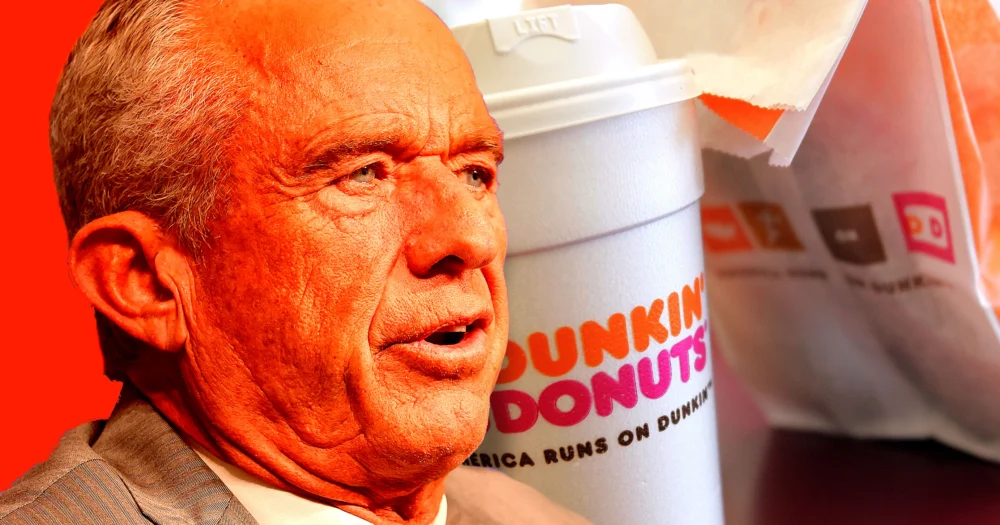
America Does Not Run on Dunkin, RFK Jr. Rages
Sign up to see the future, today
Can’t-miss innovations from the bleeding edge of science and tech
Robert F. Kennedy Jr., currently serving as the Health and Human Services (HHS) secretary in the Trump administration, has plunged his department into a maelstrom of controversy since taking office. His tenure has been marked by a series of contentious decisions and pronouncements, from cancelling potentially life-saving research into mRNA-based cancer vaccines to disseminating outright dangerous advice regarding common illnesses like measles, and consistently muddying the waters surrounding public health messaging on vaccines.
Kennedy’s extensive and well-documented history as a prominent conspiracy theorist and anti-vaccine activist has made him a deeply unconventional and, for many, an alarming choice for the nation’s top health official. His presence has profoundly impacted public health policy. A stark illustration of this came with the Trump administration’s recent decision to significantly modify the Centers for Disease Control and Prevention’s (CDC) recommended childhood vaccine schedule. This move, widely criticized by medical professionals, has triggered a significant counter-movement among a growing number of states. These states are now actively working to create their own, more robust vaccine guidelines, deliberately breaking with federal recommendations to safeguard children from a resurgence of preventable diseases that were once largely eradicated.
Beyond the vaccine debates, Kennedy has also launched a separate, yet equally ambitious, battle against the United States’ notoriously ultraprocessed food system. In a bold move, he has declared war on synthetic food dyes, which are prevalent in countless processed foods and have been linked by some studies to behavioral issues in children. Concurrently, his department has unveiled new dietary guidelines that represent a significant departure from previous recommendations, strongly urging Americans to increase their protein intake while drastically reducing sugar consumption – a direct challenge to the pervasive sweetness of the American diet.
While Kennedy’s focus on improving American diets might seem like a rare instance of alignment with public health goals – proving the adage that even a broken clock is right twice a day, given the objectively appalling state of US dietary habits – his direct confrontation with the country’s beloved fast food industry has proven immensely unpopular. This sector, deeply ingrained in American culture and daily life, presents a formidable opponent.
Most recently, Kennedy escalated his food reform efforts by publicly targeting popular coffee chains. Speaking at a recent event in Texas last week, which appeared to be part of a broader public engagement tour, he declared his intent to hold these establishments accountable for the “immense amount of sugar” they pack into their beverages.
“We’re going to ask Dunkin’ Donuts and Starbucks, ‘Show us the safety data that show that it’s OK for a teenage girl to drink an iced coffee with 115 grams of sugar in it,’” he told the captivated crowd, as quoted by the Boston Globe. “I don’t think they’re gonna be able to do it.” For context, 115 grams of sugar is roughly equivalent to nearly 29 teaspoons of sugar, far exceeding the daily recommended sugar intake for adults, let alone teenagers, which the American Heart Association suggests should be no more than 25-36 grams. (It’s worth noting that Dunkin’ officially dropped the word “Donuts” from its name in September 2018, rebranding simply as Dunkin’ to reflect its expanded beverage offerings, but the original name often persists in common parlance.)
Kennedy’s specific call-out of Dunkin’ – which the Globe accurately describes as a “Massachusetts staple,” deeply woven into the state’s cultural fabric and daily routines – did not go over well with Massachusetts Governor Maura Healey. Her response was swift and defiant.
In a post on X, Healey replied to the Globe’s reporting with a powerful image displaying the phrase “COME AND TAKE IT” in bold capital letters. This iconic American political slogan, originating from the Battle of Gonzales during the Texas Revolution, signifies an unyielding refusal to surrender something prized, clearly conveying the governor’s staunch defense of the beloved coffee chain.

The online unrest quickly escalated, with another account taking the cultural appropriation a step further. It cleverly re-imagined the American Revolution political slogan, “Don’t Tread on Me” – famously associated with the Gadsden flag – into a viral meme that humorously reads “Donut Tread on Me”, rendered in Dunkin’s instantly recognizable font.

The sentiment of outrage was echoed across social media platforms. “This means war,” declared Ron Filipkowski, the editor-in-chief of MeidasNews, a prominent left-leaning news and political commentary outlet, in a post on Bluesky, underscoring the perceived gravity of Kennedy’s culinary challenge.
Other commentators accused RFK Jr. of blundering into an untouchable subject in the realm of American politics and regional pride. “This moron has no idea how much of a third rail this is,” exclaimed Ben Collins, CEO of The Onion and a proud Massachusetts native, in a Bluesky post. The term “third rail” refers to a politically charged topic that is considered too dangerous for a politician to touch, as doing so would likely result in severe backlash. Collins continued, “If he goes through with a public fight with Dunkin, he will never live this down. In the words of my people ‘f*** ya motha.’” Another user, referencing the chain’s ubiquitous and successful advertising slogan, simply replied, “Does he not know America runs on Dunkin’?” This rhetorical question highlights the deep cultural connection many Americans, especially in the Northeast, have with the brand.
Beyond the public outcry, Kennedy’s broader agenda includes a significant effort to reform the Food and Drug Administration (FDA) database of food ingredients that are “generally recognized as safe” (GRAS). This system, which was originally established in the late 1950s, allows manufacturers to self-certify ingredients as safe without direct FDA approval. Over the decades, this list has ballooned to include thousands of substances commonly found in ultraprocessed foods, often without rigorous independent review.
Adding to the urgency of reform, a recent investigative report revealed that over 100 substances of unknown safety were quietly added to the GRAS list without the FDA’s knowledge or explicit approval. These substances, including various flavorings, emulsifiers, and preservatives, raise serious questions about consumer protection and regulatory oversight.
The White House is currently deliberating on the specific regulatory actions to take. Critics of the current GRAS system argue that the onus should be shifted, requiring food companies to definitively prove the safety of their ingredients *before* they enter the food supply, rather than operating on a presumption of safety. Such a shift would have profound implications for the entire food industry, potentially leading to costly re-evaluations, product reformulations, and even the removal of widely used ingredients.
Given that the vast majority of the US food supply is categorized as “ultra-processed” – meaning it contains industrial ingredients and additives not typically used in home cooking – renegotiating these terms would require an immense regulatory undertaking. This effort would undoubtedly face major resistance from powerful corporations and well-funded lobbying groups, eager to protect their existing product lines and profit margins.
Complicating matters further is President Donald Trump himself, who has a very well-documented and widely publicized obsession with fast food. His personal dietary preferences create an interesting dynamic, potentially undermining his own HHS Secretary’s public health initiatives aimed at curbing the consumption of precisely these types of foods.
While a consensus exists among health experts that stuffing caffeinated drinks with immense amounts of sugar is unequivocally a bad idea, Kennedy will likely find his work cut out for him. He faces a challenging tightrope walk, balancing public health advocacy with cultural sensitivities and powerful industry interests.
“I would agree that the idea of drinking a product that has 115 grams of sugar in it is a very bad idea,” author and highly respected nutrition expert Marion Nestle (who doesn’t appear to be affiliated with the corporation of the same name) told the Globe. “I would not recommend it.”
“But, the reality of the food supply is that sugar is in everything,” she added, highlighting the systemic nature of the problem. “They want sugar out of everything? Fine, where’s the regulation? I want to see the regulation.” Nestle’s point underscores the need for comprehensive, enforceable policies rather than just vocal criticisms.
Kennedy himself doesn’t appear to maintain a perfectly consistent stance on food reform, revealing some potential internal contradictions. For instance, he has been noted praising Coca-Cola for switching to cane sugar instead of high-fructose corn syrup – a change that, while sometimes marketed as “natural,” still involves two forms of concentrated sugar, with similar metabolic effects. He also publicly celebrated a Florida Steak ‘n Shake for “RFK’ing the french fries,” a reference to the company switching from seed oils to beef tallow. While the debate around seed oils vs. animal fats is a growing one in certain health circles, these endorsements highlight a selective focus that some critics might perceive as inconsistent with a broader war on ultraprocessed ingredients.