anjir abdul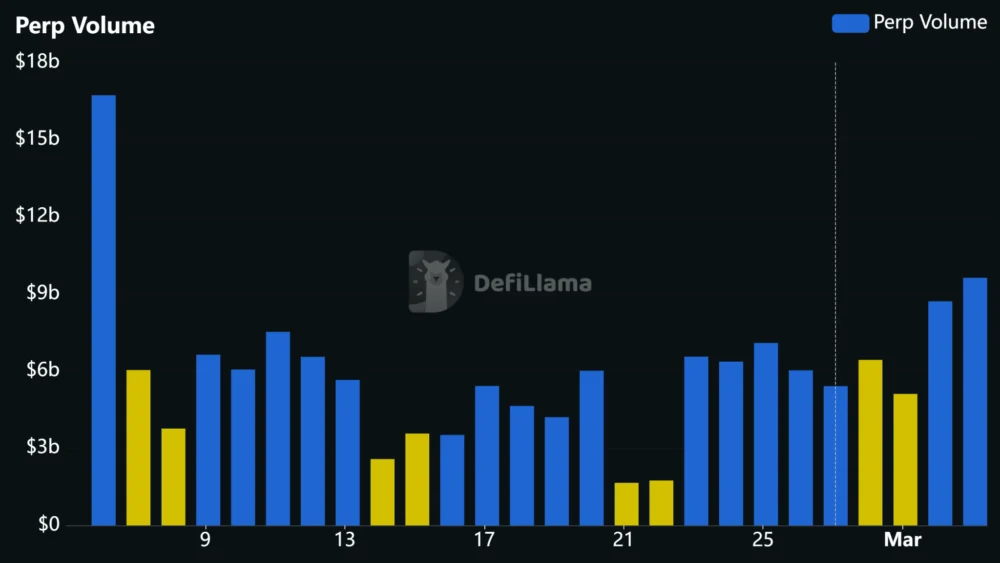
Crypto markets have demonstrably emerged as the instantaneous barometer for investor sentiment, particularly when geopolitical tremors shake global stability outside conventional trading hours. The recent US and Israeli strikes on Iran over a tumultuous weekend provided a stark illustration of this evolving dynamic, with Bitcoin serving as the immediate, unblinking eye of the financial world.
The catalyst for this weekend’s market reaction arrived at approximately 7:30 am (UTC) on a Saturday, a time when most major traditional financial centers across Wall Street and Europe were deeply asleep. US President Donald Trump, utilizing his Truth Social platform, posted a video announcing a coordinated military action by the US and Israel against Iran. The news, delivered digitally and without the customary pause for market contemplation, sent an immediate shockwave through the ever-vigilant crypto ecosystem. Bitcoin (BTC), the flagship cryptocurrency, reacted with characteristic volatility, plummeting sharply to around the $63,000 mark within minutes of the announcement. This swift descent was not merely a price movement; it was a real-time aggregation of global fear, uncertainty, and a reassessment of risk, all unfolding while traditional equity and bond markets remained shuttered.
The incident underscored a critical difference between the legacy financial system and its digital counterpart. While traditional markets operate on a schedule dictated by time zones and historical conventions, closing their doors for weekends and holidays, the crypto market is a ceaseless, 24/7 global entity. This always-on nature means that when significant geopolitical events — which frequently erupt on weekends or late Friday evenings — occur, crypto markets become the de facto first responder. Traders, unable to access conventional avenues for hedging or speculation, rushed to crypto-native platforms, particularly those offering commodities futures and other derivatives, to express their immediate views on the unfolding crisis. This activity provided a crucial early read on sentiment, foreshadowing the likely direction of major indexes when they would eventually reopen on Monday morning.
Jonatan Randin, a senior market analyst at PrimeXBT, articulated this phenomenon to Cointelegraph, observing, "The initial [weekend] move to the downside was sharp but contained, [and] Bitcoin never broke its broader market structure. When confirmation came that [Supreme Leader Ayatollah Ali Khamenei] had been killed and the immediate escalation risk appeared limited, price retraced quickly, and Bitcoin held its footing." He added, "By Monday morning, traditional market participants who had been watching crypto through the weekend already had a clear read on sentiment: This was a significant geopolitical event, but not a systemic one." This highlights Bitcoin’s dual role: not only does it react, but its subsequent price action can also help contextualize the severity of the event for a global audience, providing a vital risk assessment before other markets have even a chance to open.

Bitcoin’s increasing entanglement with macroeconomic settings means its 24/7 trading is evolving beyond mere speculative activity, solidifying its role as a crucial gauge for stock markets during their downtime. This uninterrupted flow of information and price discovery allows for an accelerated adjustment process to global shocks. Governments and public companies often time significant announcements to coincide with market closures, a practice rooted in the desire to allow investors ample time to digest information without immediate, knee-jerk reactions. A guideline from New Zealand, for instance, explicitly states: "Unless compelling reasons exist to release the announcement or media release while the affected market is open, it should be made when the market is closed to give investors time to consider the information before the market opens." However, crypto investors, operating in a relentless cycle, are often compelled to react in real-time, making their collective sentiment a powerful, instant indicator.
Iliya Kalchev, an analyst at Nexo Dispatch, explained the implications of this perpetual motion: "While liquidity can be thinner during these periods, occasionally amplifying short-term volatility, the uninterrupted market ultimately enhances real-time price discovery and accelerates the adjustment process." This immediate price discovery, despite potential short-term volatility due to thinner liquidity, offers a distinct advantage in a rapidly changing world, absorbing and reflecting information without delay.
This dynamic was powerfully demonstrated on October 10, 2025, during what became known as the "10/10" event, when the crypto market experienced its largest liquidation event on record. US President Donald Trump had threatened steep tariffs against China, a move that sent tremors through global financial markets. This announcement, made before the US closing bell, caused Bitcoin to sink in tandem with major stock market indexes. However, as traditional markets closed, crypto markets continued their operations, and the cascade of liquidations continued unabated, totaling an staggering $19 billion. The event vividly illustrated how Bitcoin’s price movements could effectively chart investor sentiment’s evolution even as conventional markets slept, providing crucial insights for macro traders tracking global risk appetite.
For macro traders, this inherent characteristic transforms crypto into an indispensable real-time sentiment gauge during geopolitical shocks. When significant events unfold outside conventional trading hours, investors increasingly pivot to digital asset markets to express their views on risk, liquidity, or inflation expectations, preempting the reopening of equity, bond, or commodity markets. This 24/7 market activity extends far beyond Bitcoin or other spot assets. A substantial portion of this activity now flows through perpetual futures contracts across both centralized and decentralized exchanges. Furthermore, institutions are actively experimenting with tokenized real-world assets (RWAs), which effectively bring traditional financial instruments onto blockchain rails, inheriting the 24/7 trading and global accessibility that define the crypto space.

The recent weekend’s geopolitical unrest highlighted the burgeoning role of decentralized exchanges (DEXs) in this new paradigm. As Bloomberg reported, Hyperliquid, a perpetual futures DEX, became a popular trading platform for traditional commodities like oil and precious metals, illustrating how traders sought immediate exposure and hedging opportunities. DefiLlama data further corroborated this trend, showing that Hyperliquid’s trading volume, which typically experiences a dip on weekends, remained remarkably high, matching that of business days during the period of heightened geopolitical tension.
Matt Hougan, Chief Investment Officer at Bitwise, further pointed out that Tether’s tokenized gold (XAUT) experienced a significant spike in trading volume over the same weekend, while prediction markets saw their volumes reach new records. These observations collectively underscore a growing trend: the demand for weekend trading is increasingly being met by crypto-native solutions, pushing the boundaries of traditional finance. Tokenized assets, by their very nature, inherit key features of crypto markets, including seamless cross-border accessibility and the ability to trade outside conventional market hours. This aligns with estimates from McKinsey and Standard Chartered, projecting tokenized assets to reach approximately $2 trillion by 2030, and Boston Consulting Group’s more ambitious forecast of $16 trillion to $30 trillion over the same period.
The undeniable advantages of 24/7 trading are also prompting traditional markets to reconsider their long-standing operating hours. In December, Nasdaq sought approval for a 23-hour trading system, proposing a split into day and night sessions with a single maintenance hour. This bold move, however, met with resistance, notably from Wells Fargo, whose trading desk reportedly commented, "I cannot think of an action that single-handedly gamifies the stock market even more than it has already become. This is the epitome of making trading even more like gambling." Despite such concerns, the momentum towards extended trading is palpable. In January, the New York Stock Exchange announced its plans to develop a 24/7 blockchain platform for stocks and exchange-traded funds, a clear indication that the legacy financial giants recognize the inevitability of this shift.
Ultimately, weekend geopolitical shocks are increasingly acting as stress tests for the very structure of global markets. While traditional financial systems are forced into periodic pauses, crypto markets continue their relentless absorption of information, reflecting investor sentiment in an unbroken, real-time stream. "Bitcoin has evolved into a highly sensitive macro asset, reacting not only to technology-sector dynamics but also to shifts in liquidity conditions, monetary policy expectations and geopolitical tensions," Kalchev reiterated, encapsulating its multifaceted role.

Bitwise’s Hougan, reflecting on the weekend’s trading activity, remarked that it made traditional stock exchanges appear "archaic." He suggested that while he had previously expected traditional finance to transition to blockchain rails within a decade, the performance of blockchain markets during the recent military escalation indicated this shift might happen significantly faster than anticipated. This burgeoning capability of crypto markets to absorb and reflect global shocks in real time is not just a technological curiosity; it represents a fundamental re-architecture of how global finance responds to the unforeseen, positioning Bitcoin and the broader crypto ecosystem as the world’s premier, always-on sentiment gauge.