Faris Adani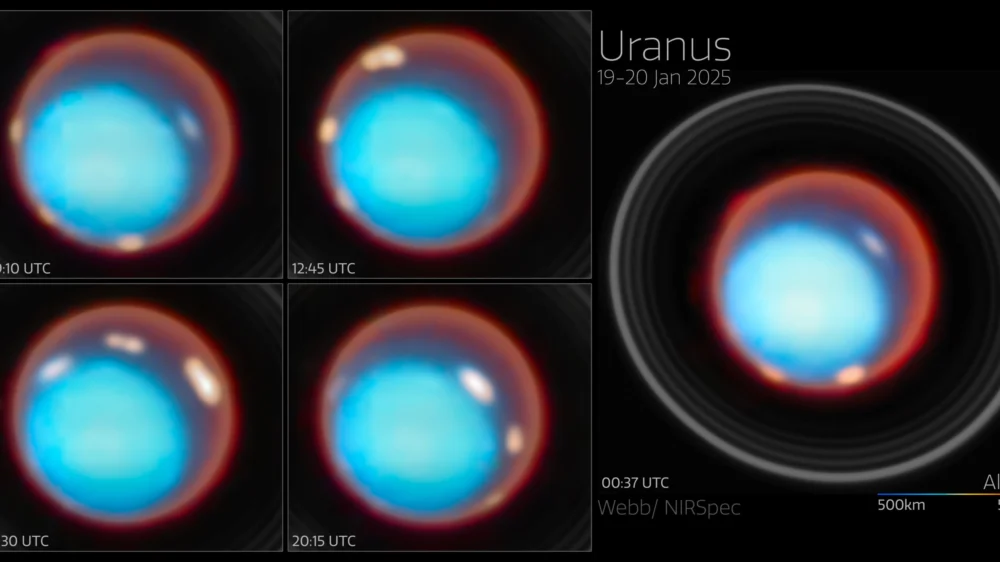
For decades, humanity’s understanding of Uranus, the enigmatic seventh planet from the Sun, has been remarkably limited, largely confined to a fleeting encounter by NASA’s Voyager 2 spacecraft in 1986. That singular flyby offered our first tantalizing, yet ultimately "drab" and indistinct, glimpse of the ice giant as a pale blue orb, more than a billion miles from Earth. Now, thanks to the unparalleled capabilities of NASA’s groundbreaking James Webb Space Telescope (JWST), we are peeling back the layers of this distant world, gaining an unprecedented and dynamic insight into its mysterious upper atmosphere, its peculiar magnetic field, and the captivating dance of its auroras.
Uranus stands as a prime example of an "ice giant," a classification it shares with Neptune. Unlike the gas giants Jupiter and Saturn, which are predominantly hydrogen and helium, Uranus and Neptune possess substantial amounts of heavier volatile compounds like water, methane, and ammonia, forming a dense, fluid layer often referred to as an "icy mantle" beneath their hydrogen-helium atmospheres. This unique composition contributes to their distinct atmospheric dynamics and internal structures. Its vast distance from the Sun, averaging around 2.8 billion kilometers (1.7 billion miles), means it receives significantly less solar energy, making its atmosphere incredibly cold and challenging to study. A full orbit around the Sun takes Uranus an astounding 84 Earth years, leading to extreme seasonal variations due to its extraordinary axial tilt.
Voyager 2’s mission in the 1980s was a monumental achievement, providing invaluable data from Jupiter, Saturn, Uranus, and Neptune. Its 1986 encounter with Uranus, however, was a rapid flyby, lasting just a few hours. While it provided the first close-up images, discovered 10 new moons, and confirmed the planet’s rings, the visible light images presented a surprisingly featureless, uniform blue sphere, offering little detail about its atmospheric layers or dynamic processes. This limited dataset left many fundamental questions about Uranus unanswered, from the mechanisms driving its internal heat to the intricacies of its magnetosphere.
Enter the James Webb Space Telescope, a revolutionary observatory designed to capture the universe in infrared light. Unlike optical telescopes, which are hindered by atmospheric haze and the limitations of visible light, JWST’s Near-Infrared Spectrograph (NIRSpec) instrument is perfectly suited to pierce through atmospheric veils and detect the faint thermal glows and spectral signatures of molecules that reveal composition, temperature, and movement. Over a year ago, JWST observed Uranus for almost a full planetary rotation, an extensive period that allowed scientists to map the vertical structure of its upper atmosphere in three dimensions. This meticulous observation revealed how Uranus’s ionosphere—a thin, uppermost atmospheric layer ionized by solar radiation—interacts with its uniquely tilted magnetic field, providing the most detailed portrait of the planet’s atmosphere to date.
The findings, detailed in a new paper published in the journal Geophysical Research Letters by lead author Paola Tiranti from Northumbria University, shed significant light on several long-standing mysteries. For the first time, researchers could map how temperature and charged particles vary with height across the planet. "This is the first time we’ve been able to see Uranus’s upper atmosphere in three dimensions," Tiranti explained in a statement. "With Webb’s sensitivity, we can trace how energy moves upward through the planet’s atmosphere and even see the influence of its lopsided magnetic field."
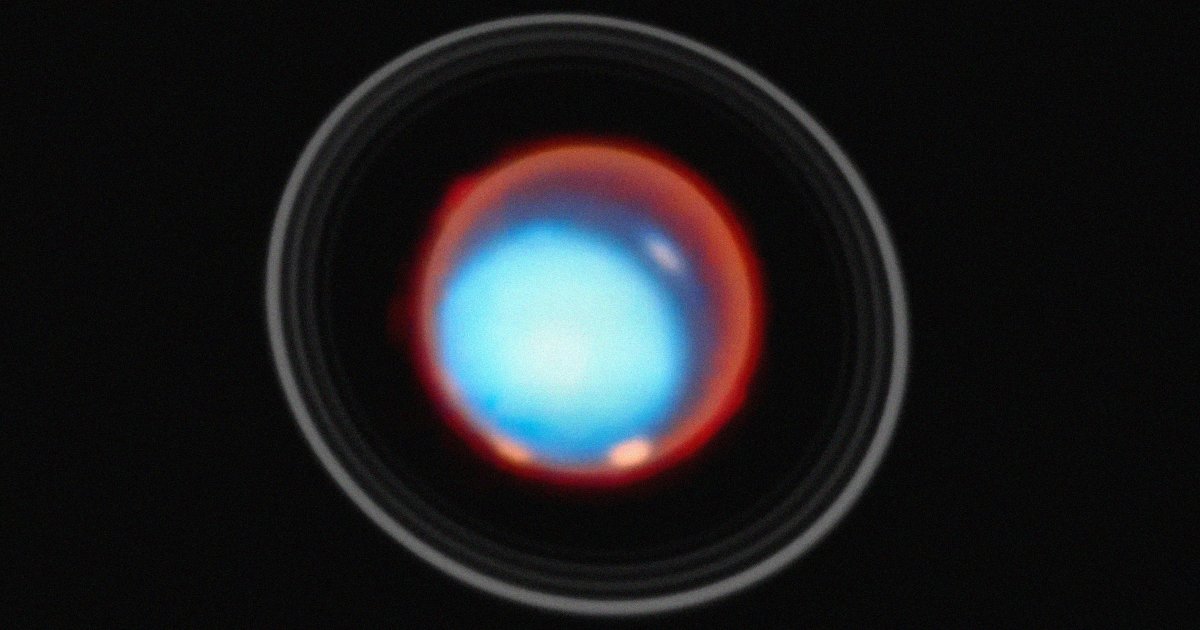
One of Uranus’s most striking peculiarities is its extreme axial tilt of 97.77 degrees, meaning its equator is almost perpendicular to its orbital plane. Scientists theorize this dramatic tilt may be the result of a massive collision with a protoplanet early in the Solar System’s history. Adding to this eccentricity, Uranus’s magnetic axis is significantly tilted relative to its rotation axis, and its magnetic center is offset from the planet’s physical center. This combination results in a highly unusual, "lopsided" magnetosphere—the region of space around a planet where its magnetic field dominates. Compared to Earth, where the magnetic poles are relatively close to the geographic poles, Uranus’s magnetosphere is a significant outlier, creating complex interactions with the solar wind, the stream of charged particles emanating from the Sun.
These complex interactions manifest in Uranus’s auroras, the spectacular light displays seen when charged particles collide with atmospheric gases. While Earth’s auroras (the Aurora Borealis and Australis) typically appear as shimmering curtains around the north and south magnetic poles, Uranus’s extreme tilts lead to a dramatically different phenomenon. "Uranus’s magnetosphere is one of the strangest in the Solar System," Tiranti noted. "It’s tilted and offset from the planet’s rotation axis, which means its auroras sweep across the surface in complex ways." JWST observations detected two bright auroral bands near Uranus’s magnetic poles, alongside reduced emission and ion density in the region between them—a feature likely linked to transitions in magnetic field lines. Instead of stable polar glows, Uranian auroras appear as glowing patches of orange and red light that extend beyond the visible edges in JWST images, their positions constantly shifting due to the planet’s unique magnetic configuration. These "auroral detections are hugely important because they are a direct manifestation of the planet’s internal magnetic field," commented JWST interdisciplinary scientist Heidi Hammel, who was not involved in the study. "We really have no other way to probing the magnetic field remotely without a spacecraft in situ." This highlights JWST’s critical role in understanding the deep internal processes of distant planets.
The latest findings from JWST also bolster existing theories that Uranus’s upper atmosphere has been undergoing a long-term cooling trend since the early 1990s, when near-infrared observations first hinted at such a phenomenon. The reasons for this cooling are still being investigated, but potential factors include changes in atmospheric circulation, long-term seasonal effects due to the planet’s extreme tilt, or even subtle changes in the planet’s internal heat dynamics. By mapping the vertical temperature profile, JWST provides crucial data points to refine models of energy distribution within the ice giant’s atmosphere, helping scientists understand how heat is transported and radiated into space.
The implications of these detailed observations extend far beyond Uranus itself. As astronomers discover thousands of exoplanets, many of which are classified as "ice giants" or "mini-Neptunes," understanding our own Solar System’s ice giants becomes paramount. Uranus serves as a natural laboratory, a prototype for these distant worlds that are too far to observe in such detail. By studying Uranus’s atmospheric dynamics, energy balance, and magnetospheric interactions, scientists can calibrate models used to interpret data from exoplanet observations, helping to characterize their atmospheres and potential habitability.
Despite the monumental contributions of JWST, the scientific community recognizes that an in-situ mission—an orbiter or even a probe—is essential for truly unlocking the remaining secrets of Uranus. The last decadal survey for planetary science, a consensus report from the scientific community, identified a Uranus Orbiter and Probe as a high-priority flagship mission. Such a mission could directly measure atmospheric composition, map the magnetic field in exquisite detail, and investigate the planet’s interior structure. However, tight budgets and the immense logistical challenges of interplanetary travel have historically endangered such ambitious missions, leaving the prospect of a return to Uranus, four decades after Voyager 2’s flyby, still uncertain.
Nevertheless, JWST’s ongoing observations represent a crucial step forward. "Webb has now shown us how deeply those effects reach into the atmosphere," Tiranti concluded. "By revealing Uranus’s vertical structure in such detail, Webb is helping us understand the energy balance of the ice giants. This is a crucial step towards characterizing giant planets beyond our Solar System." The telescope continues to transform our understanding of the cosmos, from the earliest galaxies to the distant, icy frontiers of our own planetary neighborhood, painting an increasingly vibrant and dynamic picture of a universe far more complex and interconnected than previously imagined.