Faris Adani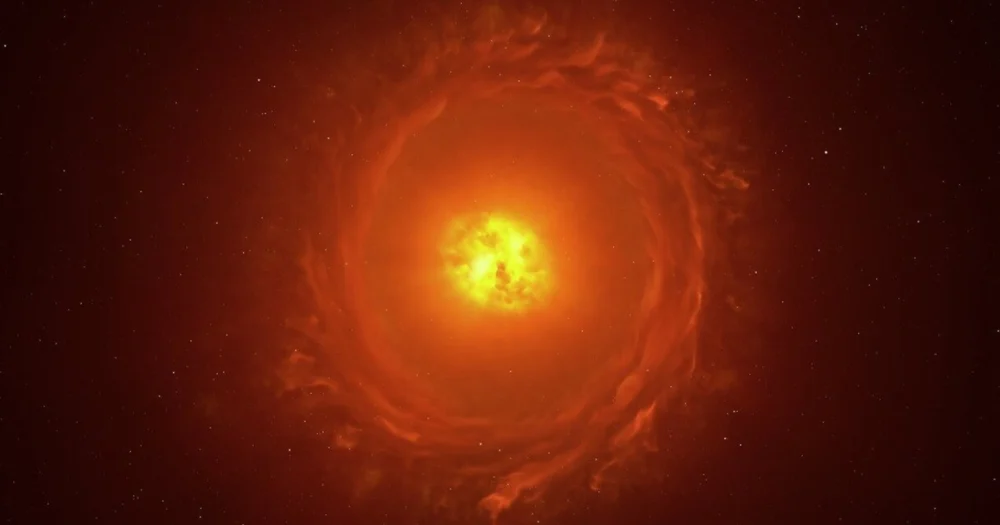
Evidence Grows That One of the Largest Known Stars Is Poised to Explode in a Spectacular Blast
In the grand cosmic theater, where stars are born and die in spectacular fashion, one of the universe’s most colossal residents is now exhibiting signs of an impending, cataclysmic demise. Astronomers, after meticulously observing a massive celestial object undergoing a dramatic and rapid transformation, suggest that this star is on the precipice of an immense explosion known as a supernova. Alternatively, its sheer, incredible mass could lead to a direct collapse into a black hole, an even more enigmatic end. These findings, detailing a cosmic countdown unlike almost any seen before, have been reported by a team of researchers in a new study published in the prestigious journal Nature Astronomy.
The star at the heart of this unfolding drama is WOH G64, a name that might not roll off the tongue but signifies a celestial titan located some 165,000 light-years away in the Large Magellanic Cloud, a dwarf galaxy orbiting our own Milky Way. Since its initial discovery approximately five decades ago, WOH G64 has been classified as a red supergiant, a class of stars known for their immense size and relatively short, brilliant lives. With a mass estimated at thirty times that of our Sun, it is already an outlier, but it is WOH G64’s physical dimensions that truly boggle the mind. Boasting a radius over 1,500 times greater than the Sun, if this stellar behemoth were placed at the center of our solar system, its swollen girth would extend well beyond the orbit of Jupiter, engulfing Mercury, Venus, Earth, and Mars, leaving our familiar planetary neighborhood utterly consumed by its expansive atmosphere. Such a scale provides a humbling perspective on the sheer diversity of stellar objects in the cosmos.
Red supergiants represent a brief, yet spectacular, phase in the evolution of massive stars. Unlike our Sun, which is a middle-aged star with a projected lifespan of around 10 billion years, WOH G64 is a mere five million years old. Massive stars like WOH G64 burn through their nuclear fuel at an astonishing rate due to the immense pressure and temperature in their cores. They quickly exhaust the hydrogen supply in their core, moving on to fuse heavier elements. This transition causes their outer layers to expand dramatically and cool, giving them their characteristic red hue and making them incredibly luminous, often ranking among the brightest stars in their host galaxies. The Large Magellanic Cloud, being a fertile star-forming region, is packed with the raw material—gas and dust—necessary to give birth to such oversized behemoths, making it an ideal location to study these cosmic giants.
However, WOH G64 has embarked on a new, even more awe-inspiring transformation. Astronomers noticed that in 2014, the star’s color and temperature underwent a dramatic but remarkably smooth change over a period of less than a year. This rapid shift suggests that WOH G64 is evolving yet again, this time into a yellow hypergiant. Yellow hypergiants are among the rarest and most luminous stars in the universe. The largest of these stellar giants are so voluminous that they could theoretically fit several billion Suns inside them, dwarfing even red supergiants in some respects. Their extreme rarity makes WOH G64’s observed transformation particularly significant for astronomers.
As lead author Gonzalo Muñoz-Sanchez at the National Observatory of Athens explained to Space.com, “Yellow hypergiants are extremely rare because they represent a short-lived transitional phase between the red supergiant stage and the eventual supernova explosion. Consequently, only a small number of confirmed yellow hypergiants are currently known, amounting to just a few tens of objects.” Witnessing a star undergo such a rapid and profound change in human timescales is, indeed, an extraordinary stroke of luck, providing invaluable real-time data on these fleeting evolutionary stages.
The precise mechanism driving WOH G64’s transformation into a yellow hypergiant is a subject of ongoing investigation, with two primary hypotheses emerging. One theory suggests that the star ejected a large portion of its outer layers into space, a process potentially spurred by interactions with a companion star. In this scenario, the companion star would have stripped material from WOH G64’s surface, forming a vast common envelope of hydrogen that engulfed both stars. Such common envelopes are crucial, albeit violent, phases in the evolution of binary star systems, leading to significant mass transfer, orbital decay, and often dramatic stellar mergers or the formation of exotic stellar remnants. The intense gravitational interplay within such an envelope can accelerate mass loss from the primary star, drastically altering its surface properties.
However, the astronomers cannot definitively rule out the possibility that this dramatic transformation is taking place independently of a companion star’s interference, driven by intrinsic stellar processes. As Muñoz-Sanchez further elaborated to Space.com, “Even though the system is binary, the transition may have been driven by intrinsic stellar processes. In this case, the star may have undergone an extraordinary eruptive episode lasting more than 30 years and is now returning to a yellow, quiescent state.” Massive stars are known for their powerful stellar winds and occasional eruptive outbursts, where they shed vast amounts of material into space. Such an eruption, if sufficiently powerful and sustained, could cause the star to rapidly shed its cool, outer hydrogen envelope, exposing hotter, deeper layers and resulting in the observed shift in temperature and color. The fact that both possibilities are “extremely rare” and that witnessing either occur on human timescales is “nearly unprecedented” underscores the unique nature of WOH G64’s current behavior.
Regardless of the exact cause of its metamorphosis, the ultimate fate of WOH G64 is sealed: a cataclysm of cosmic proportions. Its unclear nature, oscillating between binary interaction and intrinsic eruption, makes it challenging to predict the precise manner of its death, but it is guaranteed to be a catastrophic event that will unfold “soon” in cosmic terms. Muñoz-Sanchez estimates this “soon” to mean anywhere from hundreds to thousands of years – a mere blink of an eye on astronomical timescales, but still comfortably beyond immediate human experience. One potential end is a spectacular core-collapse supernova. In this scenario, the star’s nuclear fuel will eventually be exhausted, its iron core will collapse under its own immense gravity, triggering a powerful shockwave that blasts the star’s outer layers into space in an explosion that can outshine an entire galaxy for a brief period, leaving behind a neutron star or, given WOH G64’s mass, a black hole.
Alternatively, due to its incredible mass, WOH G64 might bypass the supernova stage entirely and collapse directly into a black hole. This “failed supernova” scenario occurs when the gravitational pull is so immense that even the rebound from the core collapse cannot generate an outward-moving shockwave, leading to the rapid and complete implosion of the star into an event horizon. A third, less common possibility, especially if the common envelope theory holds true, is a catastrophic collision or merger with its companion star, an event that would also release enormous amounts of energy and light. The study of WOH G64’s behavior could provide crucial insights into the fates of stars with initial masses between 23 and 30 solar masses, suggesting that red supergiants in this range may evolve into yellow hypergiants before their final demise.
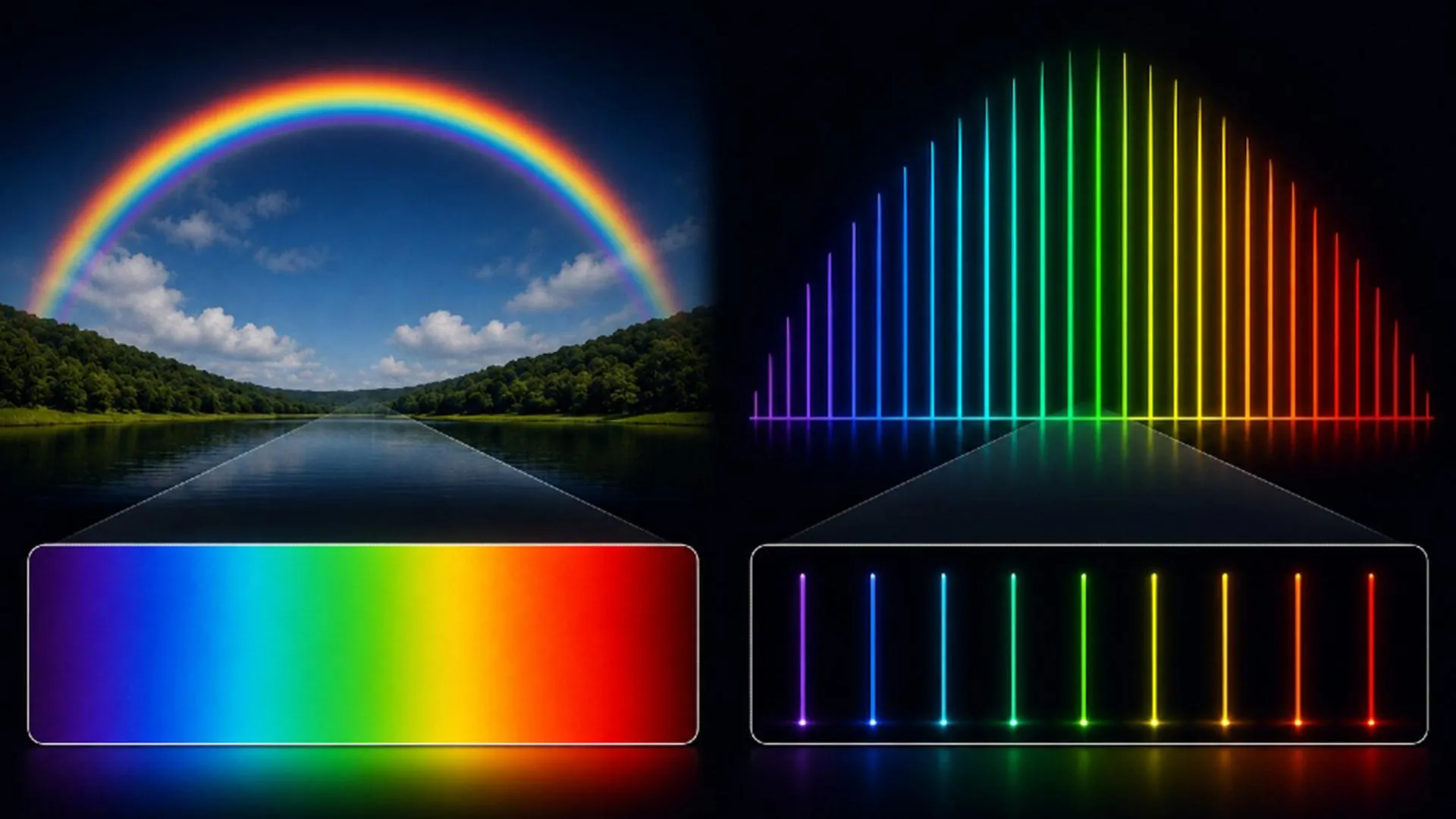
The observational detection of such subtle yet profound changes in a star located 165,000 light-years away is a testament to the sophistication of modern astronomical instruments and techniques. Through spectroscopy, which analyzes the light from stars to determine their chemical composition, temperature, and velocity, and photometry, which measures their brightness and color variations, astronomers can piece together the evolutionary story of distant objects. Ground-based observatories, often working in conjunction with space telescopes, provide the long-term monitoring capabilities essential for catching these fleeting cosmic events.
WOH G64 stands as a majestic, albeit doomed, beacon in the Large Magellanic Cloud, its current transformation a dramatic preamble to a spectacular finale. This ongoing cosmic drama offers an invaluable, real-time laboratory for understanding the most extreme phases of massive stellar evolution. By observing WOH G64, scientists gain critical data to refine theoretical models concerning stellar interiors, mass-loss mechanisms, and the precise evolutionary pathways that lead to supernovae or direct black hole formation. It helps us answer fundamental questions about the upper mass limit for supernova progenitors and the conditions under which stars simply “wink out” of existence, as seen in other intriguing cases. The study of this unique star reminds us of the dynamic, violent, and awe-inspiring processes that continually reshape our universe, offering a fleeting glimpse into the heart of stellar catastrophe and humanity’s enduring quest to unravel the cosmos’ deepest mysteries.
More on stars: Scientists Intrigued as Prominent Star Suddenly Winks Out of Existence