anjir abdul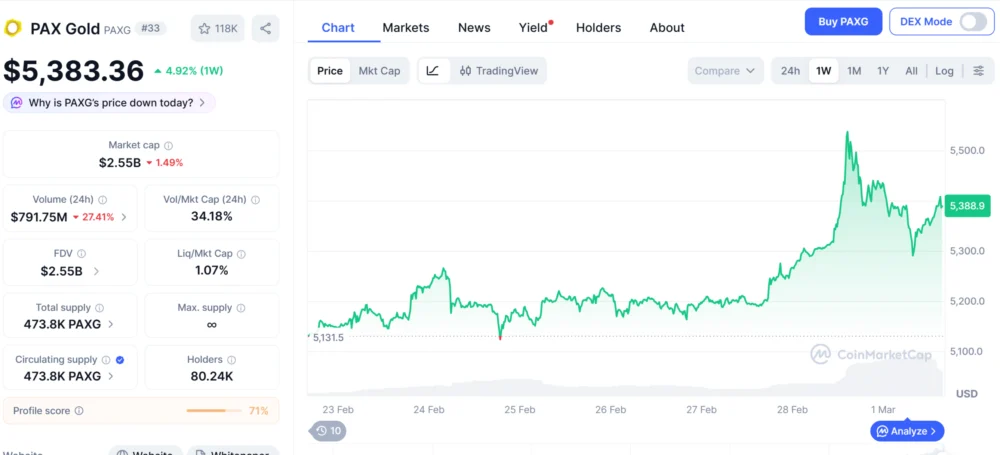
The landscape of global gold pricing undergoes a significant transformation as conventional US futures markets cease operations for the weekend, with blockchain networks stepping in to facilitate continuous price discovery, a phenomenon highlighted by Iggy Ioppe, formerly the chief investment officer at Credit Suisse and now holding the same pivotal role at the liquidity infrastructure firm, Theo. This shift underscores a growing reliance on decentralized digital assets to maintain market continuity and reflect real-time value changes for the precious metal.
CME gold futures, a cornerstone of traditional gold trading, conclude their weekly trading session promptly at 5:00 pm ET on Friday, remaining dormant until their reopening at 6:00 pm ET on Sunday. This roughly 49-hour interval creates a substantial vacuum in regulated, publicly reported trading activity. During this period, the bulk of what little activity transpires is typically confined to opaque, private over-the-counter (OTC) deals, predominantly within Asian markets, which lack the transparency and public visibility of exchange-traded instruments. It is precisely within this operational lull that tokenized gold assets, such as PAX Gold (PAXG) and Tether Gold (XAUt), emerge as the sole continuously available and publicly trackable trading venues, offering uninterrupted access to gold exposure for investors worldwide.
"In terms of publicly visible price formation, on-chain markets are responsible for virtually 100% of weekend price discovery," Ioppe conveyed to Cointelegraph, emphasizing the critical role these digital assets play in bridging the gap left by traditional markets. He further elaborated on the observed correlation, noting that upon the resumption of futures trading on Sunday evening, prices frequently align with the movements and trends that have already taken shape on blockchain-based markets over the preceding weekend. "We are seeing weekend moves reflected when CME reopens," he added, indicating that the price signals emanating from tokenized gold markets are increasingly indicative of broader market sentiment and future traditional market behavior. This dynamic highlights the nascent but undeniable influence of digital asset ecosystems on established financial commodities.
The ascendancy of tokenized gold as a primary driver of weekend price discovery is not an isolated event but rather a symptom of its broader, explosive growth within the financial sector. The past year has witnessed a remarkable surge in the market capitalization of tokenized gold, which has expanded rapidly from approximately $1.6 billion to a staggering $4.4 billion, representing an addition of nearly $2.8 billion in value. This astounding 177% increase far outstrips the growth rates observed in the broader physical gold market and most major spot gold Exchange Traded Funds (ETFs), signaling a significant shift in investor preference and accessibility. Concurrently, the number of unique holders of tokenized gold assets has almost tripled, with over 115,000 new wallets entering the ecosystem, reflecting a widening adoption base beyond institutional players. This growth trajectory alone accounted for roughly a quarter of all net inflows into the burgeoning real-world asset (RWA) sector, a testament to gold’s enduring appeal in a tokenized format. Moreover, the expansion of tokenized gold’s market cap exceeded the combined growth of tokenized stocks, corporate bonds, and non-US Treasuries, underscoring its dominance in the RWA landscape.

Beyond market capitalization, trading activity for tokenized gold has also experienced an unprecedented surge, recording approximately $178 billion in volume during 2025, with a peak of over $126 billion in the fourth quarter alone. Such a volume level would position tokenized gold as the second-largest gold investment product globally by trading volume, trailing only the venerable SPDR Gold Shares (GLD). This robust trading volume speaks to the increasing liquidity and efficiency of these digital markets, making them more attractive for various market participants.
Ioppe elaborated on the diverse participants driving this activity, noting that market makers and cross-venue liquidity providers dominate the scene. These sophisticated players actively engage in arbitraging price differences that inevitably emerge between the continuously operating digital markets and the periodically closed traditional markets. Their activities ensure price convergence and market efficiency. Furthermore, crypto-native macro traders play a pivotal role, utilizing tokenized gold not merely for direct exposure to bullion prices but also for more complex strategies. These include employing tokenized gold as collateral in decentralized finance (DeFi) protocols, for hedging against broader market volatility, and for yield-generation strategies, particularly during periods marked by heightened geopolitical tensions or macroeconomic uncertainty.
"Some institutions are monitoring weekend on-chain gold markets, particularly macro and cross-asset desks that track gap risk ahead of the CME reopen," Ioppe explained. He highlighted that while most institutions currently treat this signal as primarily informational, rather than a direct basis for active positioning, its importance in risk assessment and strategic planning is growing. The ability to gauge market sentiment and potential price gaps before traditional markets reopen provides a crucial advantage for these sophisticated desks.
The intrinsic 24/7 nature of tokenized gold markets offers a distinct and practical advantage in risk management, a benefit that traditional gold products simply cannot replicate. In a world increasingly susceptible to sudden geopolitical shifts or economic announcements, the inability of traditional participants to adjust their positions while futures markets are closed represents a significant vulnerability. For instance, if a major geopolitical event unfolds over a weekend, traditional investors are effectively locked out, unable to mitigate potential losses or capitalize on emerging opportunities until Sunday evening. Tokenized markets, however, provide immediate rebalancing capabilities, empowering investors to react instantaneously to breaking news or developing crises.

This risk management superiority was vividly demonstrated on a recent Saturday when tokenized gold rallied sharply following escalating geopolitical tensions stemming from US and Israeli strikes on Iran. As investors sought safe-haven assets, capital flowed into XAUT and PAXG, even as major cryptocurrencies like Bitcoin (BTC) and Ether (ETH) experienced significant downturns. XAUT briefly surged above $5,450, while PAXG neared $5,536 during the day, according to CoinMarketCap data, before trimming some of those gains. This episode underscored the utility of tokenized gold as a responsive safe-haven asset, offering a real-time hedge against global instability when other markets are dormant.
Despite these compelling advantages and impressive growth metrics, Ioppe acknowledges that widespread institutional adoption still faces formidable obstacles. One primary challenge is liquidity. While growing rapidly, the liquidity in tokenized gold markets remains smaller compared to the deep pools of capital available in traditional futures or exchange-traded funds (ETFs). This disparity can make executing large institutional-sized trades challenging without inadvertently moving prices, a concern for major players.
Regulatory clarity also presents a significant hurdle. While improving, the fragmented regulatory landscape across different jurisdictions slows down institutional deployment. "Custody, accounting, and capital rules still vary widely," Ioppe stated, pointing to the complexity involved for institutions operating across multiple regions. Traditional financial institutions require clear guidelines on how to hold, value, and account for digital assets, as well as how to allocate capital against them in a compliant manner. The absence of harmonized global standards creates uncertainty and increases compliance costs, deterring broader institutional participation.
For the foreseeable future, tokenized gold is widely expected to operate in conjunction with traditional gold products rather than outright replacing them. "The most likely near-term evolution is that of tokenized and traditional markets existing in parallel, each serving a different function," Ioppe concluded. This parallel existence would see traditional markets continuing to cater to very large, established institutional players and provide benchmark pricing, while tokenized gold markets would serve a distinct set of functions. These could include enabling fractional ownership for retail investors, facilitating rapid, 24/7 trading for hedging and arbitrage, integrating seamlessly into decentralized finance (DeFi) ecosystems for lending and borrowing, and offering a robust, transparent alternative for investors seeking direct, verifiable ownership of physical gold through blockchain technology. As the digital asset space matures and regulatory frameworks evolve, the symbiotic relationship between traditional and tokenized gold markets is poised to redefine how the world accesses, trades, and values this timeless commodity.