anjir abdul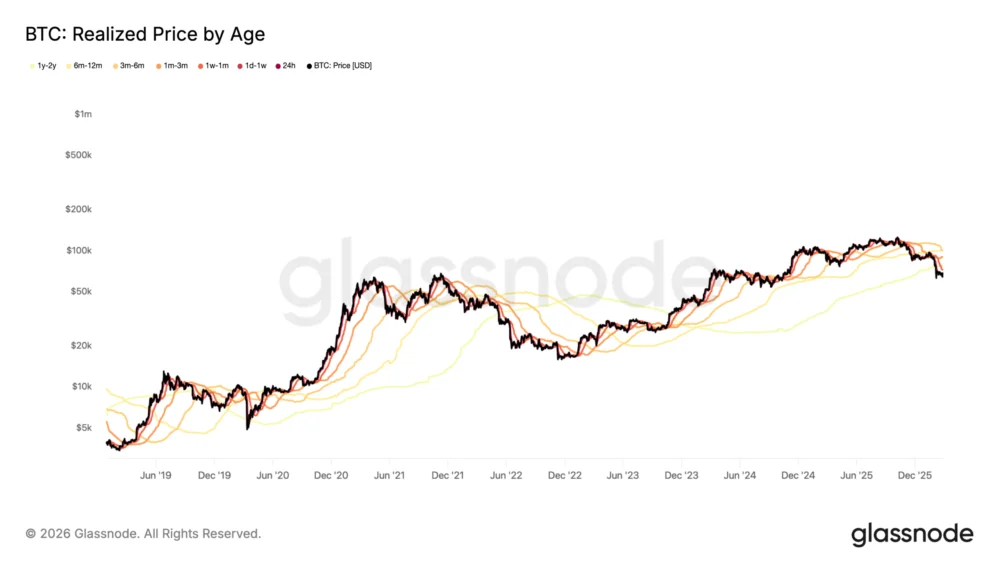
This insightful conclusion stems from a comprehensive analysis conducted by Bitwise, a prominent asset manager in the crypto space, with data shared by André Dragosch, their head of research for Bitwise Europe. The study meticulously examined Bitcoin’s extensive price history, spanning from July 17, 2010, through February 11, 2026, encompassing numerous market cycles, bull runs, and significant corrections. The core finding is a powerful testament to Bitcoin’s long-term value proposition: the likelihood of an investor being "in the red" or experiencing a loss on their investment plummets to a mere 0.70% when Bitcoin is held for a minimum of three years.
To put this into perspective, this means that nearly every single rolling three-year entry point throughout Bitcoin’s existence has ultimately resulted in a profitable outcome for the patient investor. This statistic is particularly striking given Bitcoin’s notorious volatility, which often deters short-term traders. The analysis further revealed that extending the holding period beyond three years enhances this loss-avoidance even more significantly. The risk of loss dwindles to an astonishing 0.2% over a five-year horizon and completely vanishes to 0% when Bitcoin is held for ten years or longer. This long-term trend underscores a fundamental principle often preached by seasoned investors in traditional markets: time in the market often beats timing the market, a maxim that appears exceptionally true for Bitcoin.

The contrast with shorter holding periods is stark and serves as a cautionary tale for those seeking quick gains. Intraday traders, for instance, who buy and sell Bitcoin within the same day, face a substantial 47.1% chance of ending up underwater. This probability, while decreasing, remains elevated for short-to-medium term horizons: 44.7% over one week, 43.2% over one month, and a still significant 24.3% over a one-year holding period. These figures highlight the inherent risks associated with attempting to navigate Bitcoin’s rapid price swings and underscore why a "HODL" (hold on for dear life) strategy has become a cornerstone philosophy within the cryptocurrency community. The data strongly suggests that Bitcoin is an asset best suited for long-term accumulation rather than speculative trading, rewarding conviction over agility.
Beyond simple price probability, on-chain metrics provide further corroboration of this long-term resilience, particularly through the lens of the "realized price." The realized price is a powerful on-chain indicator that represents the average price at which all bitcoins in circulation were last moved. When segmented by different age cohorts, it provides a clear picture of the average cost basis for different groups of investors. As of a recent Saturday, with Bitcoin trading around $65,000, approximately 50% down from its October 2025 high, the realized price metric painted a fascinating picture of market resilience.
Investors who acquired Bitcoin within the three-to-five-year window had a realized price of approximately $34,780. This means that even amidst a significant market correction where BTC had halved from its peak, these "stronger hands" were still sitting on an approximate 90% profit. Their average entry point was significantly below the current market price, demonstrating the substantial cushion that long-term holding provides against market downturns. This group of investors, often referred to as conviction holders, has weathered multiple cycles and has a higher tolerance for volatility, reducing their likelihood of panic selling during corrections. Their steadfastness contributes to market stability by absorbing selling pressure from newer, less experienced investors.

Conversely, the data also reveals the vulnerability of newer market entrants. Many traders who bought Bitcoin in the past two years found themselves underwater during the recent correction. Specifically, the 6-12 month cohort, representing entities that have held BTC for up to a year, had an average cost basis of around $101,250. This positioned them with roughly a 35% unrealized loss as of Saturday, highlighting the immediate pain experienced by those who bought closer to recent market peaks. The 1-2 year cohort fared slightly better, with a lower cost basis of about $78,150, translating into an approximately 15% unrealized loss. This stark divergence in profitability between different holding periods reinforces the central theme: the longer the holding window, the more insulated an investor tends to be from short-term drawdowns and market corrections. It’s a clear illustration of how time allows an asset to recover and grow, smoothing out the peaks and troughs of its price journey.
The current market correction has prompted some analysts to consider the possibility of Bitcoin’s price extending its decline, potentially towards the $30,000 mark. Such a move would undoubtedly test the resolve of even the three-to-five-year holders, pushing their profit margins closer to breakeven. The critical question then becomes whether these historically profitable cohorts will begin to add to selling pressure, perhaps to lock in profits or cut losses, or if their conviction will lead them to "sit tight" or even accumulate more at lower prices. This period of uncertainty often reveals the true strength of an asset’s investor base and its long-term viability.
Looking beyond immediate market fluctuations, longer-term forecasts for Bitcoin’s price in 2026-2027 continue to cluster around substantial upside targets, reflecting a broader bullish sentiment despite short-term headwinds. Global brokerage firm Bernstein, for instance, has maintained its ambitious $150,000 BTC price call for 2026. Their analysis points to the remarkable resilience of spot Bitcoin ETFs, which, despite a 50% price drop in BTC, experienced relatively modest net outflows of only about 7%. This suggests that institutional demand and investor confidence, particularly from the more sophisticated institutional money flowing into ETFs, remains robust. Bernstein analysts, led by Gautam Chhugani, characterized the current Bitcoin price action as "a mere crisis of confidence," implying that the fundamental bullish drivers for Bitcoin remain intact and that the current dip is more a reflection of market psychology and temporary FUD (fear, uncertainty, doubt) rather than a structural problem.

However, other prominent institutions offer a more nuanced outlook. Standard Chartered, another major financial institution, has warned of a potential "final capitulation" phase for Bitcoin, which could see its price temporarily dragged towards $50,000. This more conservative projection is attributed to weaker-than-expected ETF flows and a potentially tougher macroeconomic backdrop, characterized by ongoing inflation concerns, interest rate uncertainties, and geopolitical tensions. Despite this potential short-term capitulation, Standard Chartered remains optimistic for the longer term, forecasting a recovery towards $100,000 by the end of 2026, aligning with the cyclical nature of Bitcoin’s bull and bear markets. This perspective suggests that while the path to higher prices may be bumpy, the overall trajectory remains upward.
Further extending the long-term view, Timothy Peterson’s historical "average return" framework points to a target of $122,000 by early 2027. This model, which often relies on statistical analysis of Bitcoin’s past performance and growth patterns, suggests high odds that BTC will trade above this figure. Such historical models, while not predictive guarantees, provide valuable context by illustrating how Bitcoin has historically recovered from downturns and established new all-time highs over extended periods. These diverse forecasts, ranging from Bernstein’s aggressive target to Standard Chartered’s cautious optimism and Peterson’s statistical projection, collectively reinforce the idea that Bitcoin’s long-term potential remains significant, even as short-term market dynamics introduce volatility.
In conclusion, the message from market data and expert analysis is clear: Bitcoin is an asset that profoundly rewards patience. While its volatility can be daunting for short-term traders, the historical evidence overwhelmingly favors a long-term holding strategy. The Bitwise analysis unequivocally demonstrates that holding BTC for at least three years dramatically reduces the risk of loss, with this probability nearly vanishing over five to ten years. On-chain metrics like the realized price further illustrate how long-term holders maintain significant profitability even amidst severe market corrections. While the journey may include significant price swings and periods of uncertainty, as indicated by various expert forecasts for 2026-2027, the underlying fundamentals and the historical pattern of Bitcoin’s growth suggest a strong potential for appreciation for those committed to a multi-year investment horizon. For prospective and current Bitcoin investors, embracing a long-term perspective appears to be the most robust strategy for navigating its dynamic market and ultimately achieving financial gains.

This article does not contain investment advice or recommendations. Every investment and trading move involves risk, and readers should conduct their own research when making a decision. While we strive to provide accurate and timely information, Cointelegraph does not guarantee the accuracy, completeness, or reliability of any information in this article. This article may contain forward-looking statements that are subject to risks and uncertainties. Cointelegraph will not be liable for any loss or damage arising from your reliance on this information.