Faris Adani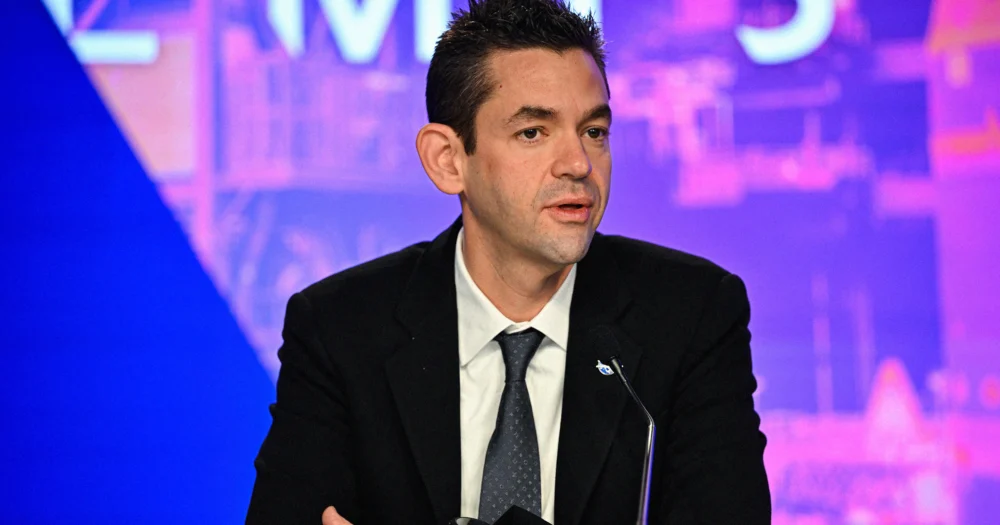
NASA Cancels Moon Landing Mission
In a significant recalibration of its ambitious lunar exploration program, NASA has officially announced a major restructuring of its Artemis missions, effectively pushing back the timeline for humanity’s next footsteps on the Moon by several years. The eagerly anticipated Artemis 3 mission, once envisioned as the landmark return to the lunar surface, will no longer attempt a landing, instead focusing on crucial in-orbit testing. This pivotal decision underscores the inherent complexities and persistent challenges plaguing deep space endeavors, signaling a more cautious, incremental approach to lunar exploration.
The journey back to the Moon began in earnest in late 2017 when then-President Donald Trump signed Space Policy Directive 1 (SPD-1). This directive marked a monumental shift in U.S. space policy, unequivocally committing the nation to returning humans to the lunar surface. The signing was particularly symbolic, taking place on the 45th anniversary of Apollo 17, the final mission of NASA’s iconic Apollo program, which last saw humans walk on the Moon in December 1972. The political momentum gained further traction in 2019 when Vice President Mike Pence dramatically accelerated NASA’s timeline, publicly announcing the audacious goal of landing astronauts on the Moon by the year 2024. This aggressive target, often dubbed the “Artemis Accords,” aimed to revitalize American leadership in space and inspire a new generation, echoing the urgency and competitive spirit of the original space race.
However, as 2024 has now come and gone, the reality of space exploration’s intricate demands has become starkly apparent. While significant progress has been made, the ambitious timeline proved untenable. Nine years after SPD-1, the United States has indeed taken considerable strides toward its lunar objective. A crowning achievement was the uncrewed Artemis 1 mission in November 2022, which successfully sent the Orion spacecraft on a journey around the Moon and back. This mission served as a vital, high-stakes test of NASA’s powerful Space Launch System (SLS) rocket and the Orion crew capsule, demonstrating their capabilities for deep space travel. It provided invaluable data on the spacecraft’s performance, thermal protection system, and communication relays, paving the way for future crewed missions. Yet, despite this success, the fact remained: no human had yet ventured beyond low-Earth orbit, and a lunar landing was clearly still years away.
Now, what was once speculation has crystallized into official policy. NASA has unequivocally announced major changes to its Artemis program architecture. These revisions could mean that humanity won’t be attempting a lunar landing until, at the very earliest, early 2028. This represents a four-year delay from the original 2024 target, a substantial setback that has prompted widespread discussion within the aerospace community and among the public.
The cascading effects of several preceding delays to the Artemis 2 mission ultimately led to this programmatic overhaul. Artemis 2, which will see four astronauts travel around the Moon – a mission akin to Apollo 8 – has faced numerous technical hurdles and scheduling conflicts. During a press conference held on a recent Friday, NASA’s leadership officially revealed the revised strategy. The most significant revelation was that Artemis 3, originally envisioned as the program’s first modern lunar landing attempt with astronauts, will no longer aim to touch down on the Moon’s surface. Instead, its objectives have been fundamentally redefined.
This reframing of the Artemis program marks perhaps the most significant structural change since its inception under the Trump administration. It starkly highlights persistent issues that have plagued the agency, including the monumental task of developing new heavy-lift launch vehicles and human-rated lunar landers. The immense complexity of these endeavors, coupled with budget constraints and the sheer scale of engineering challenges, has proven to be a formidable adversary to the initial aggressive timelines.
The revised schedule also implicitly shines a spotlight on potential significant delays with NASA’s Human Landing System (HLS) partners, particularly SpaceX’s efforts to develop a Starship-based lunar lander. SpaceX was controversially tapped by NASA in 2021 to design and build the primary human landing system, tasked with transporting crew from lunar orbit down to the surface. Similarly, Blue Origin, led by Jeff Bezos, is developing its own Blue Moon lander as a second HLS provider. The complexities involved in maturing these novel systems, which are integral to the Artemis landing strategy, have undoubtedly contributed to the overall program delays.
Under the new plan, Artemis 3, now tentatively scheduled for “mid-2027,” will serve an entirely different, albeit critical, purpose. Instead of a lunar landing, its primary objective will be to test the crucial maneuver of docking with one or both of NASA’s Human Landing Systems partners – SpaceX’s Starship and Blue Origin’s Blue Moon lander. Crucially, these docking tests will occur in low-Earth orbit (LEO), not lunar orbit as initially planned for a landing mission. This adjustment allows for a less risky, more controlled environment to validate the complex rendezvous and docking procedures before attempting them in the unforgiving lunar environment. Additionally, NASA plans to use this opportunity for astronauts to test out their new generation Moon suits in an orbital setting, ensuring their functionality and comfort before a high-stakes lunar surface mission.
Consequently, the actual lunar landing attempts, now designated as Artemis 4 and Artemis 5, have been pushed further back. Artemis 4 is now slated for “early 2028,” with Artemis 5 following in “late 2028.” These revised dates, however, come with a significant caveat: “if everything goes according to plan.” This acknowledges the inherent uncertainties and potential for further delays in such complex undertakings.
During the press conference, NASA Administrator Jared Isaacman articulated the agency’s new, more pragmatic philosophy. “We’re not necessarily committed, but we want to have the opportunity to make both attempts in 2028,” Isaacman stated, emphasizing flexibility and achievable milestones. He candidly admitted that a three-year launch cadence between Artemis 1 (November 2022) and Artemis 2 (now projected for late 2025 or early 2026) was simply too long. “Skills atrophy” over such extended periods, he argued, highlighting concerns about maintaining expertise and morale within the highly specialized workforce. “We’ve got a lot of talented folks that have been working hard on the Artemis 2 campaign, and whether they will want to stick around for three more years after this mission is complete is a question mark,” he said. “This is just not the right pathway forward.”
Isaacman further elaborated on the inefficiencies of flying different configurations of NASA’s “extremely costly” Space Launch System rocket for each mission. Standardizing components and procedures is vital for both cost-effectiveness and increased reliability. “A wide objective gap between missions is also not a pathway to success,” he stressed, drawing parallels to the historical progression of the American space program. “They didn’t go right to Apollo 11. We had a whole Mercury program, Gemini, Apollo… Lots of Apollo missions before we ultimately landed.” This historical perspective underscores the agency’s renewed commitment to a methodical, step-by-step approach.
“We need to chunk it into achievable objectives,” Isaacman later explained, advocating for a strategy focused on mitigating “incremental risks” to increase “reliability and standardization” across several missions. This philosophy aims to build confidence and refine technologies through progressively challenging steps, minimizing the chances of catastrophic failure in later, higher-stakes missions. This iterative process, reminiscent of the Mercury and Gemini programs that preceded Apollo, is designed to ensure a more robust and sustainable presence on the Moon.
Meanwhile, NASA remains committed to launching Artemis 2 – which was initially scheduled to launch earlier this month – “in the weeks ahead,” according to a recent press release. The massive 322-foot-tall orange and white Space Launch System rocket, topped with the Orion capsule, was recently rolled back to the iconic Vehicle Assembly Building (VAB) at NASA’s Kennedy Space Center. This return to the hangar was necessary for further work following technical issues, including a persistent helium leak that had triggered previous launch delays. The VAB, a gargantuan structure synonymous with American space endeavors, once again houses a rocket undergoing crucial repairs and modifications.
In a profound way, the SLS rocket’s retreat into the VAB is symbolic of the space agency’s broader reimagining of its Artemis program. It represents a reining in of some extremely ambitious goals and timelines that, while inspiring, ultimately proved to be unrealistic given the technical hurdles, budget realities, and inherent risks of human spaceflight. The initial political drive for a rapid return to the Moon, while well-intentioned, may have underestimated the sheer engineering and logistical challenges involved in building entirely new systems from the ground up.
Instead, Isaacman’s NASA is now deciding to take one small step at a time. This measured, incremental approach, prioritizing safety, testing, and operational maturity over speed, is hoped to lead up to its long-awaited and sustainable return to the Moon. The ultimate goal of establishing a long-term human presence on the Moon, and using it as a stepping stone to Mars, remains unchanged. However, the path to achieving it has been revised, emphasizing prudence and the lessons learned from decades of space exploration.