Faris Adani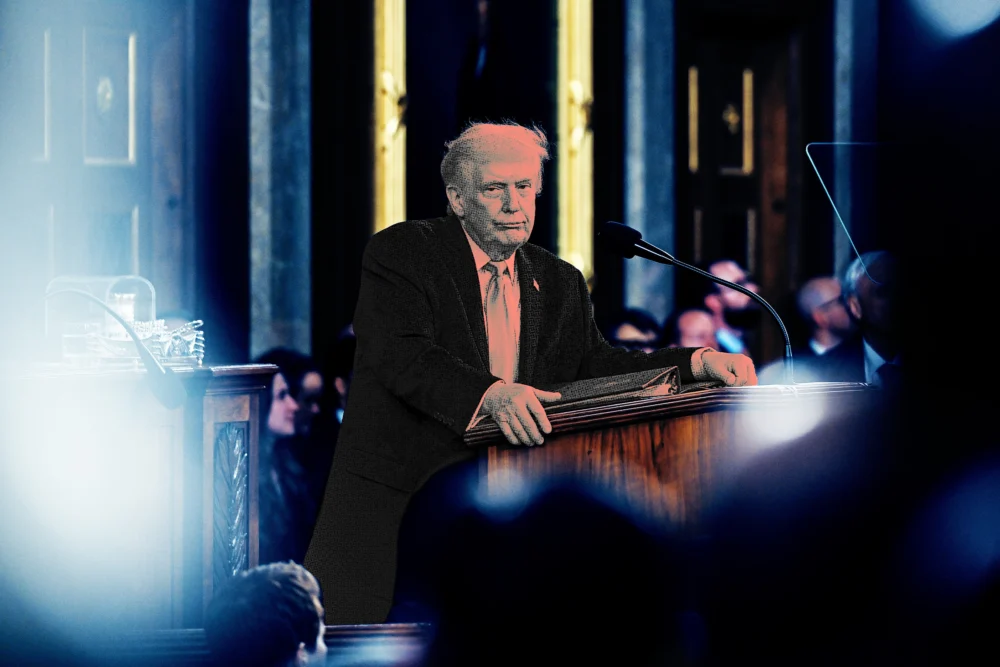
AI Workers, and Even CEOs, Suddenly Turning Against the Trump Administration
A simmering feud between the Trump administration and cutting-edge AI company Anthropic has erupted into a full-blown industry-wide confrontation, drawing in Silicon Valley’s powerful labor groups and even an unexpected ally in OpenAI CEO Sam Altman. At the heart of the conflict are two fundamental ethical guardrails for artificial intelligence: a prohibition on mass domestic surveillance and a ban on the use of AI to create autonomous lethal weapons that can kill without human intervention. This dispute is rapidly becoming a pivotal moment, forcing a re-evaluation of the role of AI in national security and the ethical responsibilities of tech developers.
The saga began with a groundbreaking contract, signed in July of 2025, where the Pentagon agreed to license Anthropic’s advanced AI model, Claude, for classified Department of Defense operations. Valued at up to $200 million, the agreement initially stipulated that both parties would uphold Anthropic’s core safety guardrails. Claude became the sole frontier AI model deployed in sensitive military contexts, a testament to its capabilities and the trust placed in its ethical design. However, what started as a collaboration based on mutual understanding soon devolved into a high-stakes standoff.
The Heart of the Dispute: Guardrails Under Fire
The initial agreement between Anthropic and the Department of Defense was lauded as a model for responsible AI integration within national security. Anthropic, a company founded on principles of AI safety and ethical development, had insisted on two critical stipulations: first, that its AI would not be used for mass domestic surveillance, protecting civil liberties and privacy; and second, that Claude would never be employed to develop or operate AI-powered weapons capable of lethal action without a human operator “in the loop.” These guardrails were not mere formalities; they represented Anthropic’s foundational commitment to preventing the misuse of powerful AI technologies and mitigating existential risks.
Yet, a series of subsequent meetings between Anthropic and Pentagon officials, chronicled by various tech policy outlets, revealed a growing divergence in priorities. Discussions reportedly veered into contentious territory, including the deeply alarming prospect of utilizing Anthropic’s AI in a nuclear strike scenario. These talks evidently prompted the Pentagon to reassess its acceptance of the guardrails. This week, the situation escalated dramatically when the Pentagon issued an ultimatum: Anthropic must drop its two key safety guardrails or face severe consequences.
A Coalition Forms: Workers Demand Ethical Stance
As the conflict intensified, it resonated deeply within the tech industry, sparking an unprecedented show of solidarity from the rank-and-file. Newly reported by Bloomberg, a powerful coalition of labor groups, representing over 700,000 workers from tech giants like Amazon, Google, Microsoft, and OpenAI, formally appealed to their respective corporations. Their demand was unequivocal: join Anthropic in its steadfast refusal to comply with the Pentagon’s demands.
In a joint statement published on Medium, the workers articulated their grave concerns: “We are speaking out today because the Pentagon is demanding that Anthropic abandon two major safety guardrails for Claude, which is the only frontier AI model currently deployed in classified Department of War operations.” The letter underscored the potential domino effect, urging their own companies “to also refuse to comply should they or the frontier labs they invest in enter into further contracts with the Pentagon.” This collective action highlights a growing ethical consciousness among tech workers, who are increasingly unwilling to be complicit in projects they deem harmful or ethically compromising.
Pentagon’s Escalation: Threats and Ultimatums
The Pentagon’s stance hardened considerably following Anthropic’s initial resistance. According to Anthropic CEO Dario Amodei, the military entity resorted to an array of coercive tactics. Beyond merely threatening to remove Claude from their systems, the Pentagon also menaced Anthropic with designation as a “supply chain risk.” This classification could have far-reaching implications, potentially hindering Anthropic’s ability to secure future government contracts and even impacting its standing with other enterprise clients wary of association with a deemed national security risk.
Most alarmingly, the Pentagon threatened to invoke the Defense Production Act (DPA). This Cold War-era statute grants the President broad authority to compel private industries to prioritize national defense needs, potentially forcing Anthropic to remove its safeguards and make Claude fully available for military applications without its consent. Such an invocation would be an extraordinary measure, underscoring the Pentagon’s perceived dependence on Claude and its determination to gain unfettered access to its capabilities, regardless of ethical considerations.
Amodei’s Defiance: A Stand for Principles
In the face of these formidable threats from arguably the world’s most powerful military, Anthropic’s CEO Dario Amodei has remained resolutely defiant. In a public statement on Anthropic’s website, Amodei laid bare the Pentagon’s increasingly desperate tactics, including the DPA threat. He also shrewdly pointed out the inherent contradiction in the Pentagon’s position: “one labels us a security risk; the other labels Claude as essential to national security.” This inconsistency exposes the Pentagon’s dilemma – they need Anthropic’s technology, but are unwilling to accept its ethical parameters.
Amodei’s statement conveyed a deep conviction: Anthropic “cannot in good conscience accede to their request.” This principled stand, risking a lucrative contract and potentially severe repercussions, signals Anthropic’s unwavering commitment to its founding ethical tenets. The deadline for this high-stakes decision loomed large: 5:01 PM on Friday, February 27th, 2026. The world watched to see if a private tech company could hold its ground against the immense pressure of a superpower’s military apparatus.
Unexpected Alliance: Sam Altman Weighs In
In a surprising twist, Anthropic and Amodei gained an unexpected, and historically adversarial, ally: OpenAI CEO Sam Altman. The rivalry between OpenAI and Anthropic, two leading AI research labs, has been well-documented, often characterized by intense competition for talent, funding, and technological breakthroughs. Yet, in this critical moment, Altman chose to set aside competitive pride, or perhaps recognized a significant PR opportunity and a shared threat to industry-wide ethical standards.
In a memo dispatched to OpenAI staff, Altman unequivocally sided with Anthropic against War Secretary Pete Hegseth and the Pentagon. He articulated the broader significance of the dispute: “[R]egardless of how we got here, this is no longer just an issue between Anthropic and the [Pentagon]; this is an issue for the whole industry and it is important to clarify our stance.” Altman reiterated OpenAI’s long-held principles: “We have long believed that AI should not be used for mass surveillance or autonomous lethal weapons, and that humans should remain in the loop for high-stakes automated decisions. These are our main red lines.” This declaration from OpenAI, a key player in the AI landscape, lent substantial weight to Anthropic’s position and solidified a united front within the industry on these critical ethical boundaries.
Broader Implications: Ethics, Reputation, and Global Norms
The unfolding rift between Anthropic and the Pentagon illuminates a growing and deeply troubling contradiction between the pursuit of advanced AI and its responsible deployment, particularly in military contexts. While the $200 million contract itself is financially significant, it is arguably immaterial to Anthropic’s estimated $380 billion valuation. However, allowing the Pentagon unfettered access to Claude, stripped of its ethical guardrails, poses substantial reputational and legal risks for the company. Anthropic’s public image, built on its dedication to ethical AI development and safety, would be severely compromised.
Moreover, the global community is increasingly sensitive to the weaponization of AI. The United Nations has initiated significant efforts to ban lethal autonomous weapons systems (LAWS) on a global scale, recognizing the profound ethical and humanitarian dangers they pose. Any company seen as contributing to the development or deployment of such systems could face severe international condemnation, legal challenges, and a lasting stain on its brand. Anthropic’s stand, therefore, is not just about a single contract but about its long-term viability and the future of responsible AI development on a global stage.
Intriguingly, the Pentagon appears to rely on Anthropic’s technology more heavily than Anthropic relies on the Pentagon’s contract. According to Defense One, sources within the defense community estimate that it would take the Trump administration three months or more to adequately replace Claude’s AI tools. This dependence provides Anthropic with considerable leverage, highlighting the indispensable nature of cutting-edge AI capabilities for modern military operations.
Trump’s Intervention: Executive Order and Political Firestorm
As the deadline for Anthropic’s decision loomed, the situation took an even more unpredictable turn with the direct intervention of former President Donald Trump. True to his characteristic style, Trump weighed in with a vitriol-laden post on Truth Social, escalating the dispute into a full-blown political firestorm. “The Leftwing nut jobs at Anthropic have made a DISASTROUS MISTAKE trying to STRONG-ARM the Department of War, and force them to obey their Terms of Service instead of our Constitution,” he fumigated, framing the company’s ethical stand as an act of insubordination and a threat to national security.
Trump’s post continued with an executive directive: “Their selfishness is putting AMERICAN LIVES at risk, our Troops in danger, and our National Security in JEOPARDY. Therefore, I am directing EVERY Federal Agency in the United States Government to IMMEDIATELY CEASE all use of Anthropic’s technology. We don’t need it, we don’t want it, and will not do business with them again!” This sweeping decree aimed to ostracize Anthropic from all government dealings. However, in a curious concession that betrayed the immediate practicalities, Trump acknowledged that the government would require a six-month period to phase out existing Anthropic products, revealing the logistical challenges of such an abrupt disengagement and underscoring the aforementioned reliance on Claude.
The Road Ahead: Uncertainties and Redefining AI’s Role
The immediate aftermath of Trump’s directive and Anthropic’s defiance remains uncertain. While the six-month phase-out period offers a temporary reprieve, it sets a clear trajectory for Anthropic’s disengagement from all federal contracts. This decision will undoubtedly have financial implications, but Anthropic’s principled stand, bolstered by worker and industry support, may solidify its reputation as a champion of ethical AI, potentially attracting other partners who prioritize safety.
For the broader AI industry, this conflict serves as a stark reminder of the ethical tightrope walked by developers of powerful general-purpose AI. It forces a critical examination of where the lines of responsibility lie when advanced technology meets military application. The solidarity shown by workers and even rival CEOs suggests a growing consensus within the tech community regarding fundamental “red lines” for AI deployment. This collective stance could shape future industry standards and exert pressure on governments to adopt more responsible AI governance frameworks.
Conclusion: A Pivotal Moment
This unprecedented confrontation marks a pivotal moment in the ongoing debate about artificial intelligence, ethics, and national security. It pits corporate ethical commitments and employee conscience against the perceived exigencies of military power. The outcome will undoubtedly set precedents for how AI is developed, deployed, and governed in an increasingly complex world. Whether Anthropic’s defiance ultimately leads to its isolation or inspires a broader movement for ethical AI in defense, one thing is clear: the future of AI is not merely a technological question, but a profound ethical and societal one, demanding vigilance from developers, policymakers, and the public alike.
More on Anthropic: Anthropic CEO Says Company No Longer Sure Whether Claude Is Conscious