Faris Adani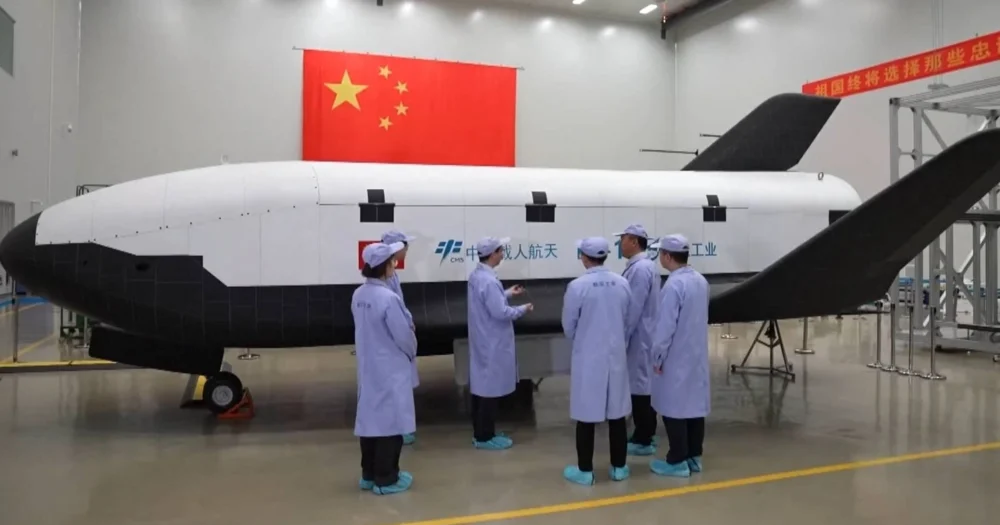
The latest launch of the Shendong underscores a intensifying strategic competition in the final frontier, as both global superpowers develop advanced, reusable space capabilities with largely undisclosed purposes. While state-run news agency Xinhua offered a characteristically vague statement, claiming the space plane "will conduct technological verification for reusable spacecraft, providing technical support for the peaceful use of space," the ambiguity fuels speculation among international observers and defense analysts about its true military and intelligence-gathering potential. This mission follows the Shendong’s third trip, which concluded in September 2024 after an impressive 267 days in orbit, with Xinhua then hailing the "growing maturity of China’s reusable spacecraft technologies" as a "pave[ment] for more convenient and affordable round-trip methods for the peaceful use of space." However, the "peaceful use" rhetoric is often viewed with skepticism in the context of dual-use space technologies, where civilian applications can readily mask or support military objectives.
The United States has long been a pioneer in this particular niche of spaceflight with its X-37B. Operated by the US Space Force, two versions of this uncrewed, robotic space plane have completed seven orbital missions over the past 15 years, accumulating thousands of days in space. Like its Chinese counterpart, the X-37B launches atop a conventional rocket and returns to Earth, slowing its descent autonomously much like NASA’s retired Space Shuttle. Its missions are also veiled in secrecy, with the military only broadly stating its purpose as testing new spaceflight hardware and space-based capabilities, including quantum equipment, as mentioned in previous reports. This established pattern of secrecy from the US side inevitably sets the precedent for China’s similar approach, making the Shendong’s activities all the more intriguing and, for some, concerning.
One of the most compelling and frequently discussed aspects of the Shendong’s previous missions has been its tendency to release small, mysterious objects while in orbit. These objects, believed to be small satellites or experimental payloads, have been tracked by the US Space Force and even observed by dedicated amateur astronomers, who often play an unwitting but crucial role in shedding light on classified space activities. The lack of official explanation for these deployments has intensified speculation, particularly regarding the potential for these missions to involve sophisticated "rendezvous proximity operations" (RPOs).
RPOs involve the close approach, inspection, or manipulation of other objects in space. This capability is strategically vital for a range of purposes, both benign and potentially hostile. On the civilian side, RPOs are essential for satellite servicing, refueling, repair, and debris removal – technologies that could revolutionize space operations by extending the life of valuable assets. However, the same capabilities can be repurposed for military ends: close-up reconnaissance and surveillance of adversary satellites, electronic eavesdropping, disabling or interfering with orbital assets, or even demonstrating a kinetic anti-satellite (ASAT) capability by physically approaching and potentially damaging a target. Victoria Samson, the chief director of space security and stability at the nonprofit Secure World Foundation, articulated this concern to Space.com, stating, "I think that tracks along with other things that they’re doing — you know, conducting RPOs in [low-Earth] and [geostationary orbit]… This is a skill set that they’re obviously interested in, as is Russia, as is the United States." This collective interest among major powers highlights RPOs as a critical and highly sensitive area of development in the ongoing space arms race.
The development of reusable spacecraft technology itself represents a major leap forward for any spacefaring nation. Reusability significantly reduces the cost and lead time for launching payloads into orbit, making space access more affordable and flexible. This has profound implications for both commercial and military applications. For commercial entities, it means cheaper satellite deployment and easier access to burgeoning space industries like in-orbit manufacturing or tourism. For military strategists, it offers the ability to rapidly deploy or replace satellites, launch classified payloads on demand, or conduct flexible missions that require multiple visits to space. The Shendong, likely similar in size to the X-37B given the payload capacity of its Long March 2F rocket, symbolizes China’s commitment to mastering this complex technology, which involves advanced aerodynamics, thermal protection systems for reentry, and autonomous landing capabilities.
Beyond the technological marvel, the secretive nature of both the Shendong and the X-37B casts a long shadow over the future of space security. These missions are emblematic of a new "space race" where the prize is not merely prestige, but strategic dominance in a domain increasingly vital for national security, economic prosperity, and global communication. The inherent dual-use nature of most space technologies means that even ostensibly peaceful scientific endeavors can have military implications. For instance, advanced imaging capabilities used for Earth observation can also be used for military intelligence. Precision maneuvering capabilities designed for satellite servicing can also be used for offensive counter-space operations.
The lack of transparency surrounding these space planes exacerbates international tensions and complicates efforts to establish norms of behavior in space. When the purpose of a sophisticated orbital asset is unknown, other nations must assume the worst-case scenario for their own defense planning. This fuels a cycle of suspicion and potentially escalatory development. Space Domain Awareness (SDA), the ability to track and understand what is happening in orbit, becomes paramount. Organizations like the US Space Force and NORAD dedicate significant resources to monitoring thousands of objects in space, including these elusive space planes, to detect any unusual or potentially threatening activities. Amateur astronomers, with their dedicated tracking networks, often provide invaluable independent verification and supplementary data, highlighting the difficulty of maintaining complete secrecy in the increasingly crowded orbital environment.
Ultimately, the Shendong’s fourth mission is more than just another launch; it’s a potent symbol of a critical juncture in space exploration and geopolitics. It signifies China’s accelerated efforts to achieve parity, and potentially superiority, in key space technologies that have direct military applications. While official statements emphasize peaceful use, the patterns of behavior, particularly the deployment of mysterious objects and suspected RPOs, point towards a more complex and strategic agenda. As these two global powers continue their clandestine orbital experiments, the international community is left to speculate about the true nature of their missions, underscoring the urgent need for greater transparency and a robust framework for managing competition in the increasingly militarized domain of space. The ambiguity surrounding these "unknown missions" ensures that the heavens remain a theater of strategic maneuvering, with profound implications for global security in the years to come.