isnaini azizah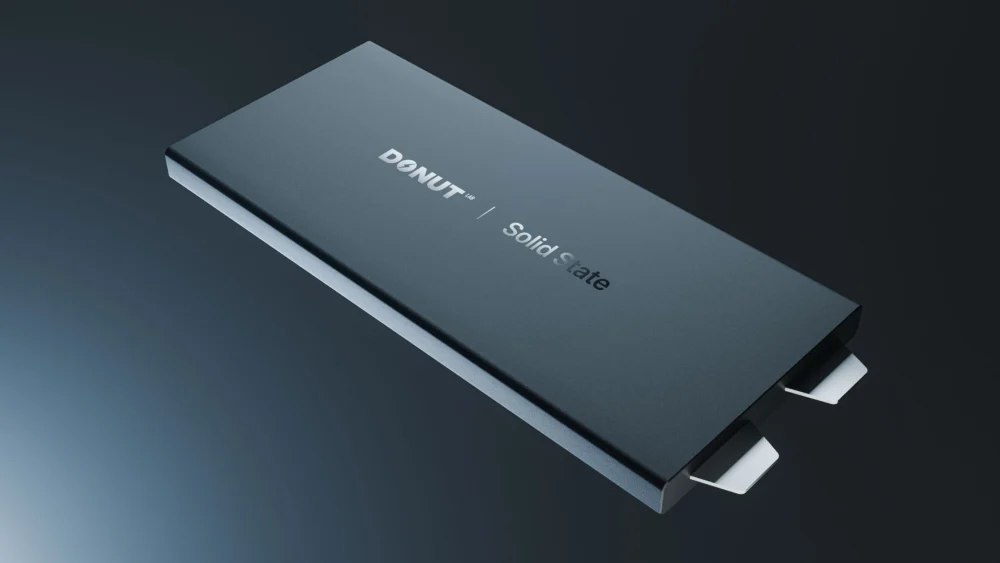
The allure of solid-state batteries is undeniable. They represent the next frontier in energy storage for EVs, promising to overcome the limitations of current lithium-ion technology. The fundamental difference lies in the electrolyte: while conventional batteries use a liquid electrolyte, solid-state batteries employ a solid material. This seemingly small change has significant implications, allowing for more compact battery designs. This compactness directly translates into a higher energy density, meaning more energy can be packed into the same volume or weight, thus enabling EVs to travel significantly longer distances on a single charge. This enhanced range is a critical factor in alleviating range anxiety, a major hurdle for widespread EV adoption.
However, the path to realizing the potential of solid-state batteries has been fraught with challenges, particularly in achieving large-scale manufacturing. For years, some of the world’s most influential automotive manufacturers and battery giants have been locked in a race to commercialize this technology. Toyota, for instance, once projected the integration of solid-state batteries into its vehicles by 2020, a timeline that has since been pushed back to 2027 or 2028. Despite these delays, there’s a palpable sense that solid-state technology is closer than ever to widespread adoption. Much of the recent progress has been in the realm of semi-solid-state batteries, which utilize gel-like electrolytes. Yet, a growing number of companies, particularly in China, are making strides towards true solid-state solutions. CATL, the world’s largest battery manufacturer, has outlined plans for limited production of solid-state batteries by 2027. Similarly, Chinese automaker Changan is slated to begin testing the integration of all-solid-state batteries into its vehicles this year, with mass production anticipated to commence in 2025.
It was against this backdrop of incremental progress that Donut Lab’s announcement prior to the Consumer Electronics Show (CES) in Las Vegas sent ripples through the industry. The company boldly declared its intention to bring the world’s first all-solid-state battery into production vehicles, a claim that immediately captured attention. Among the most striking specifications put forth by Donut Lab were an energy density of 400 watt-hours per kilogram (Wh/kg), a significant leap from the 250-300 Wh/kg found in top-tier commercial lithium-ion batteries today. Furthermore, they asserted that their cells could achieve an astonishing 80% charge in just five minutes, offer an exceptionally long lifespan of 100,000 cycles, and maintain 99% of their capacity even at extreme temperatures. To cap it all off, these supposed advancements were to be achieved at a lower cost than current lithium-ion batteries, utilizing "100% green and abundant materials with global availability."
These extraordinary claims, however, were met with immediate and widespread skepticism from seasoned experts in the field. Shirley Meng, a professor of molecular engineering at the University of Chicago, who attended CES and visited Donut Lab’s booth, expressed her doubts. "In the solid-state field, the technical barriers are very high," she stated. "They had zero demo, so I don’t believe it." Her sentiment, characterized as conservative caution, highlights a common theme: a reluctance to embrace unsubstantiated breakthroughs. Eric Wachsman, a professor at the University of Maryland and co-founder of Ion Storage Systems, echoed this sentiment in a January interview, remarking, "It’s one of those things where nobody knows—they’ve never heard of it. They came out of nowhere." This lack of prior recognition and transparency further fueled the skepticism.
Donut Lab has been remarkably tight-lipped regarding the specific technical underpinnings of their claimed breakthrough. While it is not uncommon for startups, particularly in the competitive and proprietary field of battery technology, to guard their innovations until patents are secured, the sheer magnitude of Donut Lab’s claims, coupled with the limited technical disclosures, has led many experts to question their veracity. The reported performance metrics appear to defy established scientific principles and known chemistries, prompting widespread speculation and doubt. Yang Hongxin, chairman and CEO of Chinese battery giant Svolt Energy, articulated this concern in remarks to news outlets, stating, "All the parameters are contradictory." He pointed out the inherent trade-offs in battery design, such as the conflict between achieving high energy density (often requiring thicker electrodes) and enabling fast charging (which necessitates rapid ion mobility). The assertion that their technology would be both high-performing and cheaper than lithium-ion batteries further strained credulity for many.
In response to the mounting skepticism, Donut Lab has launched a video series titled "I Donut Believe," a direct acknowledgment of the doubts surrounding their claims. The accompanying website boldly proclaims, "Fair enough. Here you go." This campaign aims to provide evidence to substantiate their bold assertions. The website featured a countdown timer, culminating on Monday, February 23rd, when the company released the results of its first third-party testing: a rapid charging test. The reported findings indicated that a single cell could achieve an impressive 0% to 80% charge in approximately four and a half minutes. These results are indeed quick and represent a potentially significant achievement, although a crucial caveat noted was the considerable heating of the cells during the charging process, underscoring the potential importance of thermal management in future vehicle designs.
Despite this initial demonstration, a host of questions remain unanswered. The released test data primarily focused on charging speed. Critical information regarding the battery’s cycle life at this rapid charging rate, its ability to meet the company’s other performance claims (such as extreme temperature resilience and long-term capacity retention), and the overall cost-effectiveness of the technology are still pending. Efforts to solicit further information directly from Donut Lab have, as of this report, yielded no response.
Donut Lab has undeniably succeeded in generating substantial interest and attention through its strategic rollout and the theatrics surrounding its claims. The company’s website continues to feature another countdown timer, set to expire on Monday, March 2nd, hinting at further revelations. While the prospect of a genuine breakthrough in battery technology is exciting, the industry is increasingly guided by a pragmatic principle: "Extraordinary claims require extraordinary proof." As the narrative unfolds, the onus is on Donut Lab to move beyond compelling claims and provide the concrete, verifiable evidence necessary to win over a skeptical, yet hopeful, world. The future of EV adoption may very well depend on it.