Faris Adani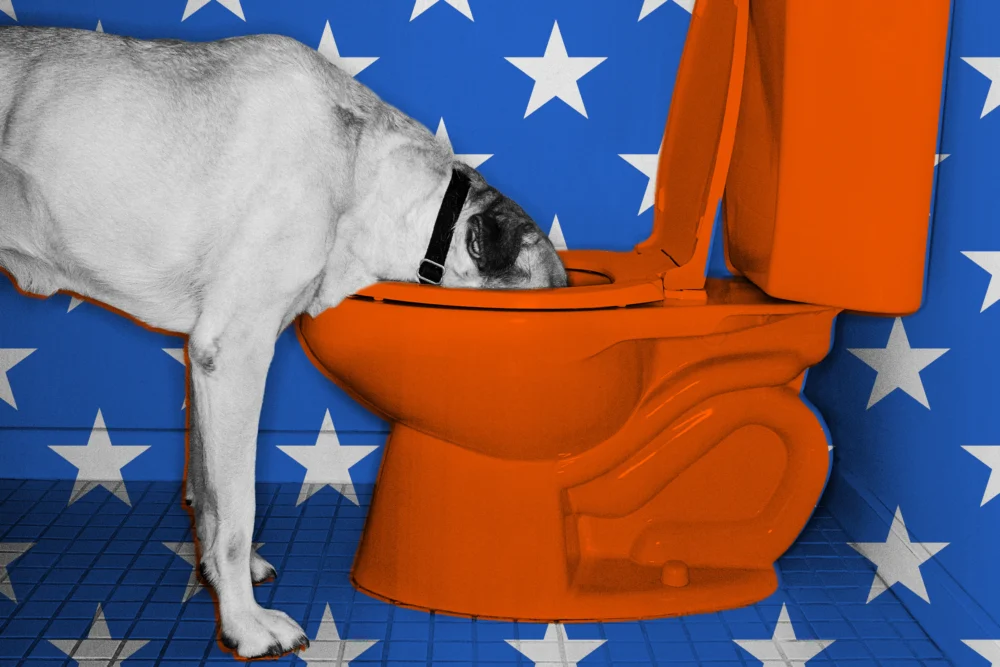
The notion of transforming wastewater into potable drinking water, often colloquially and somewhat provocatively dubbed "toilet-to-tap," is steadily moving from the realm of sci-fi speculation to a critical component of modern water management strategies. While the concept might initially evoke a visceral "ick" reaction, scientific advancements in water purification have rendered this recycled water not only safe but often purer than conventional tap water sources, leading treatment facilities to reintroduce essential minerals. This innovative approach to water conservation is gaining significant traction across the United States, with numerous cities already integrating such systems into their water supply networks. A recent study, highlighted by Grist and published in the esteemed journal Water Resources Research, reveals a surprising degree of public acceptance: residents in small communities expressed a willingness to pay an average of $49 per month for access to this meticulously purified, reused water. This finding suggests a significant shift in public perception, underscoring the growing recognition of recycled wastewater as a viable and necessary solution to mounting water scarcity challenges.
The process of transforming sewage into potable water is a sophisticated multi-stage operation designed to remove every conceivable contaminant. It typically begins with conventional primary and secondary wastewater treatment, which removes solids and organic matter. Following this, the water undergoes advanced purification steps. The first crucial stage is often microfiltration or ultrafiltration, physically straining out microscopic particles, bacteria, and some viruses. This is followed by reverse osmosis, a highly effective process where water is forced through a semi-permeable membrane at high pressure, stripping away dissolved salts, heavy metals, pharmaceuticals, pesticides, and remaining viruses. Finally, the water is disinfected using advanced oxidation processes, such as ultraviolet (UV) light combined with hydrogen peroxide or chlorine, to neutralize any remaining pathogens. The result is water so exceptionally pure that it often lacks the natural minerals desirable for human consumption and taste. Consequently, these treatment facilities often add minerals back into the water to ensure it’s palatable and doesn’t leach essential nutrients from the body, a stark testament to the rigor of the purification process. The very same technology ensures astronauts on the International Space Station can safely drink their recycled urine and sweat, proving the concept’s extreme reliability in a closed-loop system.
The study, co-authored by economist Todd Guilfoos of the University of Rhode Island, focused on small communities of fewer than 10,000 people, a demographic often disproportionately affected by water shortages and with fewer resources for large-scale infrastructure projects. The survey indicated that residents in these areas, facing the acute realities of dwindling water supplies, are remarkably open to innovative solutions. The $49 per month willingness-to-pay figure is significant because it represents a tangible commitment to sustainable water management. Guilfoos emphasized the bipartisan appeal of wastewater reuse, noting to Grist that "It’s often just cheaper than some of the other available solutions." This economic pragmatism, coupled with environmental necessity, appears to be dissolving traditional resistance to the "toilet-to-tap" concept. For smaller municipalities, where alternative water sources like new reservoirs, desalination plants, or long-distance pipelines are often prohibitively expensive, wastewater recycling presents a more economically feasible and environmentally sound pathway to water security.
The urgency for adopting such technologies is underscored by the escalating global water crisis, particularly severe in the American West. Soaring temperatures, a direct consequence of climate change, have exacerbated droughts across the US, as reported by Climate Central. This has forced many rural towns and agricultural regions to heavily rely on and deplete their aquifers, leading to unsustainable groundwater extraction. Beyond the immediate water scarcity, this over-pumping causes land subsidence, where the ground literally sinks, damaging infrastructure and permanently reducing aquifer storage capacity. Wastewater recycling offers a critical lifeline by creating a new, reliable, and drought-proof local water source, reducing dependence on increasingly stressed natural water bodies and groundwater reserves. It promotes a circular water economy, where water is treated, reused, and continuously returned to the system, rather than being used once and discharged, often into oceans, where it becomes permanently lost from the freshwater cycle.
Despite the compelling benefits, the widespread implementation of wastewater recycling faces significant hurdles, primarily the substantial upfront capital investment required to construct these advanced treatment facilities. As Guilfoos pointed out, the $49 monthly payment might cover operational costs, but it doesn’t account for the initial multi-million-dollar infrastructure development. Smaller municipalities, lacking the robust tax bases of larger cities, would almost certainly need to secure state and federal grants, as well as explore public-private partnerships, to finance such projects. Beyond the financial aspect, the psychological barrier, or the "yuck factor," remains a challenge, even with growing public acceptance. While the scientific community unequivocally affirms the safety and purity of recycled wastewater, public perception can be slow to catch up. Michael Kiparsky, director of the Wheeler Water Institute at UC Berkeley, not involved in the study, acknowledged this "visceral reaction to drinking reused water" but noted that "over time, that has faded as the notion of reusing water to augment water supplies, including for drinking water, has become increasingly legitimized." Effective public education campaigns, transparent communication about the purification process, and showcasing successful existing projects are vital to overcome this lingering stigma.
Fortunately, several pioneering cities and regions have already demonstrated the feasibility and success of advanced wastewater recycling. Nevada, for instance, is a national leader, reusing an impressive 85 percent of its water, according to another recent study cited by Grist. This is largely due to its innovative water management policies, particularly in the Las Vegas Valley, where highly treated wastewater from homes and businesses is returned to Lake Mead, a major source of drinking water for the region. Another shining example is the Orange County Water District (OCWD) in California, which operates the world’s largest indirect potable reuse facility, the Groundwater Replenishment System (GWRS). This system purifies wastewater to near-distilled quality and then injects it into groundwater basins, where it naturally filters further before being pumped out for drinking. Texas cities like Wichita Falls and Big Spring implemented direct potable reuse systems during severe droughts, piping purified wastewater directly into the drinking water supply. Internationally, Singapore’s NEWater initiative is a globally recognized benchmark, supplying up to 40% of the nation’s water needs and serving as a critical pillar of its water security strategy. These examples provide concrete proof that the technology works, is safe, and can be integrated successfully into large-scale urban water systems.
The image of a dog with its head in a toilet bowl, while perhaps an amusing illustration of the "ick factor," fundamentally misrepresents the sophisticated reality of modern wastewater recycling. It’s not about drinking directly from a toilet but about a meticulous, multi-barrier purification process that far exceeds the treatment levels of many conventional water sources. As climate change intensifies and traditional water supplies become increasingly unreliable, embracing innovative solutions like advanced wastewater recycling is not merely an option but a strategic imperative. The shift in public opinion, as evidenced by the Water Resources Research study, signals a growing readiness to move past outdated perceptions and embrace scientific solutions for future water security. While material concerns and infrastructural obstacles remain, the increasing legitimation of water reuse, coupled with its economic and environmental advantages, suggests that this technology will play an indispensable role in safeguarding our most precious resource for generations to come. The future of water management hinges on our collective ability to look beyond the "ick" and embrace the ingenuity that turns what was once waste into a vital, life-sustaining resource.