isnaini azizah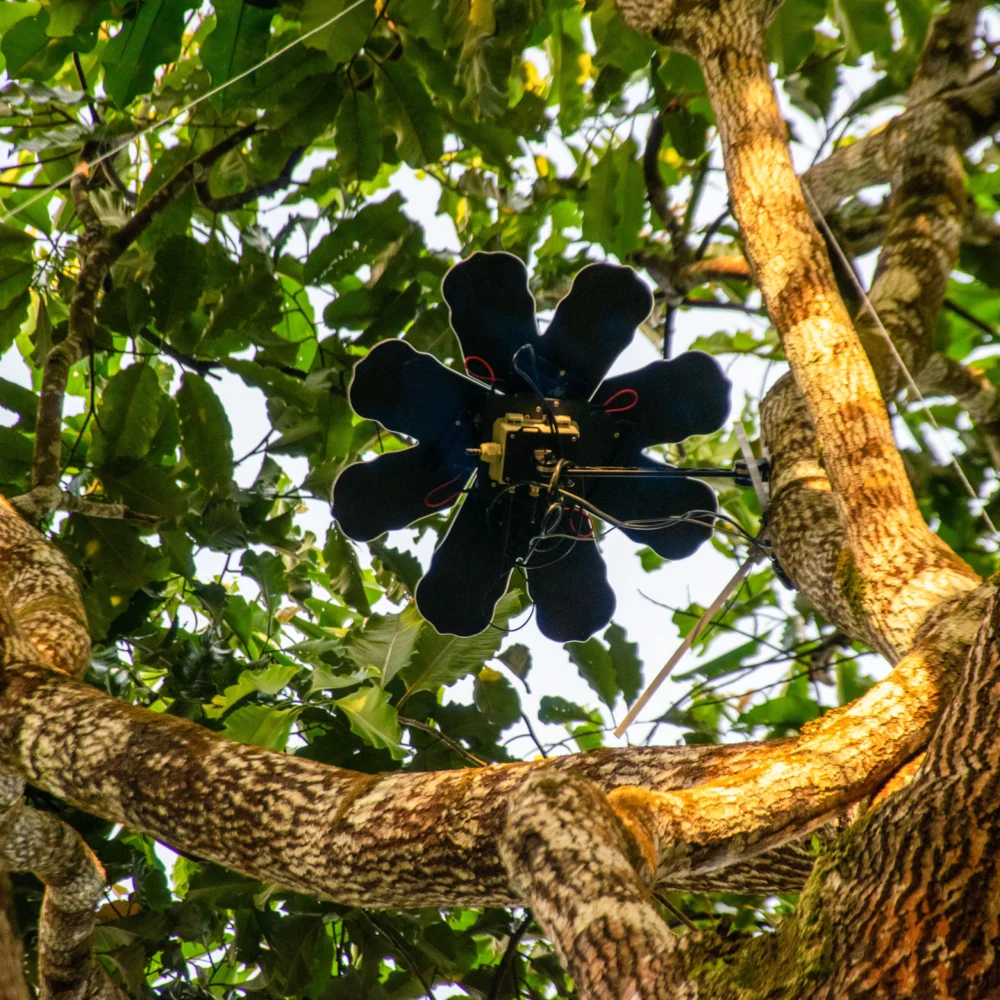
The United Nations has set a target to eradicate trafficking in protected species by 2030. However, the environmental guardians tasked with confronting these nefarious networks—comprised of dispersed alliances of rangers, community groups, and law enforcement officers—have historically been ill-equipped and underfunded. A recent report by the UN Office on Drugs and Crime expressed "no reason for confidence" that the 2030 objective would be met.
Nevertheless, there is a tangible sense of optimism that technological advancements can help reverse this trend. Tools initially developed for urban environments and research facilities are increasingly being deployed in the planet’s wild spaces, empowering environmental agencies and proactive communities in both affluent and developing nations to enhance their efforts in detecting illegal goods, tracing smuggling networks, and preventing poaching at its origin.
In December, Interpol announced a record seizure of live animals, a success partly attributed to a suite of sophisticated tools that exposed hidden trafficking networks. Its Operation Thunder 2025 coordinated law enforcement agencies from 134 countries, resulting in the seizure of 30,000 live animals, ranging from apes to butterflies, through the utilization of technologies such as digital forensics and AI-driven detection. "The success of Thunder 2025 underscores that modern threats necessitate modern tools," stated José Adrián Sánchez Romero, an operations coordinator at Interpol’s environmental security subdirectorate.

Here are five examples of technologies that are equipping conservationists and other stakeholders in the fight against wildlife crime.
Tagging Rhinos with Radioactive Isotopes
In July, a consortium of South African researchers unveiled a groundbreaking initiative to combat wildlife crime: the implantation of radioactive substances into rhinoceros horns, a plan that has garnered significant attention.
Under the initiative, known as the Rhisotope Project, researchers worked throughout 2024 and 2025 to fit 33 rhinos at the Limpopo Rhino Orphanage in South Africa with pellets containing low-level radioactive isotopes. This project has received support from the International Atomic Energy Agency.

Extensive blood samples and veterinary examinations have confirmed that these implanted pellets pose no health risks to the rhinos, the attending rangers, or the surrounding environment. Crucially, the isotopes emit sufficient radiation to be detected by radiation portal monitors. These devices are capable of scanning cargo containers and vehicles for illicit radiation sources. Currently, 11,000 such monitors are operational at airports and shipping terminals globally, complemented by thousands of personal monitors used by border security personnel. In November 2024, the Rhisotope project conducted a successful test at New York airports and harbors in collaboration with the US Customs and Border Patrol. The trial demonstrated that border guards could successfully detect an individual rhino horn that the team had discreetly placed within a fully loaded 40-foot shipping container.
This innovative approach was pioneered by James Larkin, director of the radiation and health physics unit at the University of the Witwatersrand in South Africa. Despite South Africa currently harboring approximately 15,000 rhinos, representing the majority of Africa’s total population, poachers have tragically killed 10,000 rhinos in the country since 2007. Historically, the primary strategy to deter poachers involved preemptively removing the animals’ horns. However, this dehorning process requires lengthy sedation periods, is inherently stressful and costly, and must be repeated every 18 to 24 months as rhino horns regenerate. Furthermore, dehorned rhinos are less able to defend themselves and often exhibit reduced social interaction and mating competition.
The new Rhisotope method offers a significantly less invasive and more time-efficient alternative. Each dose costs 21,500 South African rand (approximately $1,300) per animal and remains effective for five years. Prominent warning signs are strategically placed along perimeter fences to clearly indicate that the animals have been tagged, serving as a deterrent to potential poachers.
Larkin, who has dedicated his career to nuclear safety, initially harbored reservations when conservationists proposed the use of radioactive substances to combat rhino poaching, humorously admitting his concern about potential legal repercussions if anyone were harmed. However, his perspective shifted upon realizing that a specific radiation dose could be administered that would be harmless to bystanders while rendering the horns both valueless to smugglers and readily detectable.

Poachers are known to kill rhinos for even small quantities of horn, which can command prices as high as $60,000 per kilogram due to its use in traditional medicines. By incorporating isotopes, the horns are rendered potentially unsafe for consumption, and this modification is extremely difficult for smugglers to reverse. "It’s almost impossible to remove isotopes unless you are a skilled radiation protection officer who knows what they are looking for," Larkin explained. He remains guarded about the specific compound used in the pellets and their appearance, stating, "I don’t want to help criminals."
The South African health agency has now granted approval for Rhisotope to expand its program nationwide. "We have a goal ultimately to treat up to 500 rhinos a year," announced Jessica Babich, chief executive of the project. Concurrently, the team is actively working to adapt their methodology to other high-value poaching targets, including elephant tusks and pangolin scales, as well as trafficked plant species like cycads.
Elemental Signatures: Scanning for Origin
For numerous exotic pets, ranging from birds to pythons, a dual market exists: a legal trade in farmed or captive-bred animals and an illicit trade in creatures taken from the wild. However, law enforcement faces the challenge of definitively determining the origin of a particular lizard or parrot.

In Australia, some conservationists are employing innovative methods to trace these animals. The breeding of short-beaked echidnas, a species of monotreme, has proven exceptionally difficult. Zoos in the United States have managed to produce only 19 echidna offspring, or "puggles," over a century of concerted efforts. This makes Indonesia’s annual export of dozens of "captive-bred" echidnas a source of considerable suspicion.
To address this discrepancy, a team at Australia’s Taronga Conservation Society, led by Kate Brandis, has developed an X-ray fluorescence (XRF) gun. This device can analyze the elemental signatures present in keratin—the fundamental protein found in quills, feathers, and hair. Wild echidnas, for instance, consume a varied diet of beetle larvae, ants, and grubs, whereas captive animals are typically fed a less diverse diet of commercial feed. Each dietary history leaves a distinct imprint on the mammals’ spiny quills, which can be accurately deciphered using a handheld XRF gun. Similar elemental markers can be identified in other species, such as cockatoos, pangolins, and turtles, which the team has utilized to validate the device’s efficacy.
There remains substantial work to be done. Australia, home to a multitude of unique species found nowhere else on Earth, is a prime target for collectors from Asia, Europe, and the United States. Brandis is focusing on species most frequently trafficked out of the country, including shingleback and blue-tongue lizards. Recently, Australian environmental authorities conducted a trial study in post offices across the nation. This trial integrated the XRF gun with AI-equipped parcel scanners, which Brandis’s team had trained to recognize concealed species in real-time. The experiment led to the discovery of over 100 legally protected lizards being illicitly shipped out of Australia, resulting in a distributor receiving a prison sentence exceeding three years.
AI in the Sky: Monitoring Marine Sanctuaries

Commercial fishing, scuba diving, and oil exploration are strictly prohibited within the Papahānaumokuākea Marine National Monument near Hawaii, an expansive Pacific Ocean region larger than all U.S. national parks combined. This monument is one of several vast marine protected areas established in recent years, alongside global commitments to conserve 30% of Earth’s land and sea.
However, the establishment of these reserves represents only a partial victory. Enforcing their protection presents a formidable challenge. For many marine reserves, particularly those in the Global South, effective monitoring is virtually impossible, according to Ted Schmitt, senior director of conservation at the nonprofit Allen Institute for AI (AI2). The sheer immensity of open ocean requires constant vigilance. Even with satellite surveillance of marine areas, the reality until recently was that effective monitoring depended on knowing precisely what to look for. "When you have the vastness of the ocean, you can have analysts who are very well trained, looking for vessels," he stated. Even with such expertise, the chances of detecting illicit activities without ground-level intelligence are slim.
In 2017, Microsoft cofounder Paul Allen began developing a tool named Skylight to provide analysts with enhanced intelligence. This technology leverages AI to analyze satellite and ship-tracking data, thereby identifying suspicious behavior. Following Allen’s passing in 2018, the project transitioned to AI2. The technology has since been adopted by over 200 organizations in more than 70 countries. "We’re basically monitoring the entire ocean 24-7-365, and surfacing all these vessels," Schmitt remarked.
Schmitt highlighted the system’s application by coast guards, pointing to a series of arrests in Panama in early 2025. In January of that year, satellite imagery detected 16 boats approximately 200 kilometers off the coast, within the Coiba Ridge marine reserve. This reserve serves as a critical migratory corridor for sharks, rays, and large fish such as yellowfin tuna. Skylight’s AI algorithms, trained to recognize the distinct movement patterns of various fishing methods, identified long-line fishing activities and prompted requests for higher-resolution imagery of the location from a commercial satellite. The images and Skylight’s analysis were subsequently utilized by Panama’s environmental agency and military. These authorities dispatched ships and aircraft to the area, ultimately resulting in the seizure of six vessels and thousands of kilograms of illegally harvested fish.

Skylight AI reportedly detects around 300,000 vessels per week, according to the company’s platform analytics. Success stories like the Coiba Ridge operation demonstrate that AI can significantly benefit partners diligently working on the ground, Schmitt emphasized. "The Panama case really was one of those ‘wow’ moments, not because the technology finally proved itself, but because the agencies that needed to operationalize it, and actually take it to a legal finish, did it."
Rapid DNA Tests for On-the-Spot Identification
During her research on snow leopards in remote regions of Nepal, conservation scientist Natalie Schmitt collaborated with individuals who could identify signs of these elusive big cats, often through piles of droppings. However, the reliability of such identification was questionable, as leopard scat can be easily confused with that of wolves and foxes, which inhabit the same environment and prey on similar animals, she explained. Schmitt’s objective was to develop a tool capable of identifying the involved animal directly in the field, ideally by sequencing the DNA within the scat.
While some laboratories can analyze DNA samples from such materials to identify species of interest, these facilities are scarce in affluent nations and typically nonexistent in poorer countries. This leads to identification processes that can span weeks and involve shipping samples across regions or national borders. This delay poses a significant problem not only for field research but also for wildlife trafficking enforcement. Consider a border agent who has just opened a shipment of shark fins or live parrots and needs to ascertain whether the specific species is legally permitted for capture and transport. Such situations do not allow for weeks of waiting.

In 2020, Schmitt founded WildTechDNA, a company that has developed a DNA test designed for rapid, on-site identification. The test, comparable in simplicity and speed to a home pregnancy test, employs a straightforward two-step process. Initially, a novel extraction method—"Literally, put the sample in the extraction tube and squeeze 10 times," she described—reduces the time required to extract DNA from a sample from an entire day to approximately three minutes. Subsequently, for the actual DNA testing, the company drew inspiration from the COVID-19 pandemic. The researchers discovered that technology similar to rapid at-home tests could be utilized to determine if the DNA in question belongs to a specific species. "Our tests use very simple lateral-flow strips to tell you whether a sample belongs to your target species of interest, yes or no."
These strips can be customized to test for a wide range of targets, from large feline species to microbes, opening up diverse applications in the wild. They can confirm if hair samples belong to a snow leopard or if a frog has been infected with the fungi responsible for chytridiomycosis, a devastating disease that has impacted amphibians globally, leading to the extinction of at least 90 species.
WildTechDNA’s earliest client was the Canadian government, which sought to detect European eels—a critically endangered species that is virtually impossible to identify by appearance alone. This difficulty in identification has facilitated the annual smuggling of approximately €3 billion worth of European eels, often disguised as other eel species. Some of this illicit trade passes through Canada en route to suppliers in Japan and China, and in some instances, reaches Canadian restaurants and consumers. "When a shipment is suspected to contain European eel, they’ll randomly sample it and they’ll send those samples off to a lab across the country, which will take three weeks," Schmitt stated, referring to traditional tracking methods. WildTechDNA developed specialized tests for European eels and trained Canadian enforcement officers in their use, enabling them to launch a "nationwide European eel blitz."
In a 2025 campaign, European eels were detected in fewer than 1% of sampled shipments. Schmitt indicated that Canadian authorities have not divulged specific investigation details but are encouraged by these results. These figures represent a significant improvement compared to rates detected using older technologies in 2016, an advancement they attribute to enhanced surveillance capabilities.

Listening in on the Forests: Bioacoustic Monitoring
The world’s forests are increasingly populated with surveillance devices. In addition to affordable camera traps and GPS tags attached to animals, low-cost solar-powered microphones have proven remarkably effective in revealing the biodiversity of some of the planet’s most densely inhabited and ecologically rich environments.
Rainforest Connection, a nonprofit founded in 2014 by physicist-turned-conservation-tech entrepreneur Topher White, was a trailblazer in bioacoustic monitoring for conservation purposes. The organization initially repurposed old mobile phones into cost-effective monitoring devices but has since developed a standardized device known as the Guardian, which has now been deployed in over 600 locations.
Guardians are engineered to capture a comprehensive soundscape of the rainforest. "They sit out in the rainforest for long periods of time, up in treetops. They’re solar-powered, they can last for years, and we listen to all the sounds continuously and transmit that up to the cloud, where we are then able to analyze it for all sorts of things," White explained. From its inception, the objective has been to utilize these devices to detect immediate threats—"chainsaws, logging trucks, gunshots, things like that," White stated—and relay real-time alerts to local partners, including police, Indigenous communities, and local populations responsible for land protection.

Bioacoustic monitoring devices have seen rapid advancements in recent years. Many can now perform data analysis before transmission, and their manufacturing costs have decreased as battery technology has improved. By contemporary standards, Rainforest Connection’s sensors are considered "over-engineered," according to White. However, the extensive network of deployed detectors provides a substantial volume of data that can be mined for signals beyond well-known indicators of illegal activity, such as gunshots. "An area for a lot more innovation going forward is to use the soundscape itself as a detector," White suggested. Rainforest Connection and the German software firm SAP collaborated on an initiative on the island of Sumatra, where they successfully identified human intruders by employing machine learning to detect "uncharacteristic sudden changes to the soundscape." For instance, tracking animal vocalizations and noting the abrupt cessation of these calls could signal the arrival of poachers. In 2026, Rainforest Connection plans to implement this approach in reserves in Thailand, Jamaica, and Romania, developing a unique model for each environment trained on thousands of hours of audio data and verified through camera trap footage. "We have a lot of eyes and ears in the forest already, all of which are aware and reacting to each other and to new stimuli," White remarked.
For the general public, Rainforest Connection’s unfiltered audio streams offer an additional utility: an application that allows users to listen to a live stream from the Ecuadorian rainforest, immersing themselves in the complete soundscape of birdsong, frog calls, and cicada chirps.
Matthew Ponsford is a freelance reporter based in London.