Faris Adani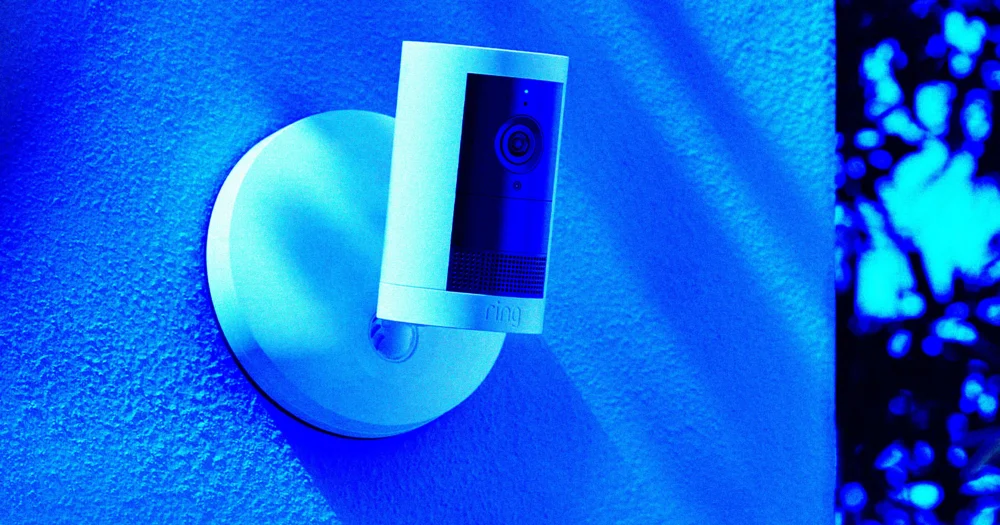
The digital rights landscape is shifting, with a growing number of consumers and advocates demanding greater control over the devices they purchase. At the forefront of this movement is the Fulu Foundation, a non-profit organization championing digital ownership and the right to repair, which has launched a substantial bounty program targeting some of the most pervasive smart home technologies. Their latest and most prominent target: Amazon’s Ring video doorbells, devices synonymous with convenience but increasingly scrutinized for their profound implications on privacy and surveillance. The Foundation is offering over $11,000 to hacktivists who can successfully modify Ring cameras to prevent them from sending user data to Amazon servers, instead enabling local storage and complete user control.
For many homeowners, a Ring camera represents an investment in security and peace of mind. The ability to monitor one’s doorstep remotely, see who’s approaching, and even speak to visitors through an app offers a compelling sense of control. However, the fine print of owning a Ring device, and indeed many internet-of-things (IoT) gadgets, reveals a significant trade-off. When a consumer integrates a Ring camera into their home security setup, they are implicitly agreeing to Amazon’s terms, which include the indefinite storage of every recording on Amazon’s cloud servers. This means that sensitive, personal footage of one’s home and family is not truly owned by the device’s purchaser but resides on corporate infrastructure, subject to Amazon’s policies and external requests.
Beyond indefinite storage, Amazon’s practices with Ring have drawn significant fire for their data-sharing policies. The company has faced intense criticism for its willingness to share user data, including video footage, with law enforcement agencies, sometimes without the user’s explicit consent or a warrant. Organizations like the EFF (Electronic Frontier Foundation) have consistently highlighted how these arrangements can create a de facto surveillance network, turning private homes into nodes in a broader monitoring system. Reports have detailed instances where Ring footage has been accessed by agencies like ICE (Immigration and Customs Enforcement), raising serious civil liberties concerns and blurring the lines between private property and public surveillance. This transforms the individual’s porch, ostensibly a private space, into a potential hub for a vast, company-controlled surveillance apparatus that can be leveraged by authorities.
The Fulu Foundation, spearheaded by renowned tech repair YouTuber Louis Rossmann, aims to fundamentally alter this dynamic. Rossmann, known for his ardent advocacy for the right to repair and consumer autonomy over their purchased electronics, founded Fulu with the explicit goal of empowering individuals with true digital ownership. The Foundation operates by incentivizing the cracking of consumer devices to strip away "harmful features" – features that often serve corporate interests at the expense of user privacy and control. Through a system of bounties, Fulu taps into the hacker community’s ingenuity to reverse-engineer proprietary systems and create open-source alternatives.
Currently, Fulu’s website showcases three active bounties, each targeting a specific pain point in consumer electronics: the Xbox Series X, the GE Refrigerator SmartWater Filter, and the Ring video doorbell. The inclusion of the Ring doorbell bounty is particularly timely, resonating with a public increasingly aware of digital privacy vulnerabilities. The bounty for the Ring camera, first brought to wider attention by Wired, promises a reward of over $11,000 to the individual or team capable of developing a specific software modification. This modification must successfully prevent Ring devices from transmitting data to Amazon’s servers and remove the dependency on Amazon’s ecosystem for the device’s core functionality. The ultimate goal is to grant the device owner total control, allowing the video doorbell to be "directly integrated with a local PC or server, either through wi-fi, or a direct physical connection."
The rationale behind this bounty is clear and compelling. As articulated in the Fulu bounty description, "People who own security cameras bought them to make their homes more secure. But without control of the video those cameras generate, Ring owners might actually be making them less so." This statement encapsulates the core paradox: a device marketed for security can, paradoxically, introduce new vulnerabilities if its operation is not entirely under the owner’s command. The potential for data breaches, unauthorized access by third parties, or coercive data sharing with law enforcement transforms a security asset into a privacy liability.
The Fulu Foundation has outlined specific parameters for the successful completion of the Ring bounty. The proposed modification must be achievable using "readily available" tools, ensuring that the solution is accessible to a broader range of users, not just highly specialized experts. Furthermore, the hack must be applicable to at least one model of Ring camera released after 2021, addressing the challenge of newer, potentially more secure hardware. This requirement ensures that the solution tackles contemporary devices, which are often designed with tighter security measures to prevent such modifications.
Kevin O’Reilly, co-founder of the Fulu Foundation, emphasized the evolving public perception of smart home devices in an interview with Wired. "It’s been an interesting moment for people to grasp exactly the trade-off that they have had to accept when they installed these security doorbell cameras," O’Reilly stated. He further elaborated on the foundational principle driving Fulu’s work: "People who install security cameras are looking for more security, not less. At the end of the day, control is at the heart of security. If we don’t control our data, we don’t control our devices." His words underscore a critical shift in consumer awareness, moving from an acceptance of convenience at any cost to a demand for genuine control and privacy. The idea that a security camera could undermine one’s security by surrendering data autonomy is a powerful and unsettling realization for many.
The bounty system itself is designed for community engagement, allowing anyone to donate to the fund, thereby amplifying the collective desire for digital freedom. In a significant show of commitment, the Fulu Foundation has pledged to match up to the first $10,000 contributed to the Ring bounty, effectively doubling the incentive for hackers. The public response has been notable, with donations pouring in, indicating that the challenge has indeed struck a nerve. A donor named David, contributing $10, succinctly captured the sentiment: "Don’t have a [R]ing camera myself, but want to help the cause." This reflects a broader understanding that the issue extends beyond individual ownership; it’s about setting a precedent for consumer rights in the digital age.
Ring’s path has been paved with significant controversy, reaching a peak with its "dystopian Super Bowl" advertisement, which critics lambasted as normalizing omnipresent surveillance. This ad, along with numerous reports of police partnerships and access to user data, fueled accusations that Ring was inadvertently creating the "largest civilian surveillance panopticon" in history. The concept of a panopticon, originally an architectural design for prisons allowing guards to observe all inmates without them knowing if they are being watched, serves as a chilling analogy for a society under constant, invisible digital scrutiny. The backlash has not been confined to academic discussions or online forums; some disgruntled owners have taken more drastic measures, reportedly "simply smashing them" in protest of the perceived privacy invasion. This visceral reaction underscores the depth of frustration and the urgent desire for alternatives to corporate-controlled smart home ecosystems.
The Fulu Foundation’s initiative represents a crucial step in the larger battle for digital sovereignty and the right to repair. In an era where smart devices are increasingly integral to our homes and lives, the question of who truly controls these devices—the consumer who bought them, or the corporation that manufactured them—is paramount. A successful hack of the Ring doorbell, enabling local data storage and severing the Amazon umbilical cord, would not only provide a tangible solution for Ring owners but also send a powerful message to the entire IoT industry. It would demonstrate that consumers are no longer passive recipients of terms and conditions but active participants demanding ownership, privacy, and true security from their smart devices. Such a breakthrough could inspire similar efforts across the spectrum of smart home technology, fostering a future where convenience does not automatically equate to a surrender of digital rights. The bounty is more than just a monetary reward; it’s an investment in a more private, more secure, and more user-controlled digital future.