anjir abdul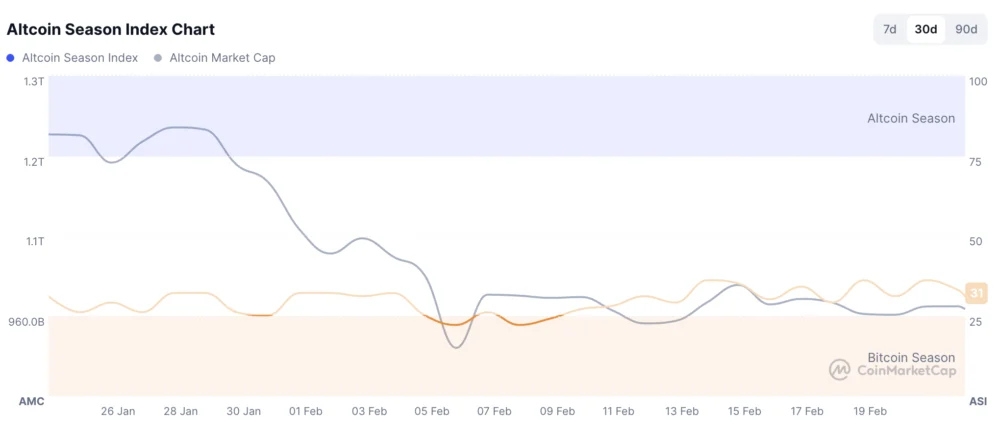
Crypto investors are demonstrating a notable shift in strategy during the current market downturn, moving beyond the traditional top two or three digital assets to explore a much broader spectrum of cryptocurrencies, according to Johann Kerbrat, Robinhood’s head of crypto. This burgeoning diversification signals a growing maturity and comfort level among retail participants, who are increasingly viewing market dips not as a cause for panic, but as strategic buying opportunities.
Kerbrat articulated this evolving investor behavior during an exclusive interview with Cointelegraph, highlighting a significant trend among Robinhood’s user base. "I think what we see from our customers is that they actually see it as an opportunity," he stated, emphasizing that investors are actively "buying the dip." This sentiment runs contrary to a purely fear-driven response, suggesting a more sophisticated understanding of crypto market cycles and long-term potential. He further elaborated, "So we actually see a lot of customers continuing to trade crypto and diversifying, not just on the top two or three assets, but actually going pretty wide." This "pretty wide" expansion extends beyond the perennial giants, Bitcoin (BTC) and Ether (ETH), which have historically dominated investor portfolios and market capitalization.
The inclination to "buy the dip" is a well-documented phenomenon in both traditional and crypto markets, reflecting a contrarian investment philosophy. When asset prices fall, these investors see a chance to acquire more at a lower cost, anticipating a future rebound. In the volatile world of cryptocurrency, where dramatic price swings are common, this strategy can be particularly potent, though it inherently carries higher risk. The current dip, rather than deterring engagement, appears to be fueling a more adventurous spirit among retail investors, pushing them to research and invest in a wider array of altcoins. This could be driven by the hunt for higher potential returns, as smaller cap altcoins often exhibit greater percentage gains during bull runs, or by a desire to support specific technological innovations and use cases beyond the established networks.
This shift marks an interesting contrast to observations made just months prior by other industry leaders. In November, Anthony Bassili, president of Coinbase Asset Management, noted that while there was a "very, very clear view" within the crypto community regarding Bitcoin as the primary priority, followed by Ethereum, the consensus fractured significantly when it came to identifying the third most important crypto asset. Bassili suggested that the market remained "very unsure as to what’s the next asset they want to own after that," with Solana (SOL) being merely a "maybe" on the radar. Robinhood’s Kerbrat’s comments, therefore, suggest a rapid evolution in retail investor sentiment, potentially indicating that individual investors are no longer waiting for a clear market consensus on a single "third" asset but are instead fanning out across various emerging projects.
While retail investors on platforms like Robinhood are casting a wider net, institutional engagement appears to be taking a more measured, albeit still significant, approach. Basil Al Askari, CEO of institutional crypto asset trading platform MidChains, told Cointelegraph that "we’re seeing full-scale asset managers entering with very large block trades going into predominantly the top 20 assets." This highlights a strategic distinction: institutional players, often bound by stricter compliance, risk management protocols, and fiduciary duties, tend to favor assets with higher liquidity, established market presence, and stronger fundamental backing. They are less likely to venture into smaller, more speculative altcoins, at least in the initial stages of adoption. Al Askari described this as "baby steps," acknowledging that while institutions are embracing crypto, their diversification is more constrained. He did, however, express optimism that it’s "not impossible to see large investment managers and funds build specific teams around strategies that do different things along the risk curve," suggesting a future where institutional investors might also explore a broader range of assets and even DeFi products.
The backdrop to this retail diversification is a complex and often contradictory market environment. The Altcoin Season Index, a metric designed to indicate whether altcoins are outperforming Bitcoin, recorded a "Bitcoin Season" score of 33 out of 100 recently. A score below 25 typically indicates a Bitcoin Season, meaning Bitcoin is dominating the market, while a score above 75 suggests an Altcoin Season. The 33 score indicates that Bitcoin still holds significant sway, with investors generally favoring it over altcoins in aggregate. This might seem to contradict Kerbrat’s observation of investors "going pretty wide." However, this discrepancy could be explained by several factors: the Altcoin Season Index reflects overall market cap movements, while Robinhood’s data pertains to individual trading activity; "going pretty wide" could still mean a relatively small allocation to numerous altcoins compared to a larger, foundational BTC/ETH holding; or it could signal the nascent stages of a shift that hasn’t fully registered on broader market indices yet.

Further compounding the market sentiment, the Crypto Fear & Greed Index has remained entrenched in "Extreme Fear" since the start of February. This index, which gauges overall market emotion, often indicates that investors are overly apprehensive, typically seen by contrarian investors as a potential buying opportunity. The "Extreme Fear" reading, therefore, aligns with Kerbrat’s insight that customers are seeing the dip as an "opportunity to buy." It suggests that a segment of the market is actively trying to capitalize on the prevailing negative sentiment, which historically has preceded market recoveries.
Adding another layer of complexity, US spot Bitcoin exchange-traded funds (ETFs) have experienced a challenging period, posting five consecutive weeks of net outflows, totaling approximately $3.8 billion. The launch of these ETFs in January was heralded as a monumental step for institutional adoption, yet these outflows indicate a cooling off or a reallocation of capital. These outflows could be attributed to various factors, including profit-taking by early investors, a rotation of funds into other assets (including altcoins, ironically, given the diversification trend), or broader macroeconomic concerns that are dampening enthusiasm for risk assets. The outflows from Bitcoin ETFs might even be indirectly contributing to the "going wide" phenomenon, as some investors might be reallocating funds previously earmarked for BTC into potentially higher-growth altcoin opportunities.
Beyond just holding assets, Kerbrat noted another significant trend: increased active engagement with crypto assets. He observed that more crypto holders on the Robinhood platform are not merely HODLing (holding on for dear life) but are actively utilizing their tokens. Staking, in particular, has seen "very strong traction" since Robinhood rolled out the feature in December. Staking involves locking up cryptocurrencies to support the operations of a proof-of-stake blockchain network, and in return, stakers earn rewards. This passive income generation mechanism is highly attractive to long-term holders, providing a yield on their assets that traditional savings accounts cannot match. The growing interest in staking underscores a desire for utility and yield generation, even amidst market uncertainty.
Furthermore, Kerbrat noted that more crypto holders are exploring decentralized finance (DeFi), despite the inherent risks and complexities associated with the sector. DeFi encompasses a wide range of financial services built on blockchain technology, offering alternatives to traditional banking through decentralized applications (dApps) for lending, borrowing, trading, and more. The exploration of DeFi by retail investors signifies a deepening understanding and a willingness to engage with the technological innovation underpinning the crypto ecosystem. This move towards active participation, whether through staking or DeFi, reflects a broader shift from speculative holding to utility-driven engagement, indicating a maturation of the investor base. "It’s been pretty fun to see, to be honest. It’s always surprising," Kerbrat remarked, highlighting the dynamic and often unpredictable nature of crypto investor behavior.
In conclusion, the current market dip is serving as a crucible for crypto investors, forging a more diversified and actively engaged participant base. Robinhood’s insights reveal a retail sector that is not only "buying the dip" but also expanding its horizons beyond the top-tier cryptocurrencies, signaling a move towards a more robust and varied portfolio strategy. While institutional investors maintain a more conservative approach, the overall trend points towards a growing comfort with crypto as an asset class, including its inherent volatility. The increasing adoption of features like staking and the exploration of DeFi further cement the idea that investors are looking beyond mere price speculation, seeking utility and long-term value in the evolving digital asset landscape. This diversification, coupled with active participation, suggests a more resilient and sophisticated crypto market is emerging, even as traditional market indicators like the Fear & Greed Index or Bitcoin ETF flows paint a picture of caution.