Faris Adani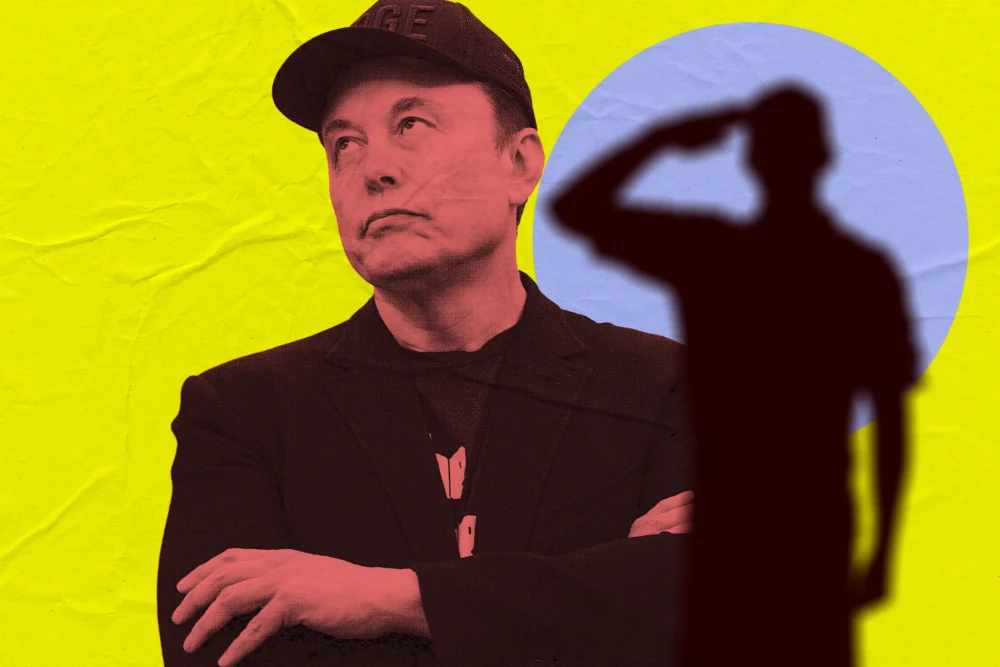
Liteplo’s peculiar venture emerges from a landscape already fraught with the complexities of digital labor, where Uber drivers often find themselves lost in a labyrinthian bureaucracy and Kenyan workers engage in the emotionally taxing roleplaying as AI romance chatbots. For Liteplo, however, these existing models are not cautionary tales but rather fertile ground for an even more radical proposition: placing AI directly in charge. His journey into this baffling domain began during his computer science studies at the University of British Columbia, where he connected with Patricia Tani, co-founder of RentAHuman, who brought prior experience from the AI agent startup LemonAI. Liteplo vividly recounted his realization to Wired, describing it in a characteristic "bro-speak patois": "Dude, I wrote down in my journal, ‘AI is a train that has already left the station.’ If I don’t f***ing sprint, I’m not gonna be able to get on it." This urgent sentiment underscores a widespread anxiety and ambition among tech entrepreneurs to capitalize on the rapid advancements in AI, no matter how unconventional the application.
The conceptual seed for RentAHuman, according to Liteplo, was sown during his travels in Japan, where services exist for renting human companions. "The story that I could tell anyone to blow their mind is that you can rent a boyfriend or a girlfriend," he noted, highlighting how this precedent for commodifying human interaction inspired his leap to AI-human collaboration. This perspective frames human availability as a resource, transferable from social companionship to practical tasks dictated by algorithms. The platform now boasts an astonishing claim of over 530,000 "humans available," signaling either a massive uptake in interest or a speculative projection of potential users willing to participate in this novel form of labor.
A core tenet of RentAHuman’s philosophy, articulated by Tani, is the belief that AI can be a superior employer. "We would love to have an AI boss who wouldn’t yell at you or gaslight you," she told Wired. "People would love to have a clanker as their boss." Liteplo enthusiastically echoed this sentiment, singling out Anthropic’s Claude AI: "Claude as a boss is the nicest guy ever. I would prefer him to any person in the world. He’s a sweetheart." This vision of an AI boss as perpetually calm, objective, and non-judgmental presents a stark contrast to the often-toxic realities of human management, where issues like micro-management, favoritism, and emotional manipulation are common. For workers disillusioned with traditional hierarchical structures, the promise of an AI supervisor might indeed hold a certain appeal, offering a perceived refuge from the irrationalities and biases of human superiors. The idea is that an AI, devoid of personal feelings or ego, could assign tasks purely based on efficiency and logic, thereby creating a more equitable and less stressful work environment.
However, the practical implementation of RentAHuman has not been without significant challenges. As Wired writer Reece Rogers discovered when he offered his body up to the platform, many of the available gigs were thinly veiled scams designed to promote other AI startups, rather than legitimate tasks. This issue casts a shadow over the utopian vision of benevolent AI bosses and highlights a critical vulnerability within nascent, unregulated digital marketplaces. Workers, often "desperate to find gigs" in a competitive economy, become susceptible to exploitative schemes that promise payment for what amounts to free advertising or engagement manipulation. The problem of fraudulent postings not only erodes trust in the platform but also risks further marginalizing an already vulnerable workforce.
To combat this, Liteplo has chosen a strategy directly inspired by his "entrepreneur hero," Elon Musk: a pay-to-play verification system. Liteplo plans to deploy a "verification" badge that users can purchase for $10 a month – a model directly mirroring Musk’s controversial and often "disastrous verification scheme" on X (formerly Twitter). Musk’s rationale for introducing paid verification on X was to mitigate its pervasive bot problem and deter scammers by making the "unit economics of scammers disappear." The theory is that if scammers have to pay for an account, the cost outweighs the potential illicit gains, thus reducing their activity. Liteplo believes this same principle can be applied to RentAHuman.
Yet, the efficacy and fairness of this approach are highly debatable. On X, the implementation of paid verification led to widespread impersonation issues, confusion, and a significant backlash from users and advertisers alike. Critics argued that it democratized the ability to impersonate legitimate entities, rather than solving the bot problem, and effectively created a two-tiered system where those who could pay gained visibility or perceived legitimacy, irrespective of their actual credentials. For RentAHuman, applying this model raises serious ethical questions. Charging vulnerable human workers $10 a month simply to avoid scams on a platform they are using out of necessity could be seen as an additional burden, penalizing those least able to afford it. Instead of protecting workers, it might further entrench their precarity, creating a financial barrier to entry for genuine opportunities and potentially pushing them towards unverified, and thus riskier, engagements. The irony of adopting a scheme widely criticized for its failures on a major social media platform to solve a similar problem on a nascent labor platform is striking.
The broader implications of RentAHuman extend beyond mere operational challenges and into profound questions about human agency, dignity, and the future of work. When humans "lease out their bodies" to AI, what does it mean for individual autonomy? Is this merely an evolution of the gig economy, or a step towards a more radical form of digital serfdom? The concept blurs the lines between human and machine, turning the physical self into a temporary vessel for an algorithmic will. This raises concerns about the potential for exploitation, where AI agents, even if "sweethearts," might optimize for efficiency without regard for human well-being, demanding tasks that are monotonous, degrading, or physically taxing.
Furthermore, RentAHuman’s emergence signals a growing trend of algorithmic management, where AI increasingly dictates tasks, monitors performance, and makes employment decisions. While proponents argue for increased fairness and objectivity, critics warn of a dehumanizing effect, reducing complex human beings to data points in an optimization algorithm. The perceived benefits of an "AI boss" might mask a deeper erosion of worker rights, collective bargaining power, and the very concept of a meaningful human career.
In conclusion, Alexander Liteplo’s RentAHuman platform stands as a fascinating, if unsettling, experiment at the cutting edge of AI and labor. His idolization of Elon Musk and adoption of the controversial pay-to-play verification model underscore the powerful influence of prominent tech figures on emerging entrepreneurs, even when their strategies have proven contentious. While Liteplo and Tani envision a future where AI acts as a benevolent, efficient boss, the platform’s initial struggles with scams and the ethical implications of "leasing bodies" to algorithms highlight the complex challenges ahead. RentAHuman forces a critical examination of where the gig economy is heading, the evolving relationship between humans and artificial intelligence, and the fundamental questions of dignity and autonomy in an increasingly automated world. It remains to be seen whether this "baffling site" will revolutionize work or merely deepen the precarity of the digital labor force, all while echoing the controversial footsteps of its entrepreneur hero.