Faris Adani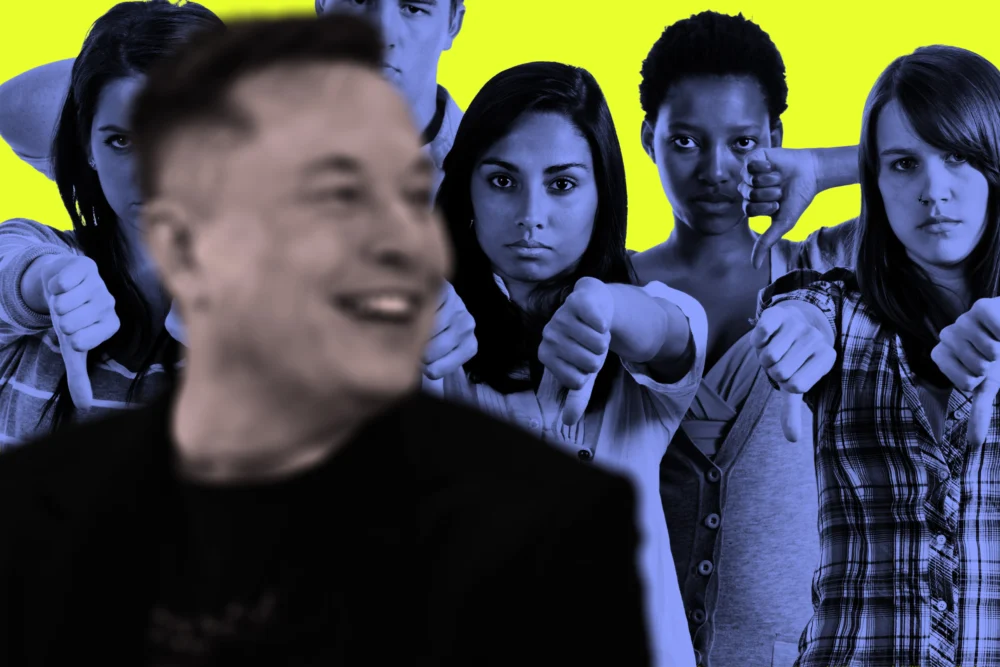
In an unprecedented challenge to the traditional judicial process, San Francisco’s federal court is grappling with the arduous task of assembling an impartial jury for Elon Musk’s upcoming stock manipulation trial, a difficulty exacerbated by the tech mogul’s polarizing public image and the pervasive sentiment of animosity many prospective jurors harbor towards him. As the visionary-yet-controversial leader of Tesla, SpaceX, and X (formerly Twitter), Musk finds himself in a legal battle where his celebrity status and often divisive actions are proving to be a significant hurdle to a fair and unbiased selection process.
The federal courtroom, presided over by Judge Charles R. Breyer, became the scene of a remarkable display of public sentiment as over 90 prospective jurors were asked to set aside their personal opinions about Musk, Twitter, or Tesla. "Whatever your opinion is on Mr. Musk, Twitter or Tesla, can you set it aside in the sense that you will judge the defendant based solely, emphasize solely, on the evidence produced in this trial and the law as I give it to you?" Judge Breyer queried, his words underscoring the delicate balance required in high-profile cases. The process of voir dire, or jury selection, is designed to filter out individuals incapable of delivering a verdict based purely on evidence, yet for a figure as globally recognized and opinion-inducing as Musk, this standard proved exceptionally challenging to meet.
A significant point of contention and a primary driver of bias among the jury pool was Musk’s highly publicized entanglement with the Trump administration. His substantial financial contributions, reportedly nearing $300 million, to Trump’s presidential campaign, coupled with his leading role in the proposed "Department of Government Efficiency," or DOGE—a pet project that aimed to dramatically streamline or "gut" federal agencies—ignited strong reactions. The judge explicitly addressed this political dimension, stating, "Even though you may have strong views on the presidency, this is not the forum where this is expressed. Whatever your views of the presidency are, they are not going to influence your views in this case." Despite this directive, the deeply partisan nature of American politics, particularly in a liberal bastion like San Francisco, made it difficult for many to disassociate their political beliefs from their perception of Musk.
The results of this intense scrutiny were telling: more than a third of the prospective jurors openly admitted they could not be impartial and were subsequently dismissed. Even among those who claimed they could set aside their biases, many confessed to holding decidedly negative opinions of Musk. This revelation prompted a heated reaction from Musk’s legal counsel, led by attorney Stephen Broome, who expressed outrage at the court’s apparent willingness to potentially seat jurors with such preconceived notions. Broome argued vehemently that in any other case, a juror who stated, "I hate that guy and he has no moral compass," would be immediately disqualified.
However, Judge Breyer remained firm, asserting the legal distinction between holding an opinion and being unable to render an impartial judgment. "He is a public figure, and as a public figure, he will excite views, strong views," the judge reminded Broome. "The question is whether or not they can set them aside." This judicial stance highlights a recurring dilemma in contemporary jurisprudence: how to ensure a fair trial for individuals who, through their immense influence and controversial actions, have become ingrained in the public consciousness and are subject to widespread adoration or disdain. Musk’s case, in this regard, serves as a stark illustration of the challenges posed by celebrity defendants in an age of instant information and pervasive social media commentary.
The trial, slated to commence on March 2 and run through March 16, centers on accusations that Musk deliberately manipulated the stock price of Twitter, which he later controversially rebranded as X and subsequently, in an unexpected turn, folded into SpaceX, along with his AI venture, xAI. The core of the plaintiffs’ argument revolves around Musk’s conduct during the tumultuous $44 billion deal to acquire the social media platform, a figure widely criticized at the time as exorbitantly overpriced given the company’s financial performance.
Specifically, the plaintiffs allege that Musk made a series of misleading statements calculated to impact Twitter’s stock valuation. A pivotal moment occurred in May 2022 when Musk, leveraging his immense reach on the platform, tweeted to his hundreds of millions of followers that the acquisition deal was "on hold" pending calculations to verify that "spam/fake accounts do indeed represent less than 5 percent of users." This suggestive remark, implying a potentially higher percentage of fake accounts, sent Twitter’s share price tumbling by nine percent the following day, wiping billions off its market capitalization.
What followed was, in the eyes of critics and plaintiffs, a brazen escalation. Just days later, Musk publicly claimed that bots and spam accounts constituted an even larger 20 percent of Twitter’s user base, demanding that the company furnish proof to refute his assertion. This move was widely interpreted by market observers and legal experts as a strategic maneuver by Musk, either to find a pretext to withdraw from the questionable $44 billion agreement he had already committed to, or to deliberately depress Twitter’s stock price, thereby enabling him to renegotiate the deal at a significantly lower valuation. Indeed, Musk himself fueled such speculation at the time, openly stating that renegotiating the deal at a reduced price was not "out of the question." These actions form the bedrock of the stock manipulation allegations, with shareholders arguing they were directly harmed by Musk’s deliberate misrepresentations.
The trial’s unique jury selection difficulties underscore a broader phenomenon: the increasingly blurred lines between public perception, corporate governance, and legal accountability in the digital age. Musk, a figure whose every tweet and public utterance can send markets spiraling or ignite global debate, represents a new class of defendant. His prior legal skirmishes, including a defamation lawsuit in 2019 brought by a cave diver he disparaged as "pedo guy" (which he ultimately won), and ongoing regulatory scrutiny from the SEC, have cemented his reputation as a combative and unyielding personality. This public record, combined with his recent management decisions at X, which have drawn widespread criticism for changes to content moderation, verification policies, and perceived increases in misinformation, has undoubtedly contributed to the strong negative views among potential jurors. Even a seemingly unrelated incident, such as the CEO of Ryanair playfully suggesting that Musk’s unlikability actually boosted their sales during a feud, serves as anecdotal evidence of the deep public sentiment surrounding him.
Ultimately, the trial will proceed with nine jurors and no alternates, a lean configuration that places even greater emphasis on the impartiality and resilience of each selected individual. The outcome will not only determine the financial liabilities for Elon Musk but will also serve as a critical precedent for how courts navigate the complexities of high-profile cases involving influential public figures whose actions, opinions, and very personas are inextricably linked to the fabric of contemporary society and the global economy.