Faris Adani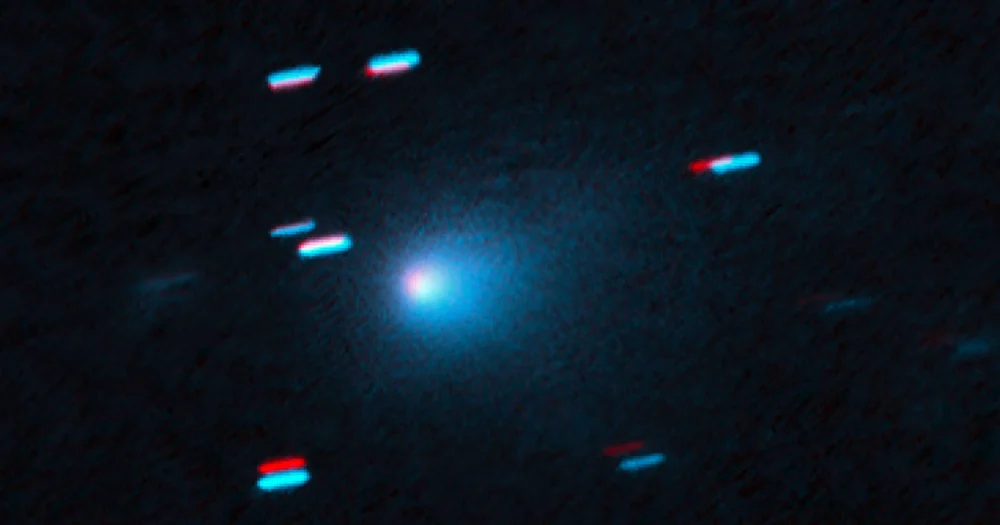
The cosmos has once again graced our solar system with a fleeting, yet profoundly illuminating, visitor: 3I/ATLAS. This enigmatic interstellar object, only the third of its kind ever definitively identified traversing our stellar neighborhood, has been a source of intense scientific fascination since its discovery. After a spectacular journey that saw it hurtle past several of our planets and make its closest approach to the Sun in October 2025, scientists are now observing an astonishing new development as it embarks on its long voyage back into the void: 3I/ATLAS has begun spewing immense quantities of water and other primordial materials into space.
The journey of 3I/ATLAS through our solar system has been meticulously tracked by astronomers worldwide. Its designation, "3I," signifies its status as the third confirmed interstellar object, following the much-debated ‘Oumuamua and the more clearly cometary 2I/Borisov. Each of these rare visitors offers an invaluable, albeit fleeting, opportunity to study matter originating from beyond our Sun’s gravitational influence, providing unprecedented insights into the chemical compositions and conditions of other star systems.
The critical turning point in 3I/ATLAS’s observable behavior occurred during its perihelion, its closest pass to the Sun, in late October 2025. For any icy body, a close encounter with our star’s intense heat and radiation is a transformative event. The solar energy warms the object, causing volatile compounds – primarily water ice – to sublimate directly from solid to gas. This process is what gives comets their characteristic glowing coma and spectacular tails. However, the activity observed from 3I/ATLAS has been particularly dramatic, signaling a profound change in its physical state.
These groundbreaking observations were made possible by NASA’s state-of-the-art SPHEREx near-infrared space observatory. Launched merely half a year before 3I/ATLAS’s solar flyby, SPHEREx (Spectro-Photometer for the History of the Universe, Epoch of Reionization, and Ices Explorer) is designed to conduct a comprehensive survey of the entire sky in near-infrared light. Its mission includes studying the early universe, the evolution of galaxies, and, crucially for 3I/ATLAS, mapping water and organic molecules in star-forming regions and planetary systems. Its sensitive instruments proved perfectly suited to capture the subtle, yet significant, chemical signatures emanating from the interstellar comet.
"Comet 3I/ATLAS was full-on erupting into space in December 2025, after its close flyby of the Sun, causing it to significantly brighten," stated Johns Hopkins astronomer Carey Lisse, lead author of a recent paper detailing the SPHEREx findings. Lisse’s remarks, published in a NASA statement, underscore the scale of the phenomenon. The significant brightening is a direct indicator of increased outgassing and the formation of a denser coma, reflecting more sunlight. "Even water ice was quickly sublimating into gas in interplanetary space," he added, confirming the primary driver of this activity.
The sublimation of water ice, a process familiar from terrestrial comets, is particularly exciting when observed in an interstellar object. It suggests that, despite its long journey through the cold vacuum between stars, 3I/ATLAS retains substantial reserves of water, a fundamental ingredient for life as we know it. But the revelations didn’t stop there. As the ice sublimated, it dislodged and released an even more intriguing cocktail of materials that have remained locked away for billions of years, offering a pristine glimpse into its origins.
"And since comets consist of about one-third bulk water ice, it was releasing an abundance of new, carbon-rich material that had remained locked in ice deep below the surface," Lisse elaborated. "We are now seeing the usual range of early solar system materials, including organic molecules, soot, and rock dust, that are typically emitted by a comet." This discovery is profoundly significant. The presence of carbon-rich materials, organic molecules, and soot points to the complex chemical processes that occurred in the protoplanetary disk where 3I/ATLAS likely formed, eons ago, around a distant star. These are the very building blocks from which planets, and potentially life, emerge. To observe them directly from an object that has traveled across vast cosmic distances provides invaluable comparative data for understanding planetary formation across the galaxy.
However, SPHEREx’s observations of 3I/ATLAS revealed something distinct, setting it apart from typical solar system comets. Phil Korngut, a SPHEREx instrument scientist, highlighted this unique aspect. "The comet has spent ages traversing interstellar space, being bombarded by highly energetic cosmic rays, and has likely formed a crust that’s been processed by that radiation," Korngut explained in a statement. This ‘cosmic ray crust’ is a crucial differentiator. In the interstellar medium, objects are constantly exposed to high-energy particles that can alter their surface chemistry and physical structure. This bombardment likely created a protective, radiation-hardened outer layer on 3I/ATLAS, effectively shielding its interior for eons.
"But now that the Sun’s energy has had time to penetrate deep into the comet, the pristine ices below the surface are warming up and erupting, releasing a cocktail of chemicals that haven’t been exposed to space for billions of years," Korngut continued. This explanation paints a vivid picture: the Sun’s intense heat, unlike the more diffuse cosmic rays, was able to finally breach this ancient crust, allowing the untouched, primordial interior of 3I/ATLAS to vent its long-held secrets. The "cocktail of chemicals" emerging now represents the original composition of the object, virtually unchanged since its birth in another star system. This makes 3I/ATLAS a time capsule, delivering samples of extrasolar planetary nebula chemistry directly to our observational doorstep.
The scientific community’s excitement about 3I/ATLAS mirrors the enthusiasm generated by its predecessors. ‘Oumuamua, discovered in 2017, was an enigma – a highly elongated object with no discernible cometary activity, leading to wild speculation about its nature. Then came 2I/Borisov in 2019, which behaved much more like a typical comet, complete with a tail, confirming its icy composition and providing the first direct chemical analysis of an interstellar comet. 3I/ATLAS now builds on this legacy, offering even more detailed insights thanks to instruments like SPHEREx.
Interstellar objects are fundamentally important because they are direct samples from other star systems. They are not merely light or radiation but actual pieces of matter, carrying the chemical fingerprints of their birthplaces. By studying them, we can:
- Understand Exoplanetary Systems: Gain direct knowledge about the building blocks of planets and the conditions in protoplanetary disks around other stars.
- Test Theories of Galactic Migration: Observe how material moves between star systems, potentially shedding light on the distribution of elements and even prebiotic molecules throughout the galaxy.
- Search for Life’s Origins: Identify the prevalence of water and organic compounds, reinforcing or challenging our understanding of the universality of the ingredients for life.
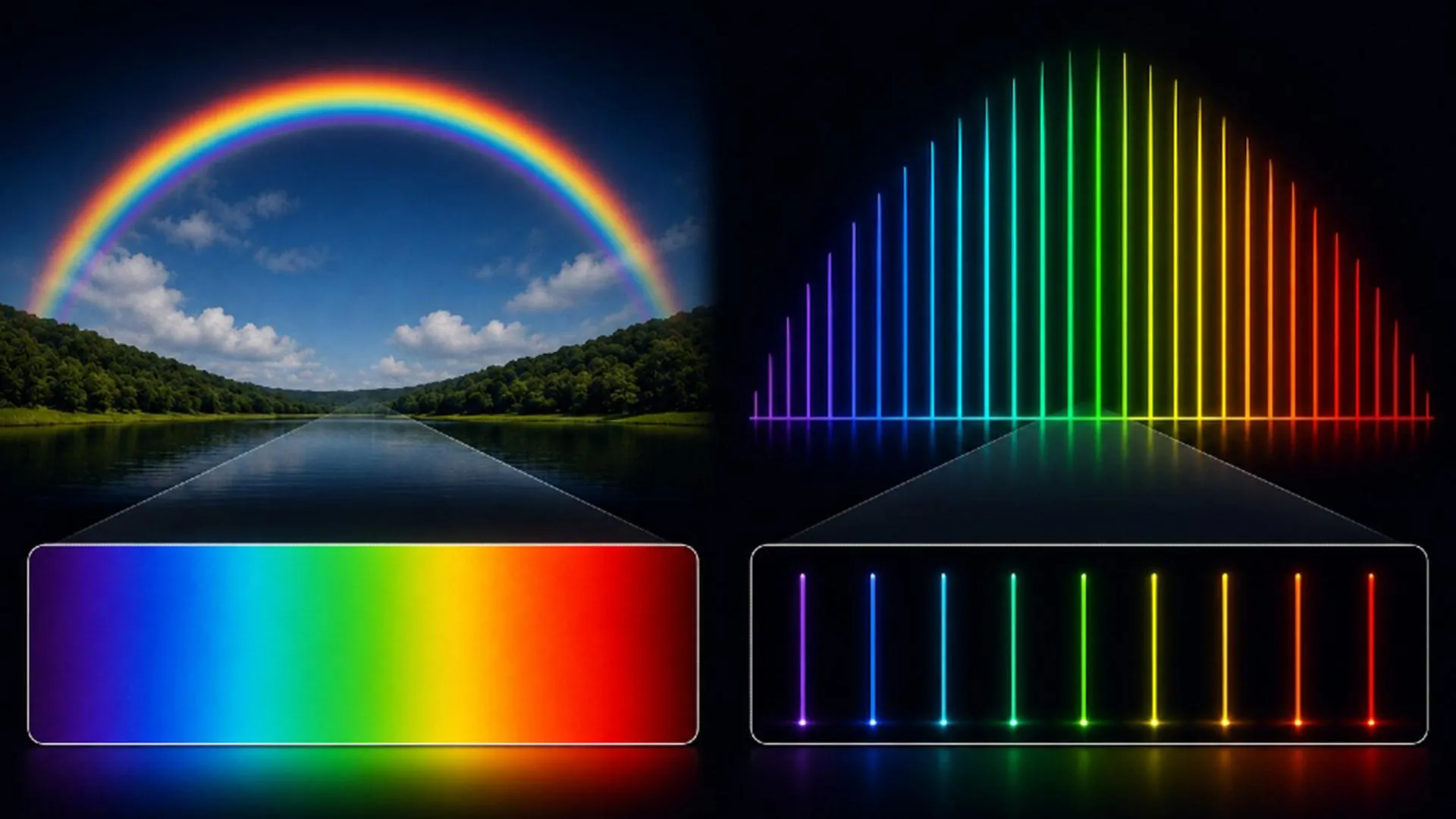
The near-infrared capabilities of SPHEREx are particularly vital for this type of research. Infrared light is excellent for detecting molecules like water (H2O), carbon dioxide (CO2), carbon monoxide (CO), and various organic compounds, as these molecules have distinct absorption and emission features in this part of the spectrum. When the sunlight interacts with the gas and dust erupting from 3I/ATLAS, these molecules absorb and re-emit light at specific wavelengths, creating a unique spectral signature that SPHEREx can identify. This allows scientists to precisely determine the chemical composition of the ejected material.
Furthermore, the timing of these observations is crucial. The fact that 3I/ATLAS exhibited a "strange protrusion" as it approached Earth, as noted in earlier reports, might be linked to the current eruptive phase. It’s plausible that this protrusion was an early sign of structural instability or a localized outgassing jet, which was then dramatically amplified by the intense solar heating at perihelion. Such features could be unique to interstellar objects, perhaps due to different formation processes or the effects of their long interstellar journeys.
As 3I/ATLAS continues its outbound trajectory, heading away from the Sun and eventually out of our solar system, it will likely never be seen again. This makes every moment of observation precious. Scientists will continue to monitor its activity as long as possible, gathering data that will inform future missions and refine our search strategies for other interstellar wanderers. Each new piece of information about 3I/ATLAS helps to build a more complete picture of these extraordinary cosmic travelers, pushing the boundaries of our understanding of the universe beyond our immediate stellar neighborhood. The ongoing study of 3I/ATLAS reinforces that our solar system is not an isolated entity but is constantly interacting with the wider galaxy, receiving occasional, invaluable gifts from distant stars.