Faris Adani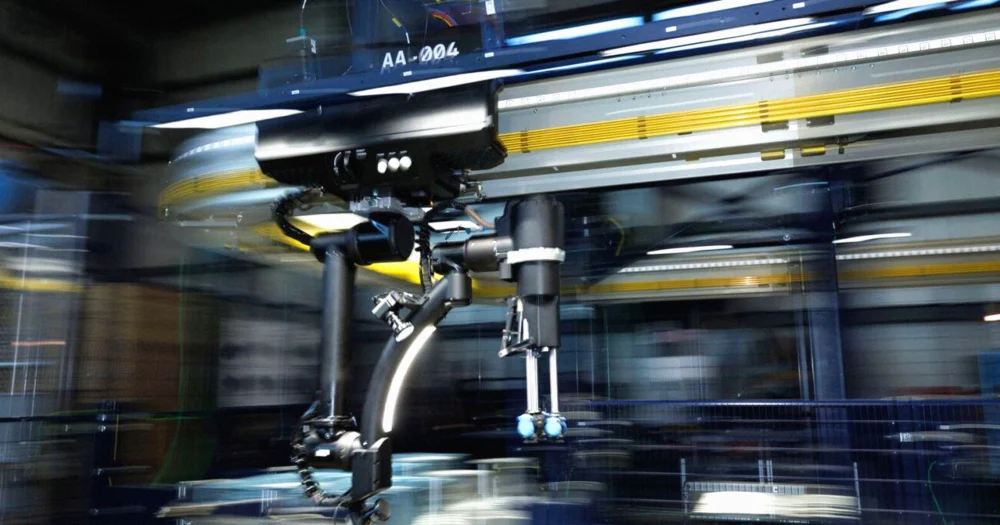
In October, Amazon had proudly introduced Blue Jay to the world, presenting it as a multi-armed marvel designed to revolutionize warehouse operations. The company’s press release brimmed with effusive praise, describing Blue Jay, alongside its integrated AI system, as a critical tool to "reduce repetitive tasks, improve safety, and boost productivity — while speeding up delivery." The imagery conjured was one of seamless precision and almost artistic grace: "Visually, Blue Jay operates like a juggler who never drops a ball — only here, the ‘balls’ are tens of thousands of items moving at high speed," the company rhapsodized. "It’s also like a conductor leading an orchestra, with every motion in harmony." This poetic description painted a vivid picture of a future where autonomous machines would elegantly orchestrate the flow of goods, promising unprecedented levels of efficiency and a safer, more engaging work environment for human employees. The hype was palpable, positioning Blue Jay as a flagship example of Amazon’s commitment to cutting-edge robotics and agentic AI.
However, the harmonious orchestra appears to have hit a sour note. Inside sources, speaking to Business Insider, revealed that the tech giant had quietly pulled the plug on Blue Jay, turning what was once a beacon of future innovation into an embarrassing debacle. The abrupt decision, coming just a few short months after its much-publicized debut, has cast a shadow over Amazon’s claims of leveraging recent advancements in AI tech for practical applications. The company’s spokesperson, Terrence Clark, attempted to soften the blow by stating that the "core tech" of the multi-arm robot would be repurposed elsewhere, emphasizing that the project was merely a "prototype" – a detail conspicuously absent from the initial fanfare-laden announcement. Clark elaborated in a separate statement to TechCrunch, "We’re always experimenting with new ways to improve the customer experience and make work safer, more efficient, and more engaging for our employees. In this case, we’re actually accelerating the use of the underlying technology developed for Blue Jay, and nearly all of the technologies are being carried over and will continue to support employees across our network." While this suggests a salvage operation, it doesn’t fully explain the swift and silent demise of a robot so recently celebrated as a game-changer.
The rapid failure and subsequent recharacterization of Blue Jay as a "prototype" highlight a critical vulnerability in the current wave of AI enthusiasm: the profound difficulty of porting sophisticated artificial intelligence from controlled digital environments into the unpredictable, messy reality of the physical world. Warehouse settings, despite their structured appearance, are far from sterile laboratories. They involve an immense variety of objects with different shapes, sizes, weights, and textures; dynamic environments with human movement and shifting obstacles; and the need for robust, real-time decision-making under pressure. An AI system that performs flawlessly in simulation can easily falter when confronted with a slightly crumpled box, an unexpected shadow, or a human worker stepping into its path. Blue Jay’s multi-arm design, while theoretically offering superior dexterity and parallel processing capabilities, likely magnified these challenges, demanding an even more intricate dance of coordination and sensory input processing. The complexity of controlling multiple arms to "juggle" tens of thousands of disparate items at high speed, without error, proved to be a far greater hurdle than initially acknowledged. This incident serves as a stark reminder that while AI is making monumental strides in areas like language processing and image generation, the leap to reliable, real-world physical autonomy, particularly in high-stakes commercial operations, remains fraught with intricate engineering and algorithmic complexities.
This failed experiment, however, is merely a blip in Amazon’s overarching, unwavering commitment to automating its vast global logistics network. The company has long been at the forefront of warehouse robotics, having famously acquired Kiva Systems in 2012, which transformed into Amazon Robotics, pioneering the use of mobile robots to move entire shelves of products. Blue Jay represented the next frontier: not just moving shelves, but deftly picking individual items, a task requiring far greater precision and intelligence. This relentless drive toward automation is not a secret; The New York Times reported last year on Amazon’s covert ambitions to eventually replace over 600,000 human jobs with robots. This colossal undertaking is driven by the promise of unprecedented efficiency gains, reduced labor costs, 24/7 operational capability, and potentially safer workplaces by removing humans from repetitive or dangerous tasks. The vision extends to the concept of "dark factories"—entirely automated facilities that require no lighting, heating, or air conditioning because no human presence is needed. While such facilities are beginning to emerge, particularly in China, for less complex manufacturing processes, fully automating the intricate choreography of an e-commerce fulfillment center remains a monumental technical and logistical challenge.
Beyond the warehouses, companies worldwide are betting big on the development of humanoid robots, which, if perfected, could theoretically take over a vast array of tasks currently performed by human workers across various industries. However, as the Blue Jay saga demonstrates, the technology required to reliably fulfill human jobs, especially those requiring adaptability and fine motor skills, still needs substantial refinement. The journey from rudimentary robotic arms to truly autonomous, general-purpose humanoid machines is long and arduous, punctuated by expensive failures and iterative improvements. The pressure on companies, particularly tech giants like Amazon, to continually deliver on their lofty promises, especially concerning the transformative potential of AI, continues to mount. Investors are keenly watching, eager for tangible returns on the colossal investments being poured into AI research and development.
Amazon itself has committed to an astounding $200 billion expenditure to build out its AI infrastructure this year alone. This astronomical sum, while indicative of the company’s deep strategic commitment to AI, also rattled investors earlier this month, highlighting a lingering wariness about the immediate profitability and practical applications of such massive investments. The quiet withdrawal of Blue Jay, despite its relatively small scale in the grand scheme of Amazon’s operations, feeds into this skepticism. It serves as a potent reminder that even with immense resources and cutting-edge research, the path to a fully automated future is paved with trial and error, costly setbacks, and the humbling reality of physical world complexities.
Despite this robotics hiccup, Amazon’s overall dominance shows no signs of waning. Just recently, news emerged that Amazon had surpassed Walmart as the world’s largest company measured by sales, a momentous occasion underscoring the e-commerce behemoth’s unparalleled reach and market power. However, even this historic achievement saw its shares remain steady, rather than surge, following the news, further suggesting a persistent underlying caution among investors. While the company’s sheer scale and diversified portfolio can easily absorb the failure of a single robotics project, each setback contributes to a narrative that tempers the hype surrounding AI’s immediate, revolutionary impact on physical labor. The dream of a fully automated workforce, while closer than ever, remains an exceptionally complex and financially demanding endeavor, where even the most promising "jugglers" can, spectacularly, drop the ball.