Faris Adani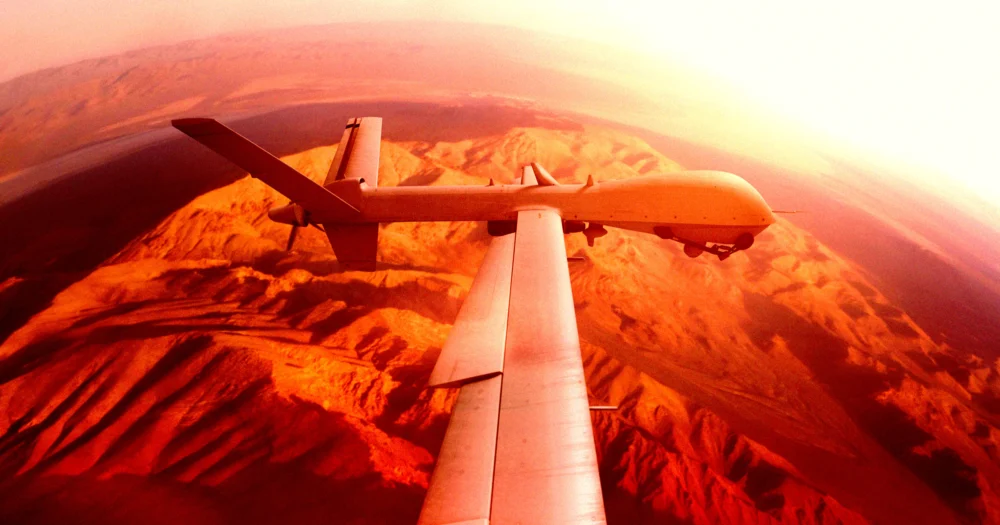
The objective of the Pentagon’s highly competitive contest is to engineer a drone swarm capable of executing complex maneuvers and missions in direct response to simultaneous voice commands, a technological feat that promises to revolutionize battlefield dynamics. This ambitious initiative is a cornerstone of the Trump administration’s broader Defense Autonomous Warfare Group (DAWG) and is spearheaded by the Defense Innovation Unit (DIU), the Pentagon’s dedicated arm for integrating cutting-edge Silicon Valley innovations into military applications. The contest is structured in five progressive phases, commencing with software development and culminating in real-life operational testing, illustrating the Pentagon’s methodical approach to integrating advanced AI into its defense capabilities. Sources close to the matter have indicated that these drone swarms are envisioned for roles extending far beyond mere reconnaissance, implying their potential deployment in offensive capacities, where the efficacy of the human-machine interaction will be paramount to their lethality and overall operational effectiveness.
The technological hurdles inherent in this endeavor are substantial, particularly given the current limitations of large language models (LLMs), which continue to grapple with issues like "hallucinations" – the generation of plausible but factually incorrect information. Experts have voiced considerable apprehension regarding the deployment of generative AI to command lethal drones, citing the potential for catastrophic errors if a machine misinterprets a command or generates an unintended response in a combat scenario. While the coordinated movement of multiple drones for tasks like aerial displays or mapping is a well-established technology, the autonomous, synchronized pursuit of specific targets by an entire network of drones presents a far more complex challenge, one that has historically proven exceptionally difficult to achieve reliably on the battlefield. This contest seeks to bridge that gap, pushing the boundaries of what is currently possible in autonomous systems.
For SpaceX, this venture marks a significant ideological and operational pivot. Traditionally, the company’s government contracts have revolved around providing access to space through its Falcon rockets and Starship program, as well as deploying and maintaining military satellites and its Starlink internet constellation, which has proven vital in conflict zones. However, engaging directly in the development of lethal autonomous weapons systems represents an entirely new and ethically charged domain for the aerospace giant. This expansion into military hardware development is further solidified by xAI’s existing engagement with the US military, having secured a $200 million contract for the use of its Grok chatbot and actively recruiting engineers with security clearance, signaling a clear intent to integrate deeply with defense applications.
The recent announcement by Elon Musk regarding the folding of xAI into SpaceX, creating what he described as "the most ambitious, vertically-integrated innovation engine on (and off) Earth," further contextualizes this strategic shift. Musk’s vision for this combined entity encompasses AI, rockets, space-based internet, direct-to-mobile device communications, and a "foremost real-time information and free speech platform." Conspicuously absent from this grand declaration, however, was any mention of the companies’ burgeoning efforts in developing autonomous drone swarms for military applications, an omission that speaks volumes about the sensitivity surrounding this particular venture. The timing of this news is particularly noteworthy, preceding a rumored SpaceX Initial Public Offering (IPO) that could value the company at an astronomical $1.25 trillion. How investors, who often weigh ethical considerations alongside financial prospects, will react to Musk’s apparent reversal on the use of autonomous weapons systems remains a critical unknown that could influence the IPO’s reception and the company’s public image.
Beyond the immediate financial implications, SpaceX and xAI’s entry into the autonomous weapons arena carries profound geopolitical and ethical ramifications. The development of voice-controlled, AI-powered drone swarms is at the forefront of a global arms race, with major powers like China and Russia also heavily investing in similar technologies. The ability for a single operator to command hundreds or thousands of drones simultaneously, autonomously identifying and engaging targets, could fundamentally alter the nature of warfare, potentially leading to a new era of "lights-out" combat where human intervention is minimal or even absent. Such systems raise thorny questions about accountability for unintended civilian casualties, the potential for rapid escalation of conflicts, and the destabilizing effect of removing human decision-making from the kill chain. The notion that an AI, prone to "hallucinations" in its current state, could be entrusted with life-or-death decisions on the battlefield is a chilling prospect that fuels widespread expert concern.
Drone swarm technology itself, while offering potential tactical advantages like overwhelming enemy defenses, reducing risk to human soldiers, and providing extensive reconnaissance capabilities, also presents significant dangers. The sheer scale and autonomy of such systems could lead to indiscriminate targeting, making it difficult to distinguish between combatants and non-combatants, particularly in complex urban environments. The ease with which these systems could be deployed might lower the threshold for military engagement, increasing the likelihood of conflict. Moreover, the security of voice command interfaces for lethal systems is paramount; any vulnerability could allow adversaries to hijack or manipulate swarms, turning them against their own forces or civilian populations. The ethical debate surrounding autonomous weapons, often dubbed "killer robots," centers on whether machines can truly adhere to international humanitarian law, including principles of distinction and proportionality, without human oversight. Many argue that the inherent value of human life demands a human in the loop for every lethal decision.
Musk’s pivot also highlights the broader phenomenon of "dual-use technology," where innovations developed for civilian purposes—such as AI, robotics, and advanced aerospace—find applications in military contexts. Companies at the cutting edge of technological advancement often face the ethical dilemma of how to manage the military implications of their work. While SpaceX’s Starlink has provided critical communication infrastructure to Ukraine, demonstrating a positive military application, direct involvement in developing lethal autonomous weapons crosses a different ethical line for many. The precedent set by other tech giants engaging with military contracts, often facing internal dissent and public backlash, suggests that SpaceX and xAI are entering a contentious domain.
In conclusion, SpaceX and xAI’s pursuit of a Pentagon contract for voice-controlled, autonomous drone swarms represents a monumental ethical and strategic turning point for Elon Musk’s empire. It underscores the intense gravitational pull of defense spending on even the most ideologically resistant tech leaders and throws into sharp relief the ongoing, unresolved debate about the role of artificial intelligence in warfare. As these companies embark on developing technology that could fundamentally reshape combat, the world watches to see if the promise of innovation can be reconciled with the profound moral responsibilities that come with wielding such unprecedented power. The decision to delegate human life-and-death decisions to a machine, once vehemently opposed by Musk, is now a frontier his companies are actively striving to conquer, posing critical questions for the future of AI, ethics, and global security.