Faris Adani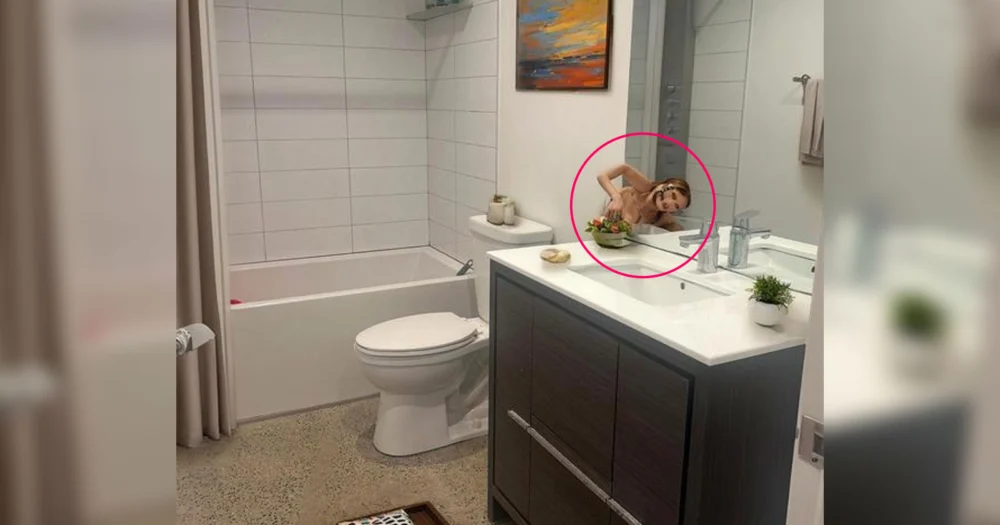
Realtor Uses AI, Accidentally Posts Photo of Rental Property With Demonic Figure Emerging From Mirror
The quest for a new home is often fraught with challenges, from competitive markets to the ever-present anxiety of finding the perfect fit. However, for prospective renters in the Washington, DC, area, this already stressful experience recently took a chilling turn into the surreal when a property listing surfaced featuring an unsettling, monstrous figure seemingly emerging from a bathroom mirror. This bizarre incident highlights a growing concern within the real estate industry: the enthusiastic yet often unsupervised adoption of generative AI, leading to uncanny visual distortions that transform mundane property photos into unsettling digital anomalies.
The real estate sector has, in recent years, embraced generative AI with an almost feverish passion. Real estate agents and agencies, eager to streamline processes, enhance property aesthetics, and create compelling listings, have extensively leveraged this technology. This often manifests in manipulating property photos far beyond simple touch-ups. Exteriors are given dramatic, often unrealistic, “facades,” while interiors receive heavy coats of AI-generated paint, sometimes resulting in smoothed-over architectural features, nonsensically rearranged furniture, and even misplaced trees. Beyond visuals, text descriptions of properties have devolved into a cacophony of ChatGPT-generated buzzwords, rendering an already frustrating house hunt genuinely exasperating. The core problem lies in the erosion of authenticity; discerning what a rental apartment truly looks like in the real world has regressed into a guessing game, a digital lottery where renters must gamble on the reality behind the polished, or sometimes mangled, AI-enhanced images.
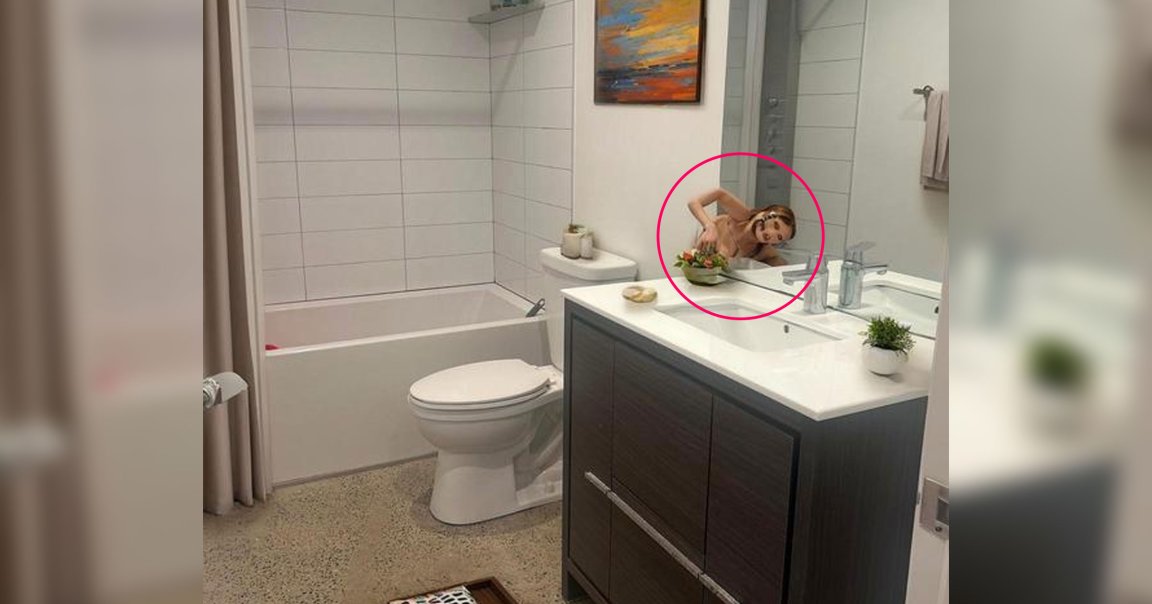
We’ve grown accustomed to seeing bizarre listings featuring inexplicably “yassified” houses, where every surface gleams with an unnatural sheen, and every corner seems too perfect to be real. However, the recent listing for a property in the Washington, DC area has undeniably taken the cake, pushing the boundaries of AI-induced absurdity into outright horror. Renters seeking a new home in the nation’s capital stumbled upon what can only be described as an Eldritch horror: a disfigured, nightmarish entity poking its head out from what appears to be simultaneously *inside* and *outside* a bathroom mirror. The image, circulated widely on platforms like Reddit, instantly sparked a mix of shock, amusement, and genuine unease among viewers. This wasn’t merely a misplaced object or an odd angle; it was the kind of grotesque aberration only a flawed AI algorithm, left unchecked, could conjure—and that only a time-strapped or inattentive realtor could fail to notice before unleashing it upon the unsuspecting public.
The property in question was located in Fort Totten, a suburb in northern DC. The listing initially appeared on Apartments.com but was swiftly taken down following the viral spread of the disturbing image. However, the internet’s indelible memory ensures that such gaffes rarely disappear completely. Other instances of the same listing, such as those found on Redfin, were quickly updated to remove the offending picture. Fortunately (or perhaps terrifyingly, depending on your perspective), the Internet Archive preserved a snapshot of the listing, immortalizing the “sleep paralysis demon,” as one Reddit user aptly described it. The public’s reaction was swift and visceral. “Genuinely the worst possible thing to scroll past before I fall asleep,” one horrified user wrote, articulating a common sentiment. “That thing somehow struck raw primal fear in me at an unparalleled record high,” another commented, capturing the sheer unnerving power of the AI’s unintentional creation.
Further investigation into the listing revealed more clues pointing to the use of AI. The Zillow listing for the same property includes what appears to be either the original or a differently edited photo of the bathroom. This alternate image lacks the “demonic figure” but does show typical cosmetic items left on the vanity, suggesting that the realtors likely attempted to digitally “stage” the bathroom by editing out personal belongings. It’s a common practice to de-clutter photos, but when entrusted to an AI without sufficient human oversight, the results can be catastrophic. Besides the nightmarish creature, a mysterious ottoman was inexplicably added to the middle of the bathroom floor in the AI-altered image, further strengthening the case that an automated tool was involved in generating or modifying the picture. “And then, for some reason, the AI added an uncanny valley blow-up doll reaching through the mirror for bathroom salad,” one Reddit user humorously, yet accurately, observed, highlighting the often-nonsensical additions AI can produce.
This incident is not an isolated anomaly but rather a glaring symptom of a broader trend where the pursuit of efficiency and aesthetic perfection through AI often clashes with the need for accuracy and ethical representation in real estate. The allure of AI for realtors is understandable: it promises to save time and resources by automating tedious tasks like photo editing and description writing. However, this convenience comes with significant ethical quandaries. Misrepresentation, false advertising, and the erosion of trust are serious risks when AI is deployed without robust human review. Property listings are legal documents, and the images accompanying them form a crucial part of a buyer’s or renter’s decision-making process. Deliberately or accidentally altering these images to the point of unreality, or worse, introducing terrifying elements, undermines the integrity of the entire transaction.
The rules governing real estate photo editing, particularly for Multiple Listing Service (MLS) organizations, are designed to prevent such misrepresentations. As Giraffe360, an AI image editing tool for real estate photos, points out on its website, MLS organizations “consistently prohibit” edits that remove or alter structural elements, erase or modify views, or digitally renovate or upgrade interiors or exteriors. Their guidance offers a simple test: “if an edit would require physical renovation to achieve in real life, it shouldn’t be in an MLS listing photo.” Whether an Eldritch horror climbing out of a bathroom mirror requires a physical renovation remains unclear at best, but it certainly doesn’t adhere to the spirit of accurate representation. The image, while bearing an MLS watermark, offered no indication that it had been edited with AI, raising questions about accountability and transparency in the digital age of real estate.
This bathroom demon isn’t even the first digital ghoul renters have encountered lately. Another separate Reddit user recently noticed what appeared to be a miniaturized woman holding a smartphone, disconcertingly crouched on the top of a toilet tank in another listing. These incidents, while comical in their absurdity, underscore a critical lack of human oversight in the real estate AI pipeline. “How do you not notice the melted demon crawling out of the wall before you hit publish?” one baffled user wrote in response to the Fort Totten incident, perfectly encapsulating the widespread incredulity. “That s*** made my stomach drop.” This visceral reaction from prospective renters highlights the emotional impact of such errors. Beyond the legal and ethical implications, there’s a psychological toll on those navigating an already stressful market, only to be confronted with digital phantoms.
As AI tools become more sophisticated and ubiquitous, the responsibility of real estate professionals to apply them judiciously and with rigorous human review becomes paramount. The line between enhancement and fabrication is increasingly blurred, and the consequences of crossing it can range from minor inconvenience to outright psychological distress for consumers. While the allure of perfectly staged, digitally enhanced properties is strong, the foundation of real estate transactions must remain trust and accurate representation. The “bathroom demon” incident serves as a stark, albeit horrifyingly humorous, reminder that unchecked AI can transform the mundane into the monstrous, eroding credibility in an industry that relies heavily on clear, honest visual communication. The future of real estate photography demands not just technological prowess, but also a renewed commitment to human vigilance and ethical integrity.