isnaini azizah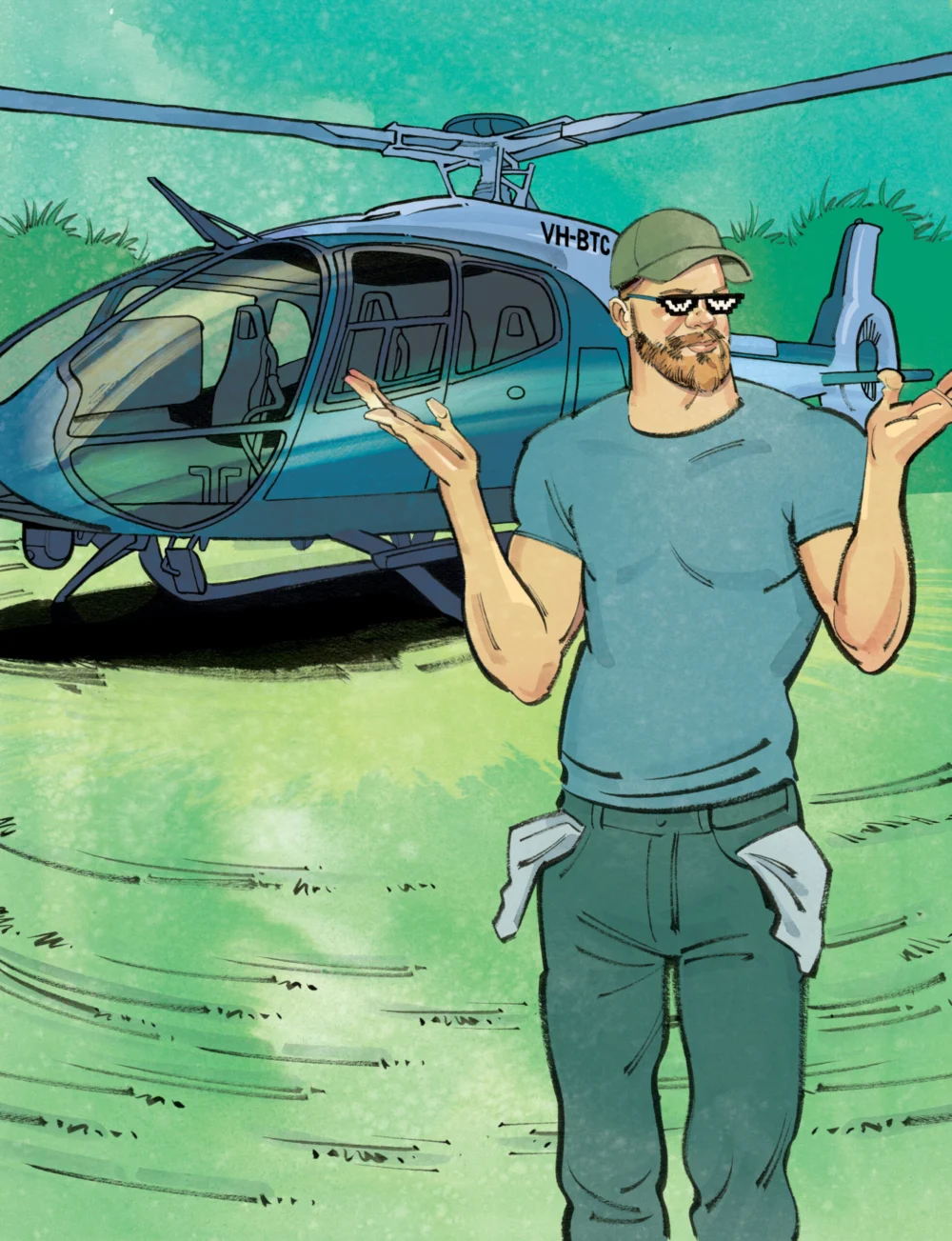
THORChain, a permissionless blockchain allowing users to swap cryptocurrencies and earn fees, operates without central authority. Its decentralized nature, built and run by pseudonymous operators globally, is both its strength and its Achilles’ heel. Thorbjornsen, who only recently revealed his identity as an Australian man in his mid-30s, is at the heart of this dichotomy. The core question surrounding THORChain is accountability: who is responsible when its decentralized structure falters? This question looms large, tarnishing the legacy of Bitcoin’s promise, which has already been marred by its association with speculative frenzy and political manipulation.
The dark side of THORChain’s permissionless nature became starkly apparent in January 2025 when users lost over $200 million due to an admin override that froze transactions and accounts, an act many believed impossible in a truly decentralized system. Shortly after, the notorious North Korean Lazarus Group exploited THORChain to launder approximately $1.2 billion in stolen Ethereum from the Bybit exchange. Thorbjornsen attributes these incidents to THORChain’s very design: its lack of executive power and its permissionless access mean anyone can use it, and there’s no one to hold accountable for malfeasance.
However, the community and observers pointed fingers at Thorbjornsen. A lawsuit filed by THORChain creditors names him, and former FBI analysts have expressed grave concerns about his position. THORChain is designed for node operators to make decisions through a two-thirds majority vote, a system that theoretically prevents any single entity from wielding absolute power.
The permissionless aspect of THORChain, lauded by users for its ability to operate outside geopolitical constraints, also makes it an attractive conduit for illicit activities, including those by sanctioned entities like North Korea. This aligns with Bitcoin’s cypherpunk origins, aiming for transactions free from state control. Node operators are financially incentivized by transaction fees, theoretically aligning their interests with the network’s health. Thorbjornsen claims his wealth stems from various sources, including early Bitcoin investments in 2013, rather than direct profits from THORChain.

Recent events, however, have cast a long shadow over THORChain’s decentralization claims and Thorbjornsen’s role. The frozen funds incident prior to the Bybit hack, and the subsequent inability to prevent the movement of stolen assets, raise critical questions. If THORChain is truly decentralized, how could a single operator freeze funds? And why was the opportunity to block the Lazarus Group’s transactions seemingly ignored?
Thorbjornsen maintains that THORChain is fulfilling Bitcoin’s original vision of enabling free, unfettered transactions. Yet, the network’s failings suggest that an alternative financial system might not be inherently superior.
The Bybit hack in February 2025, where approximately $1.5 billion in ETH was stolen, highlighted THORChain’s complex response. While other platforms heeded the FBI’s warning to block transactions linked to the hack, THORChain’s node operators engaged in heated debates on a private Discord channel about whether to blacklist the funds. This internal conflict, described as a "civil war" by crypto enthusiast Boone Wheeler, pitted those who advocated for maintaining THORChain’s permissionless nature against those who favored blocking the illicit funds to avoid law enforcement entanglements, especially for node operators identifiable by their IP addresses.
Despite the debate, the network’s design, which requires a two-thirds majority vote to halt trading, meant that individual transactions could not be blocked. Node operators who refused to validate transactions from the Bybit hack were automatically "churned" out of the system, with approximately 20 to 30 nodes removed. Thorbjornsen suggests that operators who opposed processing stolen funds should have simply gone offline rather than attempt to police the network. He claims there was no code to block transactions, yet a deleted post from his personal X account suggested he had pressured his nodes to continue trading.
Estimates suggest THORChain earned between $5 million and $10 million from the Bybit heist. Thorbjornsen, when questioned about his personal gain, stated he was not a direct recipient of these fees, clarifying that all crypto holders profit indirectly from network activity. However, his public persona has shifted dramatically. He has been seen as the "chief energy officer" and "master of the memes" of THORChain, even being dubbed the "THORChain Satoshi." This public embrace of leadership, despite the protocol’s decentralized ideals, has led to death threats and a sense of "chaos."

The THORFi withdrawal freeze in January 2025 further complicated the narrative. Users like Ryan Treat, who had trusted THORFi for its promise of "complete control" and self-custody, were shocked when an admin key was used to pause withdrawals. This action contradicted the platform’s marketing, which emphasized user control and the impossibility of external interference. The "admin mimir," a hard-coded backdoor, allowed for executive decisions, a functionality many users were unaware of.
Thorbjornsen denies using the admin key to pause withdrawals, suggesting that whoever controlled the "leena" account at the time did so. However, a video from Nine Realms named him as the activator. The exact perpetrator remains difficult to ascertain, as the "admin mimir" has since been removed from THORChain’s code.
The aftermath of the THORFi debacle has seen creditors struggling to report the incident to law enforcement, highlighting the challenges in regulating decentralized finance. Regarding the Bybit hack, German authorities shut down eXch, an exchange suspected of using THORChain for illicit fund processing. Experts like Shlomit Wagman, former head of Israel’s anti-money-laundering agency, argue that THORChain’s role in facilitating unsupervised fund transfers constitutes money laundering. Nick Carlsen, a former FBI analyst, contends that THORChain enabled bad actors to convert stolen crypto into usable currency, implicating individuals like Thorbjornsen in sustaining the North Korean government. Thorbjornsen, however, defends THORChain as "open-source infrastructure."
Thorbjornsen himself has experienced significant financial losses, including a $1.2 million hack attributed to North Korea, a situation he described as "poetic." He portrays himself as a victim of unfortunate circumstances, dealing with divorce, "threat vectors," and the complexities of his role. However, his contradictory statements and actions, such as the presence of a North Korean flag on his helicopter (which he attributes to a mix-up) and the discrepancy in his claimed financial assets, raise questions about his trustworthiness.
Despite his claims of not caring about money, he points out his new, compound-like home from his helicopter. He emphasizes that "money is a meme" and "money does not exist," yet his interactions have had real-world consequences for those who have lost money through THORChain. As investigations and blame continue, Thorbjornsen appears increasingly concerned about being the ultimate scapegoat, seeking refuge in Singapore, a jurisdiction known for denying extradition requests for money-laundering prosecutions. The dream of a permissionless, decentralized financial future, embodied by THORChain and its enigmatic founder, is clearly entangled with the darker realities of unaccountability and illicit finance.