anjir abdul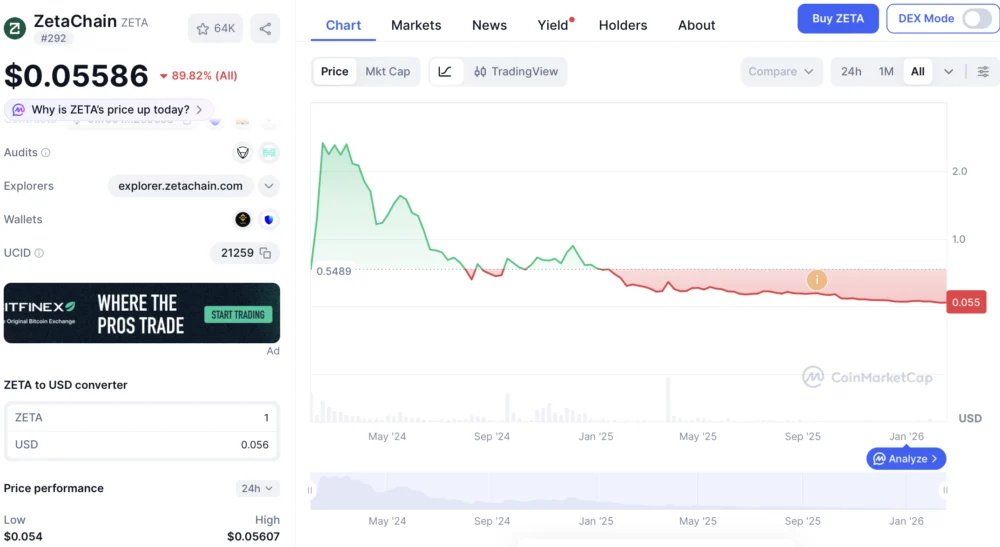
The Monad Foundation, a driving force behind the high-performance Monad blockchain, has strategically fortified its leadership team with three senior executives poached from prominent players in the Web3 and traditional finance ecosystems: Optimism Foundation, FalconX, and BVNK. This significant expansion of its executive roster underscores Monad’s intensified focus on institutional adoption, a critical pillar for long-term sustainability and growth, especially following its public mainnet launch in November. These hires are not merely additions; they represent a calculated move to bridge the gap between traditional financial institutions and the burgeoning decentralized world, leveraging deep expertise in capital markets, institutional infrastructure, and strategic market penetration.
The newly appointed executives bring a wealth of experience that spans both the legacy financial system and cutting-edge crypto infrastructure. Urvit Goel joins the Monad Foundation as Vice President of Go-to-Market, transitioning from his impactful role at the Optimism Foundation, one of Ethereum’s leading Layer 2 scaling solutions. His background at Optimism likely provides invaluable insights into ecosystem development, developer relations, and community engagement – all crucial for attracting and retaining projects on a new Layer 1. Prior to his Web3 tenure, Goel honed his skills at global giants like JP Morgan and Amazon, suggesting a robust understanding of large-scale operations, product strategy, and market positioning that will be vital in translating Monad’s technological prowess into tangible market share. His mandate at Monad will involve crafting and executing strategies to drive adoption of the Monad blockchain among developers, enterprises, and end-users, ensuring the platform’s innovative capabilities resonate across diverse segments.
Joanita Titan steps into the role of Head of Institutional Growth, bringing her extensive expertise from FalconX, a leading digital asset prime brokerage that serves institutional investors. At FalconX, Titan was instrumental in leading custody and staking initiatives, a testament to her deep understanding of the sophisticated needs and stringent compliance requirements of institutional clients. Her experience at the intersection of digital asset custody and staking is particularly pertinent for Monad, as institutional participants demand secure, reliable, and compliant solutions for managing their assets on-chain. Titan’s professional journey also includes significant stints at Deutsche Bank, Anchorage Digital, and Fireblocks. Deutsche Bank provides her with a strong foundation in traditional finance structures and risk management, while her time at Anchorage Digital and Fireblocks — both pioneers in institutional digital asset infrastructure and security — equips her with an unparalleled understanding of the operational and technological demands for onboarding large-scale financial entities into the blockchain space. Her role will be pivotal in cultivating relationships with asset managers, hedge funds, corporations, and other institutional players, guiding them through Monad’s offerings and demonstrating its value proposition.
Further strengthening Monad’s global outreach, Sagar Sarbhai has been appointed as Head of Institutions for Asia-Pacific. Sarbhai joins Monad from BVNK, a prominent digital asset payment solutions provider, where he gained firsthand experience in the operational nuances of crypto-native businesses. His appointment underscores the strategic importance of the Asia-Pacific region, a dynamic and rapidly evolving market for digital assets. Sarbhai’s prior experience at JP Morgan and Deutsche Bank further bolsters his profile, endowing him with a comprehensive grasp of global financial markets and the regulatory landscapes across key APAC jurisdictions. His deep roots in both traditional finance and institutional crypto make him uniquely qualified to navigate the complex regulatory environments and cultural intricacies of markets like Hong Kong, Singapore, Japan, and South Korea. These regions are increasingly becoming hubs for digital asset innovation and institutional engagement, making Sarbhai’s focused leadership essential for Monad’s expansion efforts there.

The collective expertise of these new hires is expected to be channeled into several strategic areas: capital markets strategy, brand building, and, most critically, accelerating institutional adoption across the aforementioned Asia-Pacific jurisdictions. According to an announcement shared with Cointelegraph, their combined efforts will be crucial in positioning Monad as a premier choice for institutional-grade blockchain applications, from high-frequency trading to complex financial instruments. This strategic focus aims to attract substantial capital and sophisticated participants to the Monad ecosystem, differentiating it in a crowded Layer 1 landscape.
Monad’s mainnet launch in November was accompanied by a high-profile token sale on Coinbase, signaling its ambition and readiness for public engagement. Since its relatively recent launch, the network has already demonstrated notable traction, accumulating approximately $450 million in stablecoin market capitalization and exceeding $200 million in total value locked (TVL) across its decentralized finance (DeFi) protocols, according to the foundation. These early metrics, while still nascent compared to established chains, indicate a promising start and a burgeoning ecosystem.
Technologically, Monad boasts impressive specifications designed to cater to demanding institutional use cases. The network claims an ability to process up to 10,000 transactions per second (TPS) with sub-second finality. This level of performance is a significant leap compared to many existing blockchains, addressing a key bottleneck in scalability that has historically hindered broader institutional adoption of decentralized applications. Crucially, Monad maintains full compatibility with the Ethereum Virtual Machine (EVM). This EVM compatibility is a strategic advantage, allowing developers familiar with Ethereum to easily deploy their existing smart contracts and dApps onto Monad, thus lowering the barrier to entry and fostering rapid ecosystem growth. The foundation explicitly states that this design targets high-frequency trading, fast payments, and other enterprise-level applications where speed, efficiency, and reliability are paramount.
The development company behind the network, Monad Labs, secured a substantial $225 million in a funding round led by Paradigm in 2024. Paradigm, a venture capital firm renowned for its investments in foundational Web3 infrastructure, backing Monad with such a significant sum underscores the market’s belief in Monad’s potential. Following the mainnet launch, the Monad Foundation assumed responsibility for overseeing ecosystem growth, a testament to the project’s maturation and its shift towards broader community and institutional engagement.
However, the journey for new Layer 1 blockchains is often fraught with challenges. The period between 2021 and 2023 witnessed a surge of Layer 1 launches, including prominent names like Avalanche (AVAX), Near (NEAR), Aptos (APT), and Sui (SUI). While many garnered significant attention and capital, the pace of new mainnet launches has somewhat decelerated over the past year. Even so, Monad is not alone in its recent entry into this competitive arena.

In late 2024, ZetaChain launched its mainnet with a distinct focus on omnichain interoperability, aiming to connect multiple crypto networks without the need for traditional bridges or wrapped assets. Following suit, February 2025 saw the Berachain Foundation go live with its EVM-compatible Layer 1, making headlines with an airdrop of nearly 80 million BERA tokens, valued at approximately $632 million, to eligible users. More recently, in February 2026, decentralized exchange Aster announced the launch of its Layer 1 testnet for public users, with a mainnet release targeted for the first quarter, outlining an ambitious roadmap including fiat on-ramps and open-source code releases throughout the year.
Despite the continuous innovation and fresh entries, not all market participants are convinced about the long-term viability of every new Layer 1. Prominent crypto investor Arthur Hayes voiced a skeptical outlook in November, predicting that most new L1 networks are likely to fail. He posited that only a select few, specifically Bitcoin (BTC), Ether (ETH), Solana (SOL), and Zcash (ZEC), possess the necessary network effects and entrenched value to remain relevant over the long term. Hayes’s perspective highlights the intense competition and the challenge of building sustainable ecosystems that can withstand market volatility and evolving technological landscapes.
Recent token performance data from CoinMarketCap indeed underscores the significant hurdles faced by many newer chains. ZetaChain’s (ZETA) native token, for instance, has experienced a sharp decline, trading approximately 98% below its all-time high. Similarly, Berachain’s (BERA) token has fallen by about 95% from its peak. While Monad’s token (MON) has also seen a correction, trading around 52% below its peak at the time of writing, its decline is less severe than some of its peers, potentially owing to its more recent launch and a different market entry strategy. These figures serve as a stark reminder of the speculative nature of nascent crypto assets and the imperative for projects to demonstrate real-world utility and robust adoption to sustain value.
Monad’s proactive approach in recruiting seasoned professionals from both the traditional finance and institutional crypto sectors, coupled with its focus on high-performance EVM compatibility, positions it strategically to address these challenges. By prioritizing institutional adoption and global expansion, particularly in high-growth regions like Asia-Pacific, Monad aims to carve out a distinct and sustainable niche in the competitive Layer 1 landscape. The success of these new hires in translating Monad’s technological capabilities into widespread institutional engagement will be a crucial determinant of the foundation’s long-term trajectory and its ability to defy the skepticism surrounding many new blockchain ventures.