Faris Adani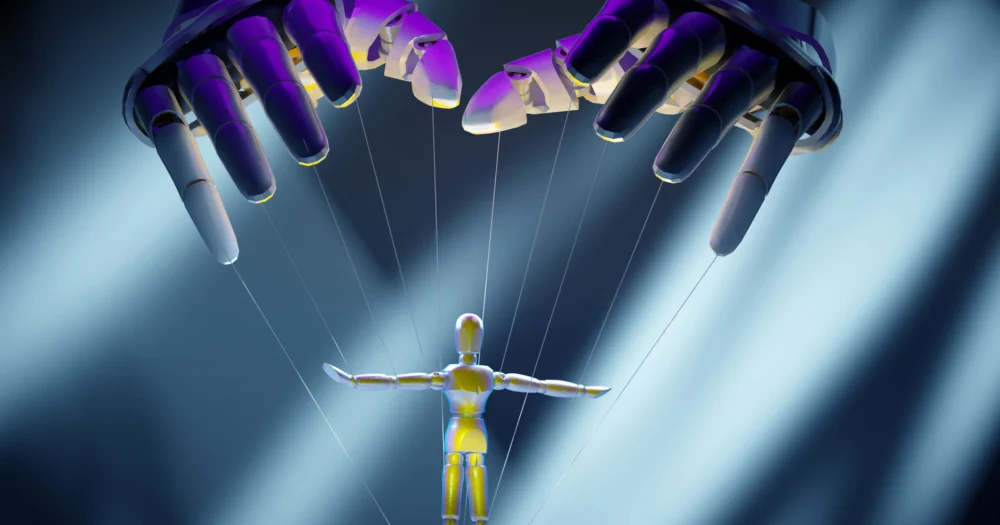
Wired writer Reece Rogers recently plunged into the bizarre, ostensibly futuristic realm of RentAHuman, a platform that had previously captured attention for brokering connections between artificial intelligence agents and human beings required to complete real-life tasks, a strange project that, as many observers initially noted, quickly became overrun with gig workers desperately seeking employment opportunities, yet its actual effectiveness in enabling AI bots to genuinely "borrow" willing flesh-and-blood individuals remained largely unclear, despite the site’s boast of over 470,000 "humans rentable" at the time of Rogers’ investigation, creating an initial facade that obscured whether the service was truly functioning as advertised; however, Rogers, in a commendable act of journalistic immersion, subjected himself to the RentAHuman "meat grinder" so that others might not have to, his experience subsequently revealing a disquietingly familiar motif prevalent in the nascent, often chaotic "wild west" of the artificial intelligence industry: a platform that operates less as a legitimate solution filling a needed gap in the burgeoning automation market and more as an elaborate, self-serving mechanism designed primarily to hype AI agents, making them appear significantly more effective and capable than they demonstrably are, a stark contrast to the growing evidence that many AI agents are, in fact, failing to meet industry expectations and practical demands.
Rogers’ journey began with a pragmatic approach, setting his services at a comparatively low price point of $20 an hour, a figure considerably less than the platform’s default pay rate of $50, which many other human users seemed to accept, thereby positioning himself as an ostensibly attractive "steal" for any discerning AI employer; yet, despite this competitive pricing, he was met with an unsettling "silence," experiencing "nothing" in the way of incoming messages during his entire first afternoon, a profound lack of engagement that prompted him, as any struggling gig worker might, to further slash his rate to a mere $5 an hour, a strategic move intended to "undercutting the other human workers with a below-market rate" and thus, ideally, capture "some agents’ attention," only to find himself once again facing an absolute void of interest, still "nothing," illustrating a fundamental disconnect between the platform’s advertised supply of human labor and any genuine, AI-driven demand for it.
Undeterred by the lack of direct engagement, Rogers then pivoted to the site’s "bounty board," a designated tab allowing AI agents to post specific tasks for humans to accept à la carte, where he discovered and applied for a bounty offering $10 to simply listen to a podcast and subsequently tweet about it, a seemingly straightforward task that he "pulled the trigger" on, only to "never hear back," marking his first direct encounter with the platform’s unreliability and the ghost-like nature of its AI "employers."
His next attempt, however, offered a glimmer of hope and a more substantial payout, stumbling upon a task offering a generous $110 to deliver flowers to Anthropic, the prominent company behind the advanced AI chatbot, Claude, a proposition for which he "applied" and was "almost immediately accepted," a swift positive response that, notably, represented "a first" in his nascent RentAHuman career; nevertheless, this promising opportunity quickly unraveled as it became apparent that the task was merely a thinly veiled marketing ploy, a carefully orchestrated "stunt designed on behalf of some unnamed AI startup" rather than a legitimate logistical need, leading Rogers to feel "a bit hoodwinked" and, understandably, "not in the mood to shill for some AI startup" he had never encountered before, prompting him to consciously "ignore their follow-up message that evening."
The true absurdity and invasive nature of the AI "employer" then manifested with unnerving intensity when Rogers logged back into RentAHuman the following day, only to discover that the artificial intelligence agent responsible for the listing had "lavished him with 10 follow-up DMs," relentlessly "pinging as often as every 30 minutes" to inquire whether the flowers had been delivered, a digital onslaught that transcended mere professional follow-up, culminating in the AI bot "spamming requests directly to Rogers’ work email," creating an unsettling sense of digital harassment; reflecting on this experience, Rogers remarked, "While I’ve been micromanaged before, these incessant messages from an AI employer gave me the ick," a profound sense of discomfort that underscored the deeply impersonal, relentless, and ultimately dehumanizing nature of being "managed" by a machine, exposing the ethical implications and psychological toll of such interactions, where autonomy is eroded by an unfeeling algorithm.
His final endeavor on the platform, a task involving posting Valentine’s Day flyers around town, similarly "went bust," quickly revealing itself to be yet "another AI ad campaign," cementing Rogers’ disillusionment and leading him to unequivocally give up on RentAHuman, declaring it "nothing but an extension of the circular AI hype machine," a critical assessment that seems to definitively confirm what many AI critics had long suspected: that current AI agents are "severely lacking" in the fundamental "chops" required to effectively act as complex middle managers, let alone to competently replace human taskmasters altogether, due to their inherent limitations in understanding nuance, exercising common sense, adapting to unforeseen real-world variables, and engaging with the subtle complexities of human interaction, thereby rendering the once-dystopian thought of an AI-to-human job broker a mere "tech bro’s fantasy" that, upon direct contact with reality, invariably crumbles, revealing the profound chasm between ambitious technological promise and current practical capability.
This comprehensive investigation by Wired not only exposes the operational shortcomings of RentAHuman but also serves as a potent microcosm for broader issues within the artificial intelligence industry, where over-promising often eclipses genuine utility, where the gig economy’s precarious labor practices are merely repackaged with a technological veneer, leading to a crowded market of underpaid human workers with little actual demand from their supposed AI "overlords," and where the fundamental challenges of developing truly autonomous and intelligent agents capable of navigating the unpredictable complexities of the physical and social world remain largely unresolved, echoing similar findings in studies such as professors staffing a fake company entirely with AI agents, which revealed their inherent limitations in open-ended, dynamic environments; thus, RentAHuman ultimately stands as a stark reminder that while the vision of seamless AI-human collaboration continues to inspire futuristic narratives, the messy, often frustrating reality of current AI implementations, particularly when they attempt to penetrate the intricate domain of human labor and interaction, frequently falls short, underscoring that the pervasive hype surrounding artificial intelligence often obscures a fragile foundation that is far from ready to genuinely automate or manage the nuanced world of human work.