Faris Adani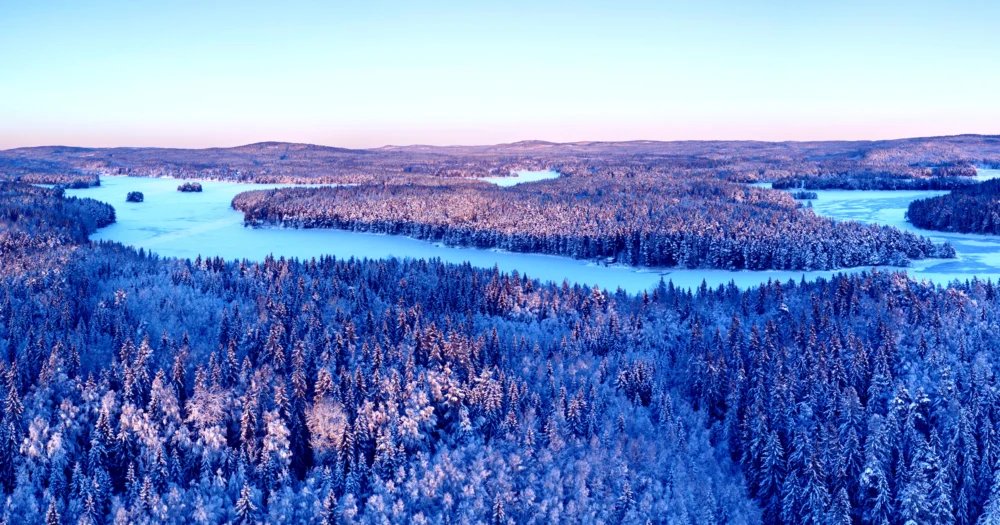
Climate change continues to reshape our planet with increasingly dramatic reminders, from the relentless retreat of glaciers to the escalating frequency and intensity of extreme weather events. Among the Earth’s vital ecosystems, forests are also profoundly bearing the brunt of global warming, undergoing transformations that have far-reaching implications for the global climate system. Recent scientific investigations, leveraging decades of satellite data, have brought to light a striking phenomenon: boreal forests, the planet’s largest terrestrial biome, are steadily shifting northwards, adapting to a warming world, yet simultaneously facing unprecedented threats.
Often referred to as the Taiga, boreal forests form a vast circumpolar belt across the northern latitudes, spanning regions of Canada, Russia, Scandinavia, and Alaska. These expansive woodlands, characterized by hardy coniferous trees like spruce, fir, and pine, are not merely vast stretches of green; they are critical components of Earth’s life support system. They regulate atmospheric composition, harbor immense biodiversity, and play a pivotal role in the global water cycle. Crucially, boreal forests are warming faster than any other forest type on Earth, making them a crucial barometer and a dynamic agent in the unfolding climate crisis.
A groundbreaking study, recently published in the journal Biogeosciences, details this significant ecological migration. An international team of researchers, including scientists from NASA’s Goddard Space Flight Center, meticulously analyzed imagery captured by the Landsat satellite program. The Landsat mission, a joint initiative of NASA and the U.S. Geological Survey, has provided a continuous record of Earth’s land surface since 1972, making it an invaluable tool for tracking long-term environmental changes. For this study, scientists examined data spanning 36 years, from 1985 to 2020, to create a highly detailed map of tree cover with an impressive resolution of 100 feet (approximately 30 meters). This granular detail allowed them to precisely track changes in forest extent and location over nearly four decades.
The findings were stark and compelling: the boreal forest biome had not only expanded its overall coverage by an impressive 12 percent but had also undergone a significant geographical shift, advancing northward by an average of 0.29 degrees of mean latitude. To put this into perspective, a single degree of latitude spans roughly 111 kilometers (or 69 miles), meaning the boreal forest’s average northward creep amounts to approximately 32 kilometers (20 miles) over the study period. This observed migration confirms a long-hypothesized response of ecosystems to rising temperatures, as species seek out more suitable climatic conditions. "These findings confirm the northward advance of the boreal forest and implicate the future importance of the region’s greening to the global carbon budget," the researchers concluded in their paper.
The implications of these changes for climate change and the future of our planet are profoundly nuanced, given the inherent complexity of ecological systems. On one hand, the growth in young boreal trees could be seen as a potentially beneficial development. Young, rapidly growing forests are particularly efficient at sequestering carbon dioxide from the atmosphere through photosynthesis, converting it into biomass. The study estimates that this expansion could lead to the absorption of an additional 1.1 to 5.9 gigatonnes of carbon. To contextualize this figure, all of the world’s trees collectively hold approximately 861 gigatonnes of carbon. Thus, while the observed increase is a fraction of the total, it represents a significant additional capacity for carbon uptake, especially within a biome that already serves as one of the world’s largest terrestrial carbon sinks.
"These changes are not only spatially extensive but demographically consequential: they reflect a growing fraction of young forests with distinct structural and functional attributes that position them as dynamic agents of carbon sequestration," the team elaborated in their paper. "Understanding the contribution of these forests to current and future carbon stocks is essential for anticipating the net climate feedbacks emerging from boreal ecosystems." This highlights the importance of considering not just the total area of forest, but also its age structure and physiological characteristics.
However, this seemingly positive development is shadowed by an increasingly extreme climate, which complicates the overall picture and introduces significant uncertainties. While young forests may be expanding into new northern territories, the established and older parts of the boreal forest are simultaneously confronting a barrage of climate-induced stressors that threaten their health and stability, potentially offsetting any long-term benefits of northward expansion.
One of the most devastating threats comes from wildfires. Shorter winters and hotter, drier summers are creating ideal conditions for more frequent, intense, and extensive wildfires across the boreal zone. Regions like western Canada and Siberia have experienced record-breaking fire seasons in recent years, releasing vast quantities of stored carbon back into the atmosphere, destroying crucial habitats, and even thawing permafrost. The phenomenon of "zombie fires," which smolder underground through winter and reignite in spring, further exacerbates this problem, making fire management increasingly challenging.
Insect outbreaks are another grave concern. Warming temperatures allow destructive species like the bark beetle (including the spruce beetle and mountain pine beetle) to expand their range, complete more generations within a season, and overwhelm weakened trees. These beetles bore into trees, disrupting their vascular systems and causing widespread mortality. Defoliating insects, such as the spruce budworm, also thrive in warmer conditions, leading to massive losses of pine and spruce boreal forests. Such outbreaks can transform vast swathes of healthy forest into deadwood, increasing fuel for future wildfires and diminishing the forest’s capacity to absorb carbon.
The study also points to longer dry spells resulting from altered precipitation patterns and increased evapotranspiration due to hotter temperatures. These droughts stress trees, making them more susceptible to disease and insect attack, and reducing their growth rates, thereby diminishing their carbon sequestration potential. Dry soils also increase the risk of fires. Furthermore, the warming trend in the boreal region has broader hydrological impacts, contributing to harmful algae blooms in lakes and other freshwater bodies, which disrupt aquatic ecosystems and water quality.
Perhaps one of the most insidious threats linked to warming is permafrost thaw. A significant portion of the boreal forest overlies permafrost, ground that has remained frozen for at least two consecutive years. As temperatures rise, this permafrost thaws, leading to "drunken forests" where trees tilt and fall as the ground beneath them becomes unstable. More critically, thawing permafrost releases vast stores of ancient carbon, locked away for millennia in frozen organic matter, in the form of potent greenhouse gases like methane and carbon dioxide. This creates a dangerous positive feedback loop, where warming causes thaw, which releases more greenhouse gases, leading to further warming.
Beyond carbon, the ecological ripple effects are profound. The rapid northward shift can create biodiversity mismatches, as animal species dependent on specific forest structures or food sources may not be able to migrate as quickly as the vegetation. This can disrupt predator-prey dynamics, pollinator interactions, and migratory bird patterns. The change in vegetation also has an albedo effect: as darker coniferous forests replace lighter, snow-covered tundra, more solar radiation is absorbed, further contributing to regional warming. Moreover, these changes have direct impacts on Indigenous communities in the boreal zone, whose traditional livelihoods, cultural practices, and food security are intimately tied to the health and stability of these forests.
In short, while boreal forests may be exhibiting a capacity for growth and northward expansion, allowing them to potentially suck up more greenhouse gases, climate change is simultaneously putting them at a much higher risk of tree cover loss due to a confluence of drought, wildfires, diseases, insect outbreaks, and permafrost thaw. This precarious balance means that any long-term benefits from increased carbon sequestration in newly established areas could be swiftly negated by losses elsewhere.
"Although the net trends are globally significant, they mask substantial geographic and temporal heterogeneity, as well as complexity in the ecological processes underlying forest change," the researchers concluded. This emphasizes that the boreal forest is not a monolithic entity, but a diverse and dynamic biome experiencing varied impacts across its vast expanse.
The path forward, according to the scientific community, requires a more comprehensive and integrated understanding. This necessitates combining the broad-scale insights from satellite time series with detailed, ground-based measurements of canopy structure and the environmental drivers of growth, mortality, and species turnover. Such integrated data will allow scientists to better model and predict the future trajectory of these vital ecosystems. Crucially, translating this complex scientific information into effective action to forestall and adapt to climate change will demand unprecedented collaboration and communication across scientific, governmental, and commercial domains of human activity. The fate of the boreal forest, and its immense contribution to regulating Earth’s climate, hinges on our collective ability to comprehend its complex dynamics and respond with urgency and wisdom.