Faris Adani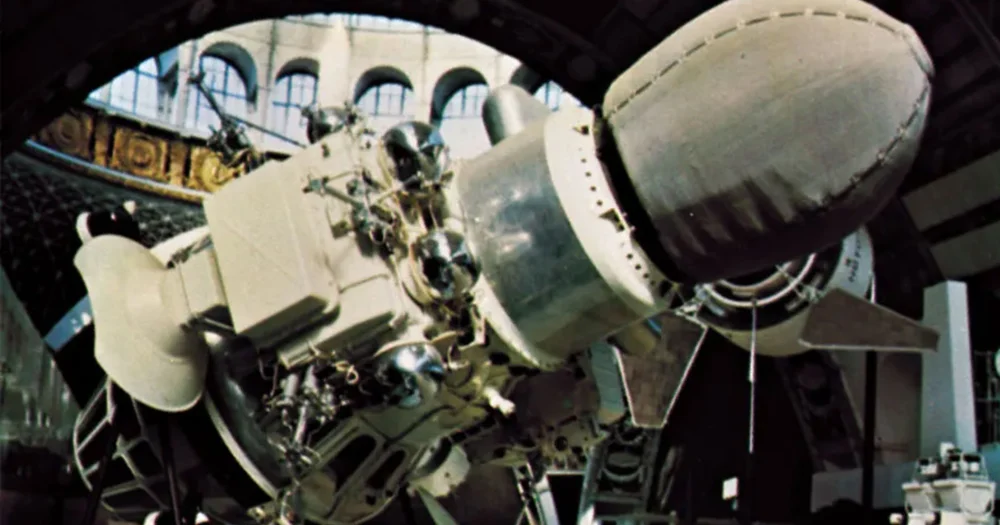
In the annals of space exploration, few feats resonate with the historical gravitas of the Soviet Union’s Luna 9 mission. Launched in 1966, three years before humanity’s indelible footsteps graced the lunar regolith, this unassuming spherical probe etched its name into history by becoming the first spacecraft to achieve a controlled soft landing on the Moon. This monumental achievement not only marked a pivotal moment in the intense Cold War space race but also fundamentally reshaped our understanding of Earth’s closest celestial neighbor. Prior to Luna 9, theories abounded, some suggesting the lunar surface was covered in a treacherous layer of fine dust, meters deep, into which any lander would inevitably sink. Luna 9 dispelled these fears, transmitting the first high-contrast, black-and-white images directly from the Moon’s surface – a rugged, rocky panorama that revealed a surprisingly solid terrain, paving the way for future manned missions.
Yet, despite its profound historical significance, the precise resting place of Luna 9 on the vast, crater-pocked lunar expanse has remained a tantalizing enigma for decades. The challenge of locating such a diminutive artifact – its spherical core stage measuring a mere two feet across, roughly the size of a beach ball – from orbit has proven formidable. This long-standing mystery has recently ignited a fresh surge of interest and a spirited scientific debate, as two independent groups of researchers have now come forward, each claiming to have identified traces of the lost Soviet lander. Intriguingly, these two groups, employing vastly different methodologies, do not concur on Luna 9’s final hiding spot, setting the stage for an exciting lunar treasure hunt.
The inherent difficulty in spotting Luna 9 stems from several factors. The lunar environment, devoid of atmospheric erosion, preserves relics remarkably well, but the sheer scale of the Moon and the limitations of orbital imaging technologies have historically made such searches akin to finding a needle in a cosmic haystack. Mark Robinson, the principal investigator for the camera attached to NASA’s Lunar Reconnaissance Orbiter (LRO), a spacecraft renowned for its high-resolution imagery of the Moon, articulated this challenge to the New York Times. He noted that Luna 9 is simply too small for LRO to definitively identify and confirm. "You can stare at an image, and maybe that’s it, but you can’t really know for sure," he stated, underscoring the ambiguity inherent in trying to resolve such a tiny object from hundreds of kilometers above.
Undeterred by these challenges, science communicator Vitaly Egorov embarked on a years-long, ambitious endeavor to pinpoint the historic relic. Recognizing the limitations of automated searches and the sheer volume of data, Egorov ingeniously turned to crowdsourcing. He mobilized a global community of amateur space enthusiasts and citizen scientists, tasking them with meticulously scanning a vast 62-mile-wide region on the Moon for any unusual patterns or anomalies in orbital imagery that might betray Luna 9’s presence. This collaborative approach leveraged the collective power of human pattern recognition, often superior to early automated systems for subtle distinctions.
Egorov’s primary methodology involved a painstaking comparison of the horizon features captured in the original grainy, black-and-white images transmitted by Luna 9 six decades ago with modern, high-resolution orbital photographs. By meticulously aligning and cross-referencing distinctive craters, rocks, and topographical contours visible in Luna 9’s panoramic views with contemporary satellite data, Egorov and his team attempted to triangulate the lander’s precise location. He claims to have found Luna 9’s final resting place through this process, expressing a "fairly confident" belief in his discovery to the New York Times. However, he candidly admitted, "I don’t exclude an error of several meters," highlighting the inherent precision limits when working with decades-old, low-resolution source material. The potential for a slight positional discrepancy, while minor in grand cosmic terms, is significant when trying to confirm an object of Luna 9’s modest dimensions. Fortunately, India’s space agency, ISRO, has stepped into the fray, agreeing to deploy its cutting-edge Chandrayaan-2 orbiter, equipped with a significantly higher-resolution camera, to conduct a closer examination of Egorov’s proposed site in March, potentially providing the definitive confirmation.
However, Egorov’s conclusion is not universally accepted, adding another layer of intrigue to the quest. Simultaneously, a team of scientists at University College London (UCL) has independently arrived at a different proposed landing site. Their findings, detailed in a paper published last month in the journal npj Space Exploration, emerged from an innovative application of artificial intelligence. The UCL team developed a sophisticated machine-learning algorithm, inventively christened "You-Only-Look-Once—Extraterrestrial Artefact" (YOLO-ETA). This AI was meticulously trained on an extensive dataset comprising existing NASA findings of numerous past landing sites on the Moon, allowing it to recognize the subtle signatures and characteristics of human-made objects against the natural lunar backdrop.
The YOLO-ETA algorithm, after processing vast swathes of orbital imagery, identified a specific area that the UCL team posits as Luna 9’s true resting spot. Their compelling evidence centers around a bright pixel located near two distinctively darker spots. The researchers theorize that this bright pixel could indeed be Luna 9 itself, while the adjacent darker spots might correspond to the protective shells or descent stages that were jettisoned during the lander’s complex braking and soft-landing sequence. These discarded components, designed to cushion the spacecraft’s descent, would have separated and impacted nearby, creating distinct marks or debris fields that a trained AI could discern. The use of AI in this context represents a significant leap forward in space archaeology, offering a powerful tool for sifting through immense datasets to uncover minute anomalies that might escape the human eye.
For now, the scientific community, and indeed space enthusiasts worldwide, await word from India’s Chandrayaan-2 team. Its scheduled close-up reconnaissance in March holds the promise of shedding more definitive light on this half-century-old treasure hunt. The resolution capabilities of Chandrayaan-2 are expected to surpass those of earlier orbiters, potentially allowing for the first unambiguous visual confirmation of Luna 9.
To many, it is no longer a question of if we will confirm Luna 9’s whereabouts, but when. This ongoing search is not merely an academic exercise; it represents a profound connection to the pioneering spirit of early space exploration. Locating these derelict spacecraft allows for a unique form of space archaeology, offering insights into the long-term effects of the lunar environment – radiation, micrometeorites, and extreme temperature fluctuations – on human-made materials. Such studies are invaluable for designing more resilient spacecraft for future long-duration missions.
Russian spaceflight expert and renowned space journalist Anatoly Zak eloquently captured this sentiment when speaking to the New York Times. He asserted, "It’s just a matter of placing bigger and better cameras into orbit around the moon. In our lifetimes, we probably will see those sites." This optimistic outlook extends beyond Luna 9, encompassing its twin, Luna 13, which also soft-landed successfully in late 1966 and is similarly awaiting rediscovery. The prospect of future lunar missions, including NASA’s Artemis program, commercial landers, and a new generation of international probes, promises an unprecedented level of lunar imaging detail. These advanced platforms will undoubtedly carry cameras with resolutions capable of spotting even the smallest artifacts left behind by humanity’s early forays into space.
The quest for Luna 9 is more than just a search for a lost artifact; it is a testament to human ingenuity, perseverance, and the enduring allure of uncovering the secrets of our universe. It is a reminder of the monumental achievements of the past and an inspiration for the ambitious endeavors yet to come, as humanity continues to push the boundaries of exploration and our understanding of the cosmos. As the high-resolution eyes of Chandrayaan-2 peer down on the lunar surface, the anticipation builds for the moment when a definitive image can finally confirm the location of this historic pioneer, closing a fascinating chapter in lunar history and perhaps opening many new ones.